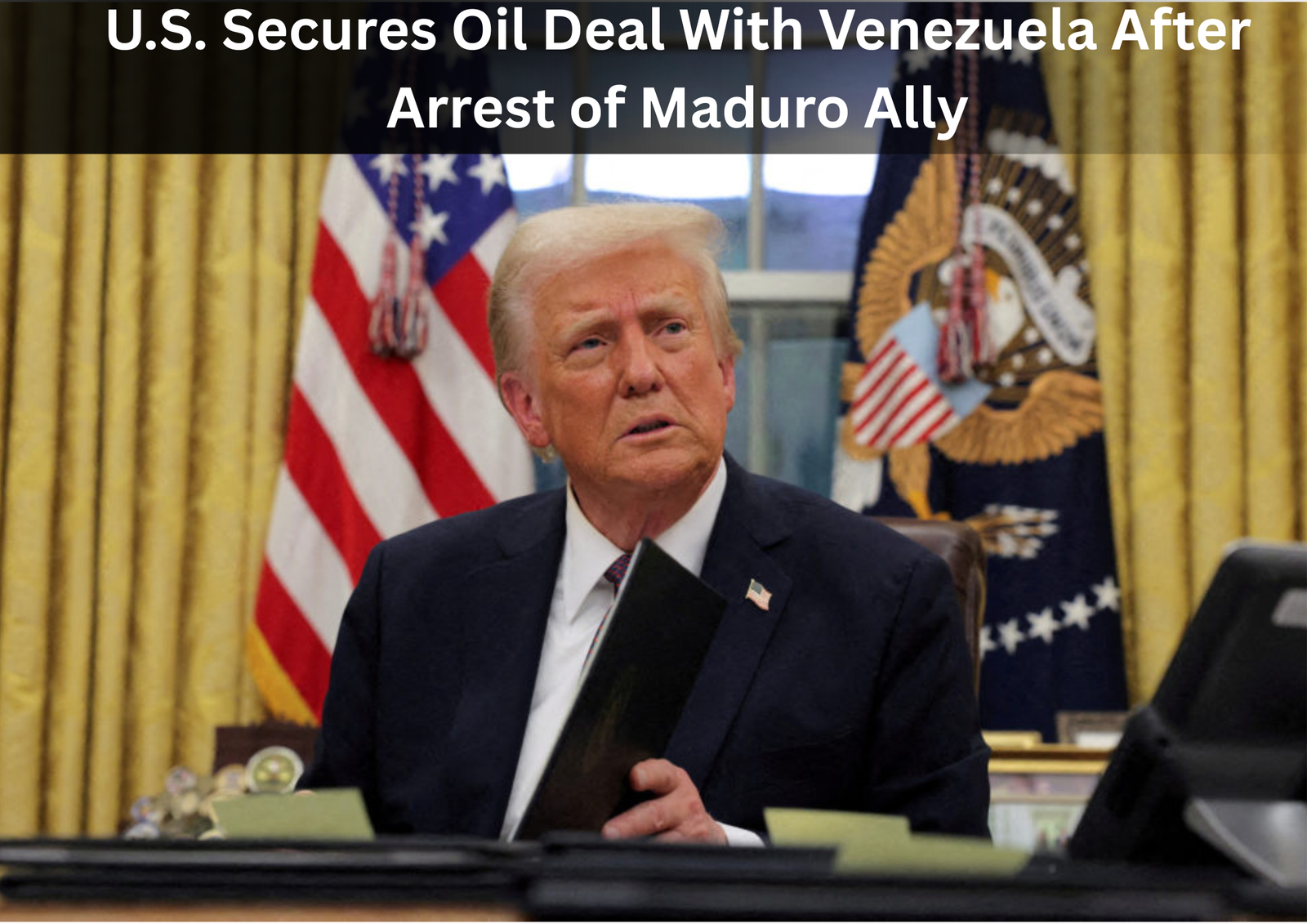
The United States has finalized a major oil supply arrangement with Venezuela in the aftermath of a controversial military operation that led to the capture of Venezuelan President Nicolás Maduro. The deal, announced by U.S. President Donald Trump, includes the transfer of tens of millions of barrels of crude oil to American buyers, signaling a sharp escalation in Washington’s pressure campaign against Caracas.
According to U.S. officials, Venezuela has agreed to sell between 30 and 50 million barrels of oil at prevailing market prices. The agreement represents the first concrete economic concession from Venezuelan authorities since the weekend raid that removed Maduro from power and transferred him to U.S. custody.
Energy Talks Take Center Stage
Senior administration sources confirmed that the White House is preparing to host executives from major American energy companies later this week to discuss future access to Venezuela’s oil sector. The talks are expected to focus on reopening parts of the industry to foreign investment after years of nationalization and sanctions.
U.S. Secretary of State Marco Rubio has publicly emphasized that restoring oil trade is a top priority, describing energy cooperation as “essential to stabilizing the region and global markets.” Venezuela holds the world’s largest proven oil reserves, but production has collapsed over the past decade due to mismanagement and sanctions.
Deadly Raid Sparks Regional Shockwaves
Venezuelan authorities say the overnight U.S. operation resulted in heavy casualties among local security forces and allied foreign personnel stationed in the country. The Pentagon acknowledged that several U.S. service members were injured during the mission, though most have since returned to active duty.
Caracas officials have condemned the raid as an act of aggression, with Venezuela’s attorney general opening a formal investigation into the deaths. Cuban authorities separately reported losses among their personnel, further intensifying diplomatic tensions in the region.
Emergency Measures Inside Venezuela
Following Maduro’s removal, interim leader Delcy Rodríguez announced a nationwide state of emergency, authorizing the deployment of military units to protect critical infrastructure, including oil facilities. Reports from human rights groups indicate increased checkpoints, detentions, and questioning of journalists and civilians suspected of supporting the U.S. action.
Rodríguez rejected Washington’s authority over Venezuela’s internal affairs, insisting that political decisions would be made “by Venezuelans alone.”
International Condemnation Builds
The operation and subsequent oil deal have drawn sharp criticism from the international community. The United Nations human rights office warned that the intervention undermines international law, while several Latin American nations raised objections during an emergency session of the Organization of American States.
Governments across South America reiterated concerns that foreign military interventions historically worsen instability rather than resolve political crises.
Legal Case Moves Forward in the U.S.
Maduro appeared in a New York federal court earlier this week, where he pleaded not guilty to multiple drug trafficking charges. During the hearing, he described himself as a prisoner of war, a claim dismissed by U.S. prosecutors.
American officials confirmed that any further easing of pressure on Venezuela would depend largely on cooperation related to oil exports and the removal of foreign military and intelligence personnel from the country.
Public Opinion Remains Divided
At home, reaction to the operation is mixed. Recent polling shows Americans nearly evenly split on whether the military action was justified, while skepticism remains high about deeper U.S. involvement in Venezuela’s political future.
As energy negotiations advance and diplomatic backlash grows, the unfolding situation underscores how oil, geopolitics, and military power are once again converging in the Western Hemisphere.
For deeper context and key developments, don’t miss “Walz Withdraws From Third-Term Race as Federal Scrutiny Intensifies Over Minnesota Fraud Case”-read the full blog to understand what’s unfolding behind the headlines.