
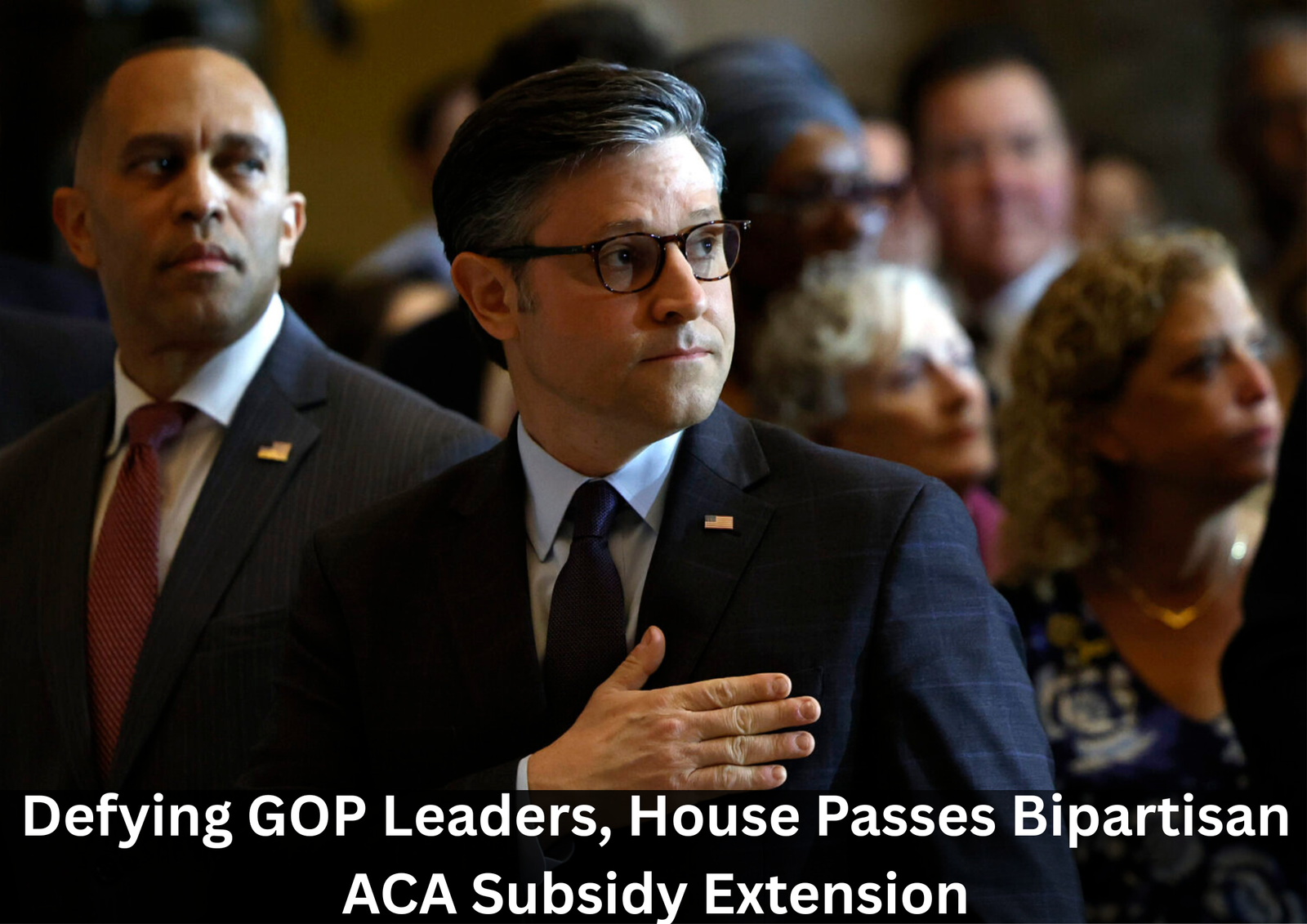
In a politically striking development on Thursday, the U.S. House of Representatives approved a measure to continue expanded financial assistance for Affordable Care Act marketplace coverage, securing enough bipartisan support to overcome the objections of Republican leadership.
The bill passed on a 221-205 vote under a fast-track procedure known as “suspension of the rules,” which limits debate and requires a higher threshold for approval. All Democrats in attendance supported the proposal, joined by nine Republicans who broke ranks with their party leaders. The move signaled a growing sensitivity among lawmakers from competitive districts toward voter concerns over rising healthcare costs.
The legislation seeks to extend enhanced premium tax credits first expanded during the COVID-19 pandemic. Those subsidies, currently scheduled to lapse, help millions of Americans reduce monthly insurance payments purchased through ACA marketplaces. Health analysts warn that without renewal, roughly 10 million people could face steep increases in premiums, in some cases amounting to hundreds of dollars per month.
House Speaker Mike Johnson and senior Republican figures urged a unified “no” vote, arguing that the subsidies represent an unnecessary expansion of federal spending. However, the defections came from GOP members representing politically mixed constituencies, where access to affordable healthcare remains an influential issue for voters.
The approval highlights the enduring political resilience of the Affordable Care Act, which despite years of legislative and legal challenges has grown more popular with key demographic groups and suburban constituencies. The ACA’s subsidy expansions have also contributed to record marketplace enrollment in recent years.
The bill now proceeds to the Senate, where its future is less certain. Senators from both parties have expressed interest in addressing health insurance costs, though the timeline and final terms remain unclear. If the Senate agrees to the House extension, the enhanced subsidies would continue into future coverage years, offering greater stability for marketplace consumers and insurers.
If you want the full story on how “Trump’s East Wing Ballroom Plan Moves Ahead With Key Federal Review as Critics Warn of Fast-Tracking,” make sure to read this blog.