The United States’ aggressive push to control Venezuelan crude exports following recent military actions has sent ripples through global energy markets and raised questions about the geopolitical balance between Washington, Beijing, and Moscow.
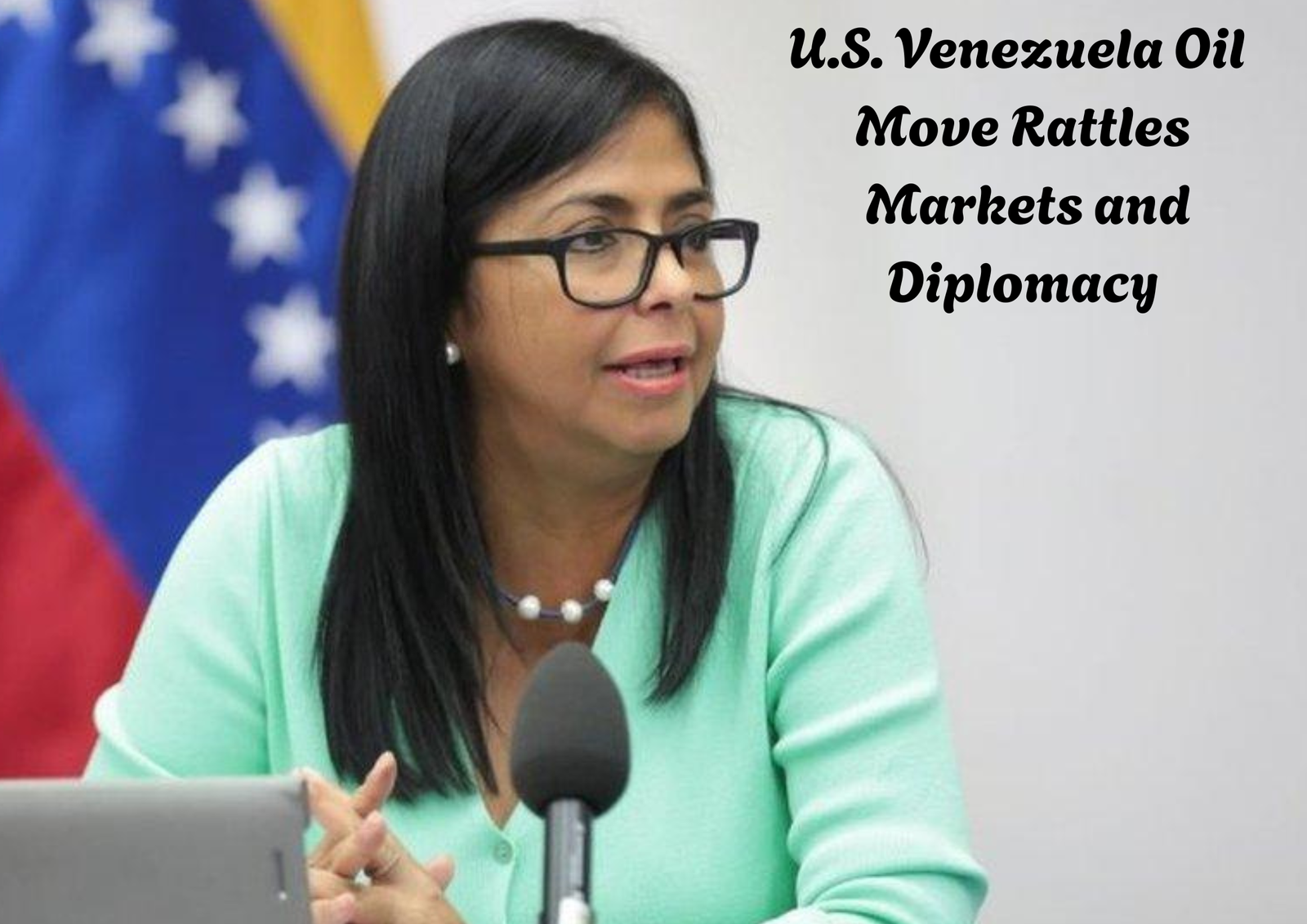
Last week’s raid in Caracas resulted in the capture of Venezuelan President Nicolás Maduro and the installation of a transitional government led by Delcy Rodríguez. U.S. officials have since demanded that the new administration distance itself from adversarial governments and accept oversight on oil trade in exchange for sanctions relief.
Energy Secretary Chris Wright stated during a press briefing on Wednesday that Washington intends to “retain leverage through the management of sanctioned crude flows,” describing the move as essential to the “rebuilding of democratic institutions” in Venezuela. Analysts have interpreted the remarks as signaling long-term U.S. involvement in the country’s key economic sector.
In addition to seizing tankers linked to Venezuela in the Atlantic, the United States negotiated an agreement under which tens of millions of barrels of crude would be transferred to U.S. control for resale. The White House has also extended invitations to major U.S. oil companies and commodity trading houses for consultations on prospective investments in Venezuela’s state-run oil fields.
Despite the strategic interest, the energy industry faces steep technical and financial challenges. Venezuela’s production has plummeted after years of underinvestment and attrition, and restoring output to historical levels would require extensive capital, refurbished infrastructure, and specialized equipment capable of processing the country’s heavy crude.
Global oil prices edged higher on Thursday, with Brent crude settling near a two-week peak as traders priced in political risk premiums stemming from the crisis. The increase comes amid broader concerns, including new disruptions to Russian-bound shipments in the Black Sea and Baghdad’s decision to tighten state control over a major oil project formerly linked to Russian interests.
Diplomatically, the U.S. position has complicated relations with other major powers. China, Venezuela’s largest creditor and formerly its top crude buyer, criticized the intervention but has yet to announce retaliatory measures. Foreign policy experts warn that the move could nudge developing nations toward Beijing and Moscow for protection against U.S. sanctions.
On Capitol Hill, the administration’s approach has faced resistance. Lawmakers introduced a resolution seeking to restrict further military deployments in Venezuela without congressional approval, signaling emerging bipartisan discomfort over the scope of the operation.
For Venezuela, the economic outlook remains precarious. With the world’s largest proven oil reserves but limited access to foreign exchange markets, the country’s financial survival may depend on how quickly political negotiations advance and whether new export channels remain open.
Observers say the crisis could reshape the global oil landscape for years, testing alliances and expanding the geopolitical footprint of energy security policy across continents.
The new US Dietary Guidelines remove daily alcohol limits and boost emphasis on full-fat dairy and protein – a major shift worth reading about in my full blog.