
A coalition of former senior U.S. national security and diplomatic officials has issued a rare public warning urging the White House and Congress to reject any consideration of using military force to assert control over Greenland, as President Donald Trump continues to argue the United States must secure the Arctic territory against rival powers.
The letter, signed by former envoys, Pentagon and State Department officials spanning both Republican and Democratic administrations, argues that threatening an ally-controlled territory risks fracturing NATO and undermining decades of Western strategic cooperation in the High North. Former ambassadors to NATO and multiple former assistant secretaries for Europe were among the signatories, who wrote that adversaries would “seize upon an alliance rupture for strategic gain in the Arctic.”
While Trump has repeatedly framed Greenland as an irreplaceable strategic location for missile defense and monitoring Russian and Chinese activity, the concept of forced control has landed poorly abroad and triggered a wave of diplomatic pushback. The White House has defended the president’s position, with Vice President JD Vance stating the administration is “serious about protecting U.S. national interests in the Arctic” and that the president is prepared to “go as far as he has to.”
Greenlandic officials have rejected any suggestion of a sale, transfer, or coerced change in sovereignty. Greenland’s representatives emphasize that the island’s foreign affairs authority ultimately runs through Denmark, and senior Danish officials have stressed that the territory is not a commodity. Danish Defence Minister Troels Lund Poulsen underscored the historic alliance by posting tributes to Danish troops who died fighting alongside Americans in Afghanistan.
The crisis has also ignited tensions within Greenland’s internal political landscape. The pro-independence Naleraq party argued that Greenland should enter direct talks with the United States rather than rely on Denmark as intermediary, while other factions insist that any future independence process must be negotiated in a cautious and internationally recognized framework.
European allies have expressed mounting concern over the rhetoric. British Prime Minister Keir Starmer raised the matter directly with Trump, NATO Secretary General Mark Rutte spoke with Secretary of State Marco Rubio over Arctic deterrence, and EU leaders are assessing political and diplomatic options should tensions escalate further.
Reaction in Washington remains split. Some Republican lawmakers have defended the strategic logic of elevating U.S. Arctic posture, but key figures on Capitol Hill have dismissed any military dimension outright. Senate Armed Services Committee Chairman Roger Wicker said Greenland’s leaders “have shown no willingness” to consider altering control, while Senator Lisa Murkowski warned that use of force would “break NATO.” House Speaker Mike Johnson similarly rejected the notion that military action was on the table.
A high-level diplomatic meeting in Washington next week between Secretary of State Rubio, Danish Foreign Minister Lars Lokke Rasmussen, and Greenlandic Foreign Minister Vivian Motzfeldt represents the first formal attempt to de-escalate the dispute and move talks toward institutional channels. Meanwhile, the memo from former officials seeks to intensify congressional resistance to any consideration of force and reassert the argument that Arctic security is best managed through NATO coordination.
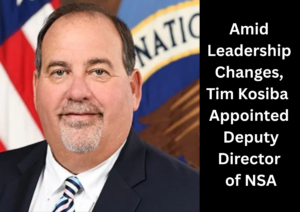
Tim Kosiba Named New NSA Deputy Director Amid Leadership Shakeup, a development drawing major attention-don’t miss the full story in my latest blog, make sure to read it!