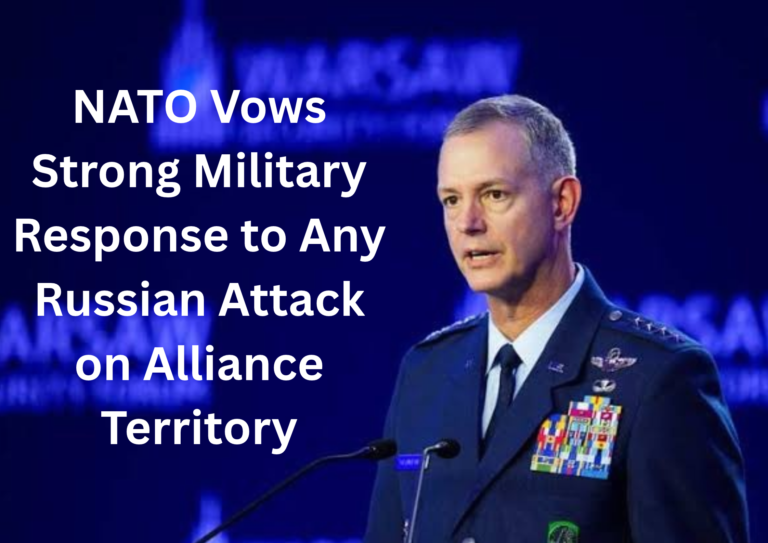
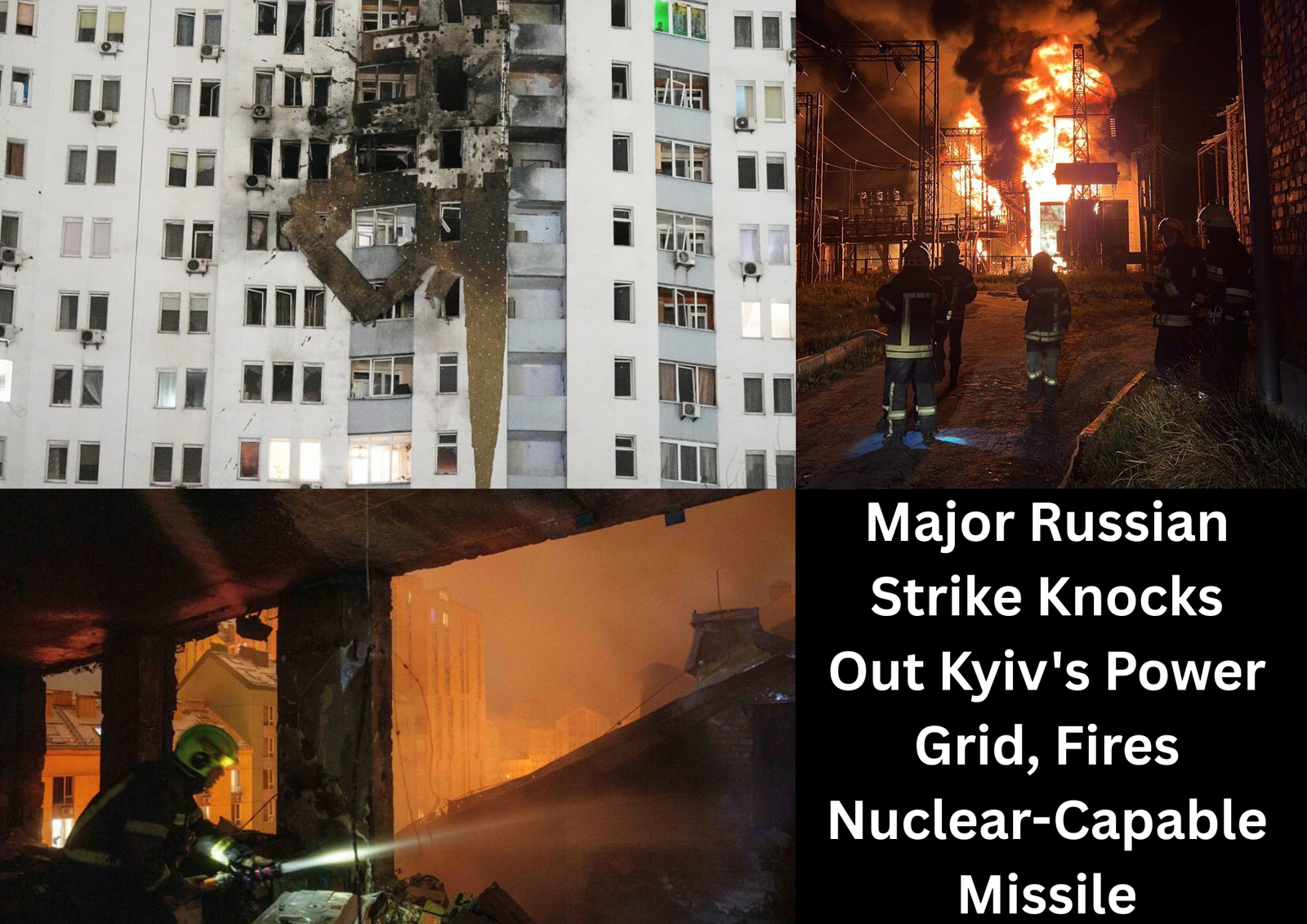
Russia carried out one of the most extensive long-range attacks on Ukraine in months, pounding major cities and critical infrastructure while simultaneously firing a nuclear-capable ballistic missile toward Western Ukraine in a move Western governments called profoundly escalatory.
Kyiv’s Grid Severely Damaged
Ukrainian officials reported that the overnight strikes between January 8 and 9 included barrages of drones, cruise missiles, and ballistic weapons. Massive explosions struck substations, heating facilities, and residential districts across the capital region.
Authorities confirmed at least four fatalities in Kyiv, with more than two dozen injured, including emergency workers who were hit during a follow-up strike. Nearly half a million residents in the city were temporarily without electricity, while thousands lost access to heating and water as temperatures plunged below freezing.
Local officials urged families with young children and the elderly to evacuate temporarily due to the widespread disruption to heating supplies. Elsewhere in the country, casualties were reported in Kryvyi Rih and Kherson following additional missile and artillery attacks.
Health facilities were not spared. The World Health Organization condemned strikes affecting hospitals and medical staff, noting multiple attacks on healthcare sites since the beginning of the new year.
Nuclear-Capable Missile Fired Toward Lviv Region
In a separate strike that drew immediate international outcry, Russia launched an Oreshnik intermediate-range ballistic missile toward Ukraine’s western Lviv region. The missile, capable of carrying nuclear warheads and reaching hypersonic speed, landed roughly 40 miles from Poland, a NATO member state.
Analysts in Europe and the United States described the launch as a political signal rather than a purely military one, as Western governments finalize new security guarantees for Ukraine’s long-term defense.
Moscow claimed the strike was in response to alleged Ukrainian drone activity targeting Russian leadership in late December – an accusation U.S. intelligence agencies have dismissed as unsubstantiated.
Developments Along the Front and at Sea
Meanwhile, Russian units reported advances in parts of the Zaporizhia region, while independent battlefield monitors noted incremental movements near Huliaipole and Prymorske. Additional clashes were reported in the Sumy region along Ukraine’s northeastern border.
Maritime tensions also escalated. A Russian drone strike on foreign-flagged vessels near Odesa resulted in the death of a Syrian sailor. In Russia’s Belgorod region, a Ukrainian drone strike on a civilian bus injured several passengers, according to local authorities.
U.S. Seizes Tanker Amid Expanding Sanctions Pressure
The United States intensified efforts to enforce sanctions tied to Russia’s war financing. U.S. naval personnel intercepted an oil tanker in the Caribbean believed to be operating under an alternate identity and carrying Venezuelan crude. Washington ordered the vessel back to Venezuela to prevent illicit fuel from entering global markets.
The action followed a recent seizure of a Russian-flagged tanker in the region. Russia later confirmed that two of its crew members detained during that operation had been released.
Western Governments Condemn Missile Launch
International reaction to the Oreshnik missile launch was swift. British Defence Secretary John Healey, during a visit to Kyiv, announced £200 million in funding to prepare for the potential deployment of British personnel as part of a wider multinational security initiative for Ukraine.
The European Union’s top foreign policy official described the missile launch as a direct warning to Europe and the United States. Nuclear watchdogs meanwhile opened consultations aimed at ensuring safety around the Zaporizhzhia nuclear plant after renewed shelling damaged power infrastructure near the facility.
A Dangerous New Stage
With Ukraine’s power grid taking on increasing damage and Europe confronting what officials described as nuclear signaling, analysts argue the conflict may be entering a more unpredictable phase. Diplomatic negotiations continue behind the scenes, but neither Moscow nor Kyiv has signaled readiness to halt or slow operations.
Former U.S. Officials Sound Alarm Over Talk of Greenland Takeover as Trump Maintains Hardline Position – read this full blog now, don’t miss the details.