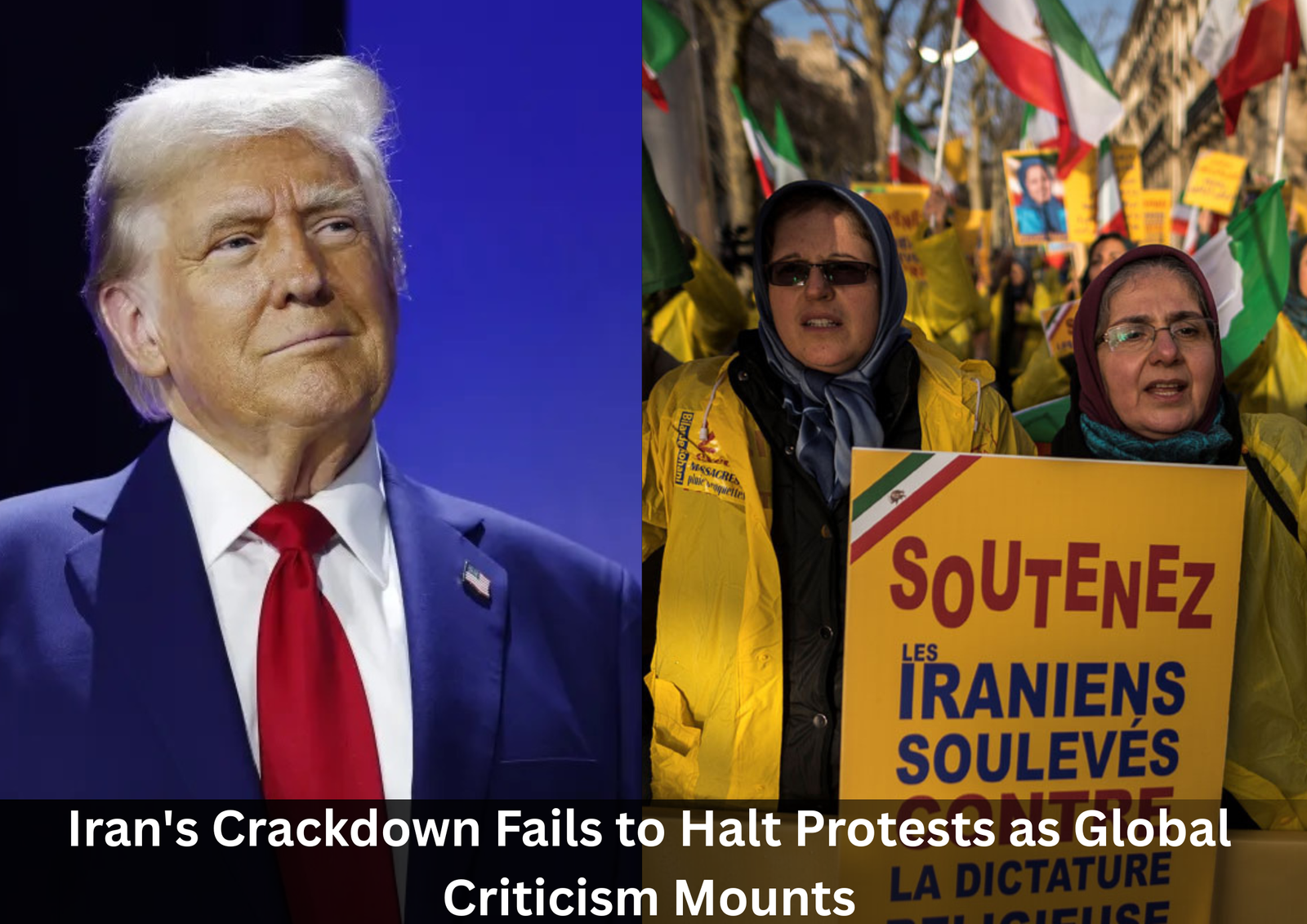
Mass protests across Iran entered their second week on Saturday as security forces intensified a sweeping crackdown aimed at halting unrest fueled by growing economic distress and political frustration. The demonstrations, which have spread across major cities and provincial regions alike, are being described by analysts as one of the most serious challenges to the country’s ruling system in recent years.
Residents and activists report that anger over soaring inflation, collapsing currency values, and widespread poverty sparked the latest wave of unrest, drawing participation from diverse social and economic backgrounds. Many demonstrators have shifted their chants from economic grievances to direct criticism of the clerical leadership, signaling a deeper and more confrontational political momentum.
Authorities have deployed security units, including the Basij militia, to disperse crowds and conduct large numbers of arrests. Internet speeds have been throttled severely in multiple regions, while access to foreign platforms has been intermittently blocked in what observers describe as an effort to limit the dissemination of protest videos and coordination between demonstrators. State media confirmed at least two fatalities in the northern city of Rasht earlier this week, though opposition groups claim the real toll could be higher.
Foreign governments and human rights organizations have expressed concern over the use of lethal force and expanding detentions. Analysts warn that the economic situation has significantly damaged the government’s patronage networks, undermining one of its traditional levers of domestic control.
In the United States, President Donald Trump weighed in on the unrest during a recent interview, praising demonstrators as “fighters for freedom.” He also linked the current movement to his 2020 decision to authorize a drone strike on Iranian General Qasem Soleimani, arguing that the operation projected U.S. strength. Trump further suggested he would consider strong military responses if Americans were targeted by Iran or its allied forces, while reiterating controversial remarks about striking cultural sites – statements that drew strong international pushback during his presidency.
Independent experts say the situation remains highly unpredictable. Scenarios range from intensified repression and a hardened authoritarian posture to a broader political shift or even institutional fracture should economic pressures continue to escalate. With protests still active in several cities and no sign of a negotiated resolution, Iran’s leadership faces mounting pressure at a moment of deep domestic instability.
International observers continue to monitor developments as demonstrations persist into a pivotal second week.
Portland Demonstrations Erupt After Border Patrol Shooting Leaves Two Dead and One Injured – read the full breakdown in my latest blog for crucial context and updates.