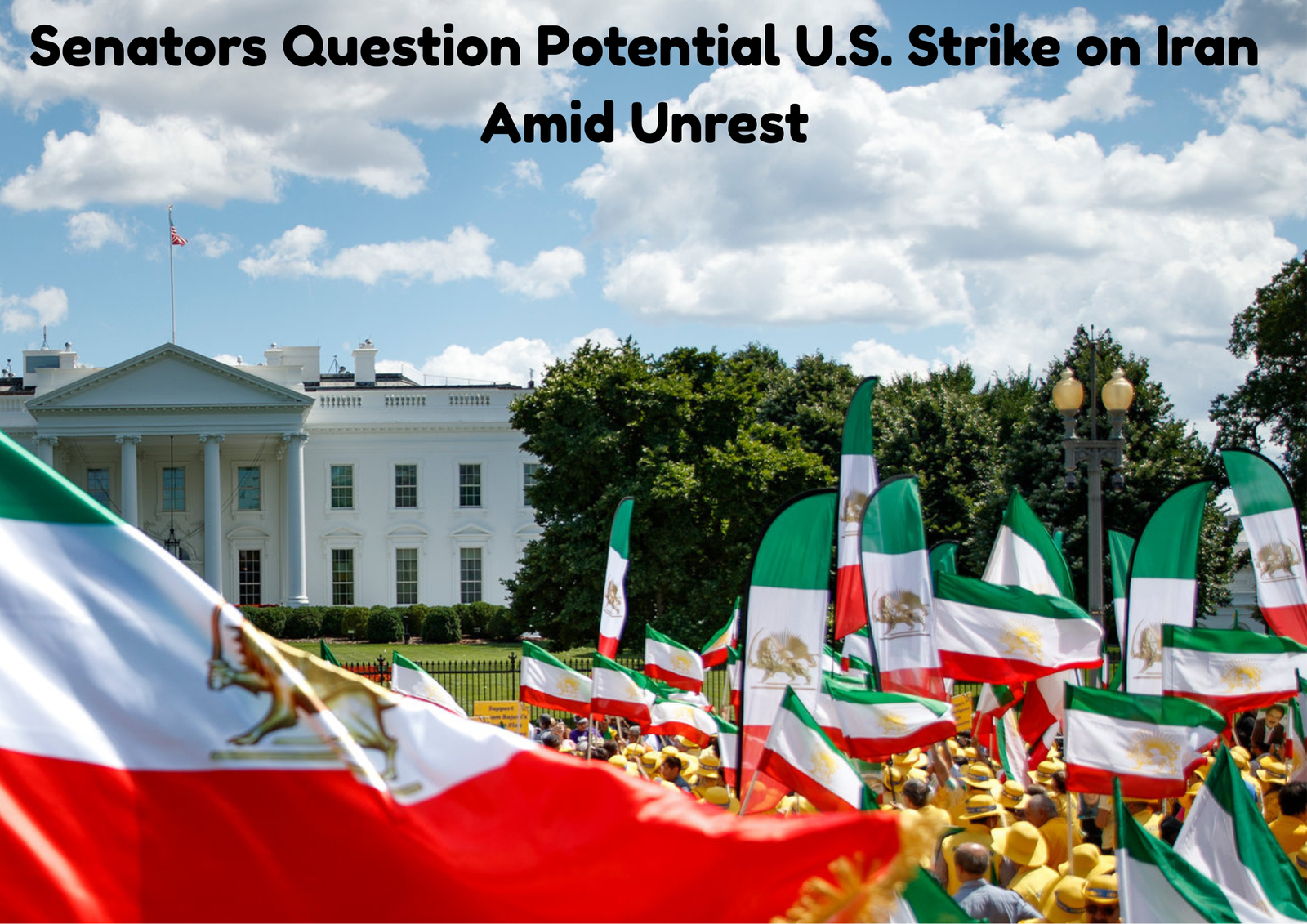
Lawmakers from both major parties are urging caution as the White House weighs possible military actions against Iran during a period of rising public protests in the country. Their concerns reflect growing anxiety in Congress over how American intervention could influence Iran’s internal dynamics and broader U.S. foreign policy.
Concerns Over Rallying Effect
Several senators warned that airstrikes or direct military engagement could inadvertently strengthen Tehran’s leadership. They argued that foreign attacks often push citizens to side with their government, even when domestic frustrations are high. Analysts in Washington have made similar observations in recent weeks, noting that the unrest in Iran has been fueled primarily by economic frustration and anger over political restrictions.
Historical Context Shapes Debate
Much of the skepticism stems from the United States’ long and complicated history with Iran. Lawmakers referenced the 1953 coup supported by Washington, which toppled Iran’s then-prime minister and had long-lasting political consequences. That episode remains a sensitive point in Iranian society and is often cited by state officials as proof of U.S. interference. Legislators cautioned that any modern-day intervention could revive those grievances and derail the current protest movement.
Push for Non-Military Strategies
Rather than deploying force, several senators advocated for non-kinetic tools such as sanctions, diplomatic pressure, and public support for demonstrators. They pointed to cases in other regions where heavy economic penalties weakened governments’ ability to suppress dissent. Some lawmakers also argued that the U.S. military should not be placed in harm’s way when alternative forms of leverage remain available.
Hawkish Voices Call for Tougher Posture
Not all lawmakers shared the same restraint. Some Republicans argued that Washington should take a bolder approach toward Tehran’s leadership and elevate international pressure on the government. They contend that strong action could empower protest movements and weaken Iran’s security forces, though they provided few details on what such a strategy would entail.
War Powers Authority Back in Spotlight
The Iran discussion has unfolded alongside a broader debate in Congress over presidential war powers. Several recent votes have sought to reaffirm the need for lawmakers to approve major military operations, a process many senators say has eroded over the past two decades. The push comes as policymakers seek greater oversight of potential conflicts beyond the Middle East, including in Latin America and regions tied to U.S. allies.
Uncertainty Ahead
While U.S. intelligence assessments reportedly note the growing scale of Iran’s protests, it remains unclear whether demonstrators or the government will outlast the crisis. Officials say the White House will continue reviewing military and non-military options, though no final decisions have been announced. For now, senators from both parties appear unified on at least one point: intervention carries risks that could extend far beyond Tehran.
“Former New Jersey Governor Richard Codey Dies at 79,” marking the loss of a longtime public servant. For complete coverage, make sure to read the full blog on my other site.