
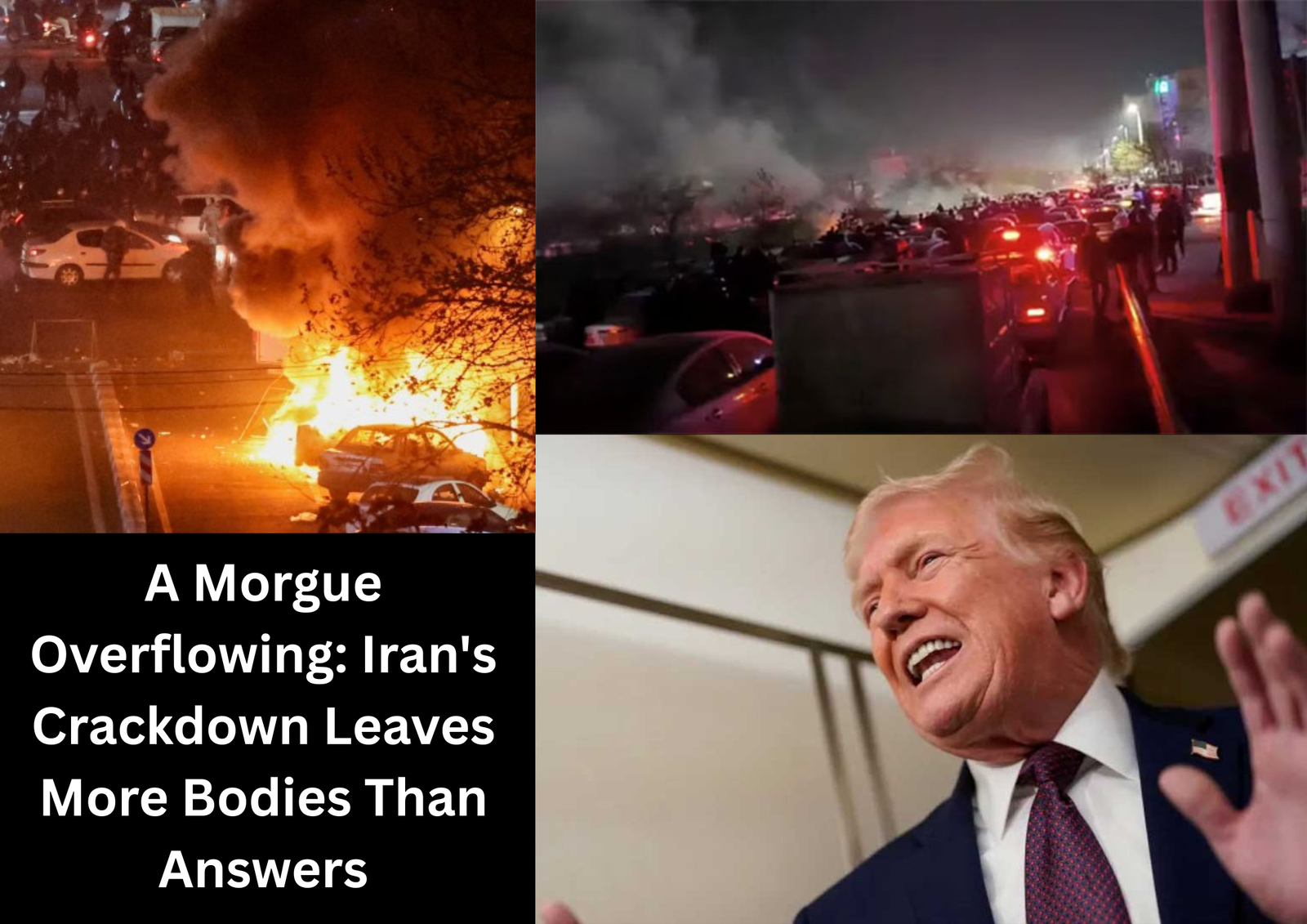
Iranian authorities announced on Monday that nationwide protests have been “brought under control,” even as new reports from activists and eyewitnesses suggest a significantly higher death toll than previously acknowledged. The unrest, driven by mounting economic frustration and rapidly expanding into a challenge to the country’s clerical leadership, has prompted the White House to deliberate diplomatic, economic, and possible military responses.
Graphic Footage Shows Overflowing Morgue Facilities
Despite tight restrictions on internet access, footage shared through satellite links appeared to show overflowing morgue facilities near Tehran. The videos, reportedly recorded at the Kahrizak Forensic Medical Center, depicted rows of bodies wrapped in black bags and laid out on floors and in courtyards, as families attempted to locate missing relatives.
Human rights monitors said the number of casualties arriving at the facility peaked in recent days. Independent activists estimate the bodies reached into the hundreds during the most intense period of protests, although state-affiliated outlets downplayed the scenes and argued most victims were uninvolved civilians caught in the violence.
Competing Narratives Around the Death Toll
Human rights groups reported that the verified death count had surpassed 600 since demonstrations began in late December, with thousands more detained. Activists claim the majority of fatalities were protesters, though the government has highlighted the deaths of security personnel in its coverage.
Senior officials in Tehran continued to distinguish between peaceful demonstrators and what they labeled as “foreign-backed agitators,” warning that those accused of sabotage or terrorism could face severe penalties, including capital punishment. State officials insisted that security forces showed restraint, although residents described heavy gunfire and the use of stun devices in Tehran and other cities.
Washington Reviews Potential Retaliatory Measures
In Washington, U.S. President Donald Trump signaled that multiple response options are under review. While the administration emphasized that diplomacy remains possible, the president did not rule out escalatory steps, including cyber measures or targeted strikes. Late Monday, Trump also announced new tariff penalties on overseas companies conducting business with Iran.
White House officials said discussions with Tehran over nuclear issues had not been halted, with quiet channels of communication reportedly ongoing. Iranian representatives confirmed the talks but criticized U.S. messaging as contradictory.
Tehran Claims Stability, Warns of Regional Consequences
Iran’s leadership insisted the unrest has subsided and that state institutions remain united. During a televised address, parliamentary speaker Mohammad Baqer Qalibaf said the country was confronting external and internal pressure simultaneously – ranging from economic coercion to what he described as terrorism aimed at destabilizing society.
Officials reported arrests of suspected militant groups accused of burning religious sites and attacking volunteer security forces. While protests marked one of the most significant challenges to the Islamic Republic in decades, analysts say there are no visible fractures within Iran’s political or security establishment.
Tehran has also warned regional adversaries against exploiting the crisis, declaring that U.S. military bases and Israeli assets would be targeted if hostilities escalate.
Global Impact and Broader Context
The protests, ignited by surging prices and deteriorating living conditions, quickly evolved into a broader confrontation over political authority. An ongoing internet blackout – now approaching a full week – has complicated efforts to verify casualty reports and to track the movement of demonstrations. Satellite-based connectivity is providing limited digital access for some residents.
Concerns about instability in Iran, a major oil-exporting state, pushed global oil prices higher for a second straight day amid fears of supply disruptions and additional sanctions.
Human rights organizations criticized Iranian authorities, arguing that security forces made little distinction between demonstrators and bystanders during the crackdown.
Tens of Thousands of NYC Nurses Launch Historic Strike Over Staffing, Safety, and Pay Disputes – read the full blog for detailed insights you shouldn’t miss.