End of TPS Designation Announced
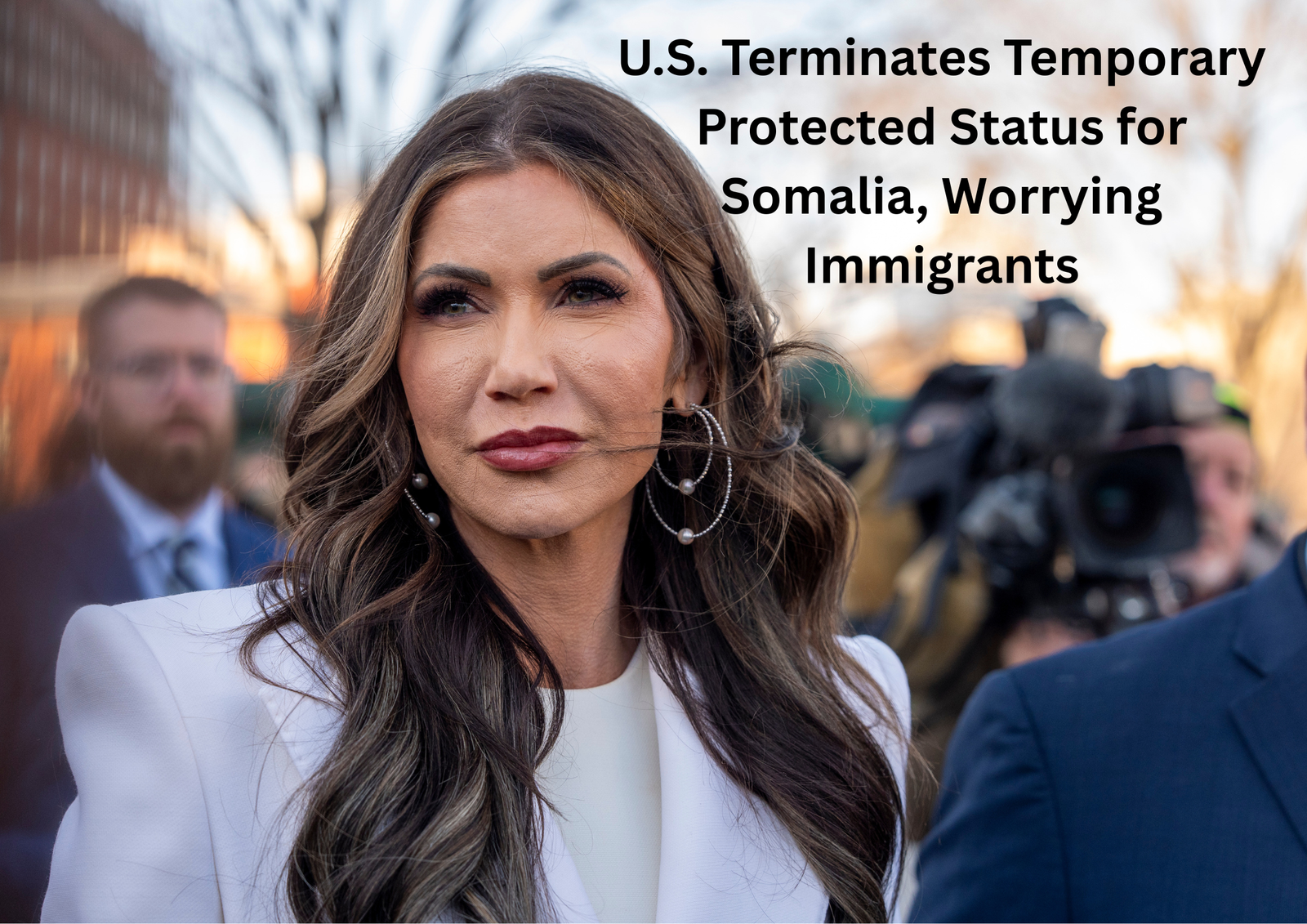
The U.S. Department of Homeland Security (DHS) confirmed on January 13 that Somalia’s designation under the Temporary Protected Status (TPS) program will officially end on March 17, 2026. DHS Secretary Kristi Noem said the government’s review concluded that the conditions in Somalia no longer meet the legal criteria for TPS and described the policy change as part of a commitment to prioritize domestic interests.
Who Will Be Affected
Somali nationals currently living and working in the United States under TPS are directly impacted. Government figures indicate several hundred Somali beneficiaries remain on active TPS status, with more applications still awaiting adjudication. Beyond TPS holders, tens of thousands of Somali immigrants live within the U.S., the vast majority of whom have already gained citizenship or permanent residency status through other channels.
A Look at TPS and Its History
TPS was created in 1990 to offer temporary humanitarian protection to individuals who cannot safely return to their home countries due to conflict, disaster, or other crises. Somalia first received TPS in the early 1990s during its civil war. The designation endured across multiple U.S. administrations-Democrat and Republican alike-due to ongoing instability in the East African nation. The most recent extension, approved in 2024, was scheduled to last until 2026 before the current policy reversal.
Part of a Broader Shift on Immigration
Federal officials framed the termination as a result of improved security and political conditions within Somalia. Analysts, however, noted that the move aligns with wider efforts by the current administration to strengthen immigration enforcement nationwide. DHS has signaled an increase in personnel deployments to Minnesota and other states with sizable Somali populations to investigate alleged immigration violations.
Criticism and Legal Pushback
The decision has been met with strong objections from civil rights and immigrant advocacy groups, who argue that Somalia continues to face significant instability. Organizations point to reports of militant violence, drought, and humanitarian displacement as evidence that returning nationals may be at risk. Municipal leaders in Minneapolis and St. Paul have also challenged federal actions, accusing Washington of disproportionately targeting Somali communities and fueling public unrest. Recent demonstrations in the Twin Cities followed a fatal federal enforcement incident, heightening local tensions.
Conditions on the Ground in Somalia
Despite modest improvements in governance, Somalia is still grappling with insurgent attacks from al-Shabaab, severe food insecurity, limited state infrastructure, and widespread displacement. Humanitarian groups caution that forced returns could create new hardships for both individuals and families already struggling with unstable conditions.
Guidance for Affected Nationals
Somali nationals whose legal status depends solely on TPS are being instructed to prepare for departure after March 17 unless they secure another immigration pathway. DHS has published procedural information through a Federal Register notice, outlining departure options and steps for voluntary compliance. It remains uncertain whether removal actions will begin immediately after TPS expiration, as previous efforts to terminate TPS designations frequently ended up in prolonged court battles.
Population Overview
Somalis have established communities in various parts of the United States over the past three decades. Minnesota hosts the largest concentration, followed by states such as Ohio and Washington. While the overall number of Somali-born immigrants has remained steady in recent years, a growing share now holds U.S. citizenship.
“Governor Kathy Hochul Pivots 2026 Agenda Toward Affordability Measures and Resistance to Trump Immigration Policies”-read this blog now to understand why it’s becoming a major political flashpoint.