
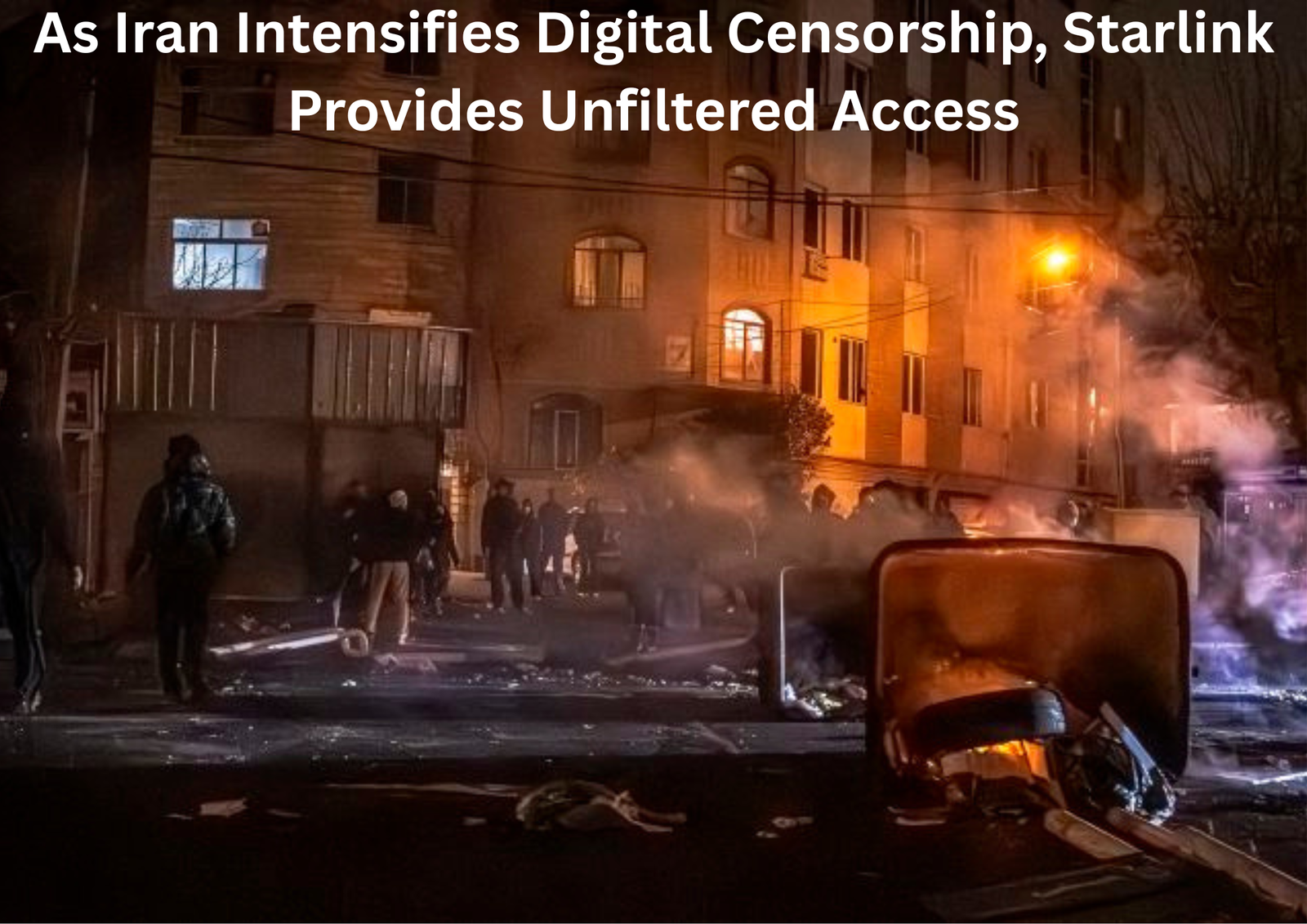
A number of Starlink satellite internet terminals in Iran unexpectedly activated free access this week, allowing thousands of Iranians to bypass one of the harshest internet shutdowns imposed by the country in recent years. U.S.-based organizations focused on digital freedom confirmed that dormant terminals began functioning without subscription charges on Tuesday, providing rare online connectivity amid widespread anti-government protests.
The sudden activation followed reports of direct communication between SpaceX founder Elon Musk and U.S. President Donald Trump, who has expressed approval for demonstrators challenging the Iranian regime.
Severe Crackdown Meets Severe Blackout
The Iranian government has responded to nationwide unrest with mass arrests and widespread violence, according to human rights observers outside the country. Activists report that security forces have used live ammunition on protesters, resulting in a civilian death toll estimated at over 1,800. The figure is believed to be incomplete because journalists and independent monitors remain cut off by an expansive information blackout.
Iran’s internet infrastructure is largely state-controlled, making it relatively simple for authorities to curtail digital access nationwide. By filtering international traffic through two major providers, the regime has been able to isolate the country while suppressing videos, images, and eyewitness testimony.
Smuggled Terminals Create an Underground Network
Starlink terminals have been quietly entering Iran through illicit channels for two years, forming a shadow communications system alongside VPNs, proxy services, and encrypted messaging apps. Analysts estimate between 50,000 and 100,000 terminals are currently inside the country, supporting potentially hundreds of thousands of users-still a small fraction of the nation’s 92 million people.
Despite limited reach, the network has enabled activists to push footage of demonstrations, damaged infrastructure, and alleged abuses into the global media ecosystem. Digital rights groups describe the network as a “lifeline” for external documentation of the protests.
Authorities Move to Block, Jail, and Confiscate
Tehran has taken increasingly aggressive steps to restrict satellite internet operations. A law passed in late 2025 classifies unauthorized Starlink use as espionage on behalf of foreign adversaries, with penalties ranging from lengthy prison sentences to the possibility of capital punishment under national security statutes.
Government forces have deployed jamming units capable of disrupting Starlink signals in specific neighborhoods. Surveillance drones are reportedly used to detect the distinctive dish-shaped receivers on rooftops and balconies. In response to interference, Starlink engineers issued a software update earlier this week designed to strengthen signal resilience.
Geopolitical Implications and U.S. Policy Tensions
Starlink’s role in Iran echoes its impact in Ukraine, where satellite communications helped sustain wartime logistics and media access. Western analysts argue the technology has become a significant tool for soft power projection in authoritarian environments.
However, international policy remains fractured. Several U.S. programs designed to support anti-censorship technology for Iranians lost funding last year, leading to frustration among civil society groups that rely on overseas assistance to maintain secure communications infrastructure.
A ‘National Internet’ Future
Experts warn that Iran’s restrictions may evolve from a temporary shutdown into a permanent structural shift. The government is actively promoting a controlled domestic network-often referred to internally as the “national internet”-that would rely exclusively on state-authorized platforms for messaging, payments, navigation, and video streaming. Such a system would be largely severed from the global web and is viewed by analysts as more restrictive than the digital ecosystem currently operating in China.
Advocacy organizations caution that if implemented at scale, Iran’s population could lose long-term access to mainstream social media, international news outlets, and foreign communications tools, redefining how information circulates within the country.
South Korean Prosecutors Demand Death Penalty for Ex-President Yoon in Treason Trial – a gripping political showdown you shouldn’t miss, read this full blog on my other site now.