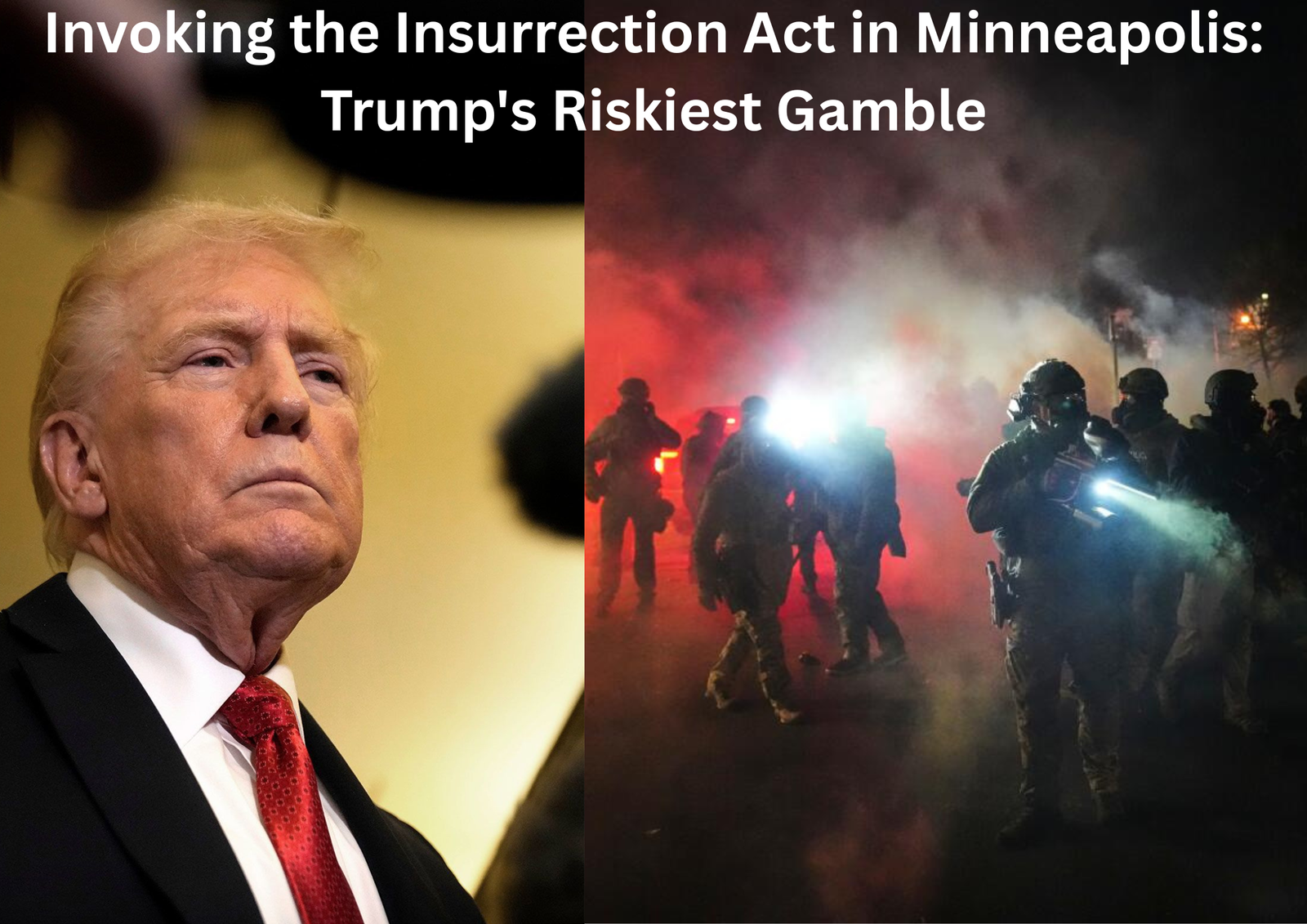
President Donald Trump has suggested he may invoke the Insurrection Act to dispatch military personnel to Minnesota if state leaders fail to restrain increasingly volatile protests surrounding an expansive federal immigration crackdown. The warning, issued online late Thursday evening, marks one of the most forceful federal threats toward a U.S. state in recent history amid deep disagreement over immigration enforcement tactics.
The White House move comes during a major surge of U.S. Immigration and Customs Enforcement (ICE) and Customs and Border Protection personnel in the Minneapolis metro region. Federal officials estimate nearly 3,000 agents have been assigned to the operation, which has sparked mass demonstrations, civil rights complaints, and legal challenges from immigrant advocacy groups and state authorities.
Shootings Intensify Public Outrage
Public anger escalated after two ICE-related shootings within a week. In the most recent incident on January 14, an ICE officer shot a Venezuelan national in the leg during a confrontation in north Minneapolis. Federal officials contended the officer was assaulted with makeshift weapons, while Homeland Security Secretary Kristi Noem denounced the altercation as an attempted killing of a federal agent.
The prior shooting proved fatal. Renee Nicole Good was killed by ICE gunfire during an enforcement action, prompting accusations of excessive force from local leaders and national advocacy organizations. Polling cited by national media suggests most Americans view the fatal shooting as unjustified, and that dissatisfaction with ICE’s handling of the Minnesota operation is growing.
State Leaders Rebuke Federal Threat
Minnesota’s elected officials sharply rejected the possibility of military involvement. Governor Tim Walz issued an appeal urging the administration to halt what he described as an escalating federal occupation. Walz has also urged residents to document immigration enforcement encounters, signaling preparation for long-term legal battles. Minnesota’s congressional delegation expressed similar alarm, with U.S. Senator Tina Smith likening the threat to “declaring war on Minnesota.”
Attorney General Keith Ellison confirmed the state will challenge any military deployment, and his office has already filed suit seeking to block DHS from continuing the surge without judicial oversight.
Civil Rights Litigation and Community Fallout
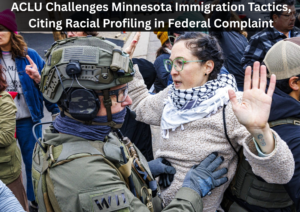
Civil liberties organizations have also launched legal action. The American Civil Liberties Union of Minnesota filed a class-action lawsuit on behalf of residents alleging racial targeting, warrantless arrests, and unconstitutional searches by federal agents. The lawsuit names ICE and DHS as defendants.
Community effects have been immediate. Airport unions reported that more than a dozen workers at Minneapolis-St. Paul International Airport were detained by ICE agents-some after passing through TSA checkpoints-leading to widespread fear among immigrant workers and disrupting staffing levels. City council members have called for emergency measures to shield vulnerable residents, including a temporary eviction moratorium.
Federal Investigations and Unrest
Authorities say the protests have occasionally spilled over into property damage. The FBI is offering up to $100,000 for information about the destruction of two bureau vehicles outside a Minneapolis field office. The agency says demonstrators broke into the vehicles and attempted to breach secured containers.
Historic Powers Under Scrutiny
Legal scholars note that Trump’s reference to the Insurrection Act carries major implications. The statute, dating to the late 18th century, enables a president to deploy active-duty troops under certain conditions of domestic disorder. The law has rarely been exercised; its last usage came during the 1992 Los Angeles riots. Experts point out that presidents typically avoid invoking it due to the political risks and public backlash associated with military force on U.S. soil.
Reporting from national media indicates a recent Supreme Court ruling may have influenced the president’s strategy. In December, the court blocked an attempt by Trump to activate National Guard units in Illinois under a separate law. A concurring opinion from Justice Brett Kavanaugh suggested the Insurrection Act provides broader authority-a remark that analysts say may have shaped the White House’s current posture.
Political Stakes Remain High
Internal polling referenced by major outlets suggests the administration’s approach may be eroding public support. Surveys show a majority of voters believe the ICE surge is making urban areas less secure and that Trump is exceeding traditional presidential powers. Commentators have warned that military involvement could drive further political division in an election year.
A federal judge has so far declined to halt ongoing ICE operations, asking for additional evidence before issuing a decision. With lawsuits multiplying, protests growing, and the White House weighing unprecedented actions, the standoff between the federal government and Minnesota shows no sign of fading.
Le Pen Challenges Court Ruling as 2027 Presidential Bid Hangs in the Balance – read this detailed blog now for crucial insights before mainstream narratives reshape the story.