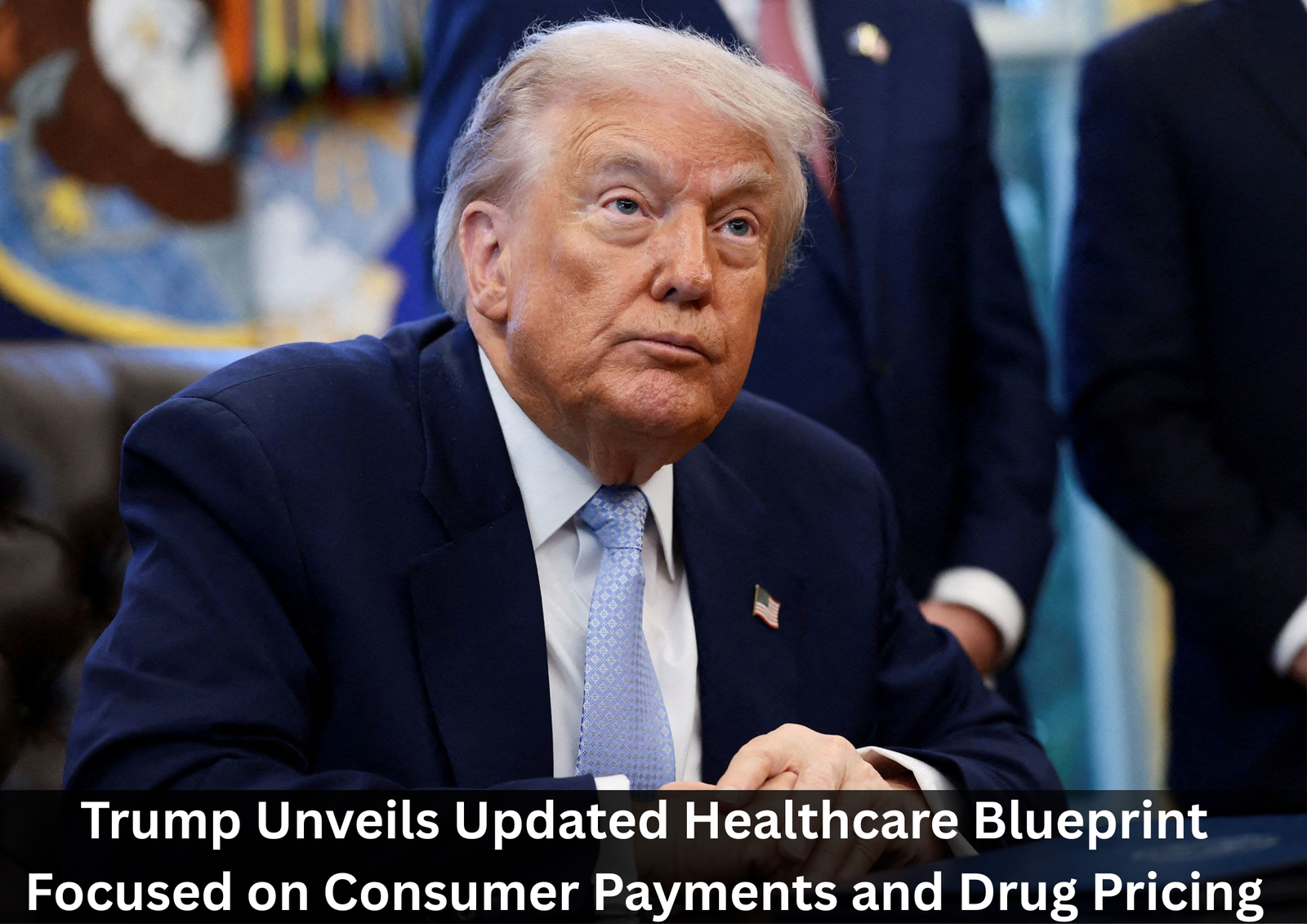
President Donald Trump on Thursday rolled out a sweeping new healthcare policy blueprint dubbed “The Great Healthcare Plan,” calling for consumer-focused payments, expanded drug pricing reforms, and tighter transparency rules for insurers. The announcement arrives as lawmakers press for a solution to rising premiums following the lapse of enhanced Affordable Care Act (ACA) subsidies at the end of 2025.
Under the proposal, federal healthcare subsidies that currently flow to insurance companies would instead be distributed directly to consumers, who would then use the funds to purchase coverage of their choosing. Trump argued that the change would give Americans broader flexibility beyond the ACA marketplace, though the administration released no specifics on eligibility thresholds, payment calculations, or oversight mechanisms.
Policy analysts reacted cautiously, noting that the absence of details makes it difficult to gauge how the shift would affect premiums and enrollment stability. They warned that inadequate payments could prompt younger and healthier consumers to forgo coverage, ultimately leaving older and sicker Americans with higher costs.
The timing of the proposal has drawn attention in Congress, where senators from both parties continue debating whether to reinstate expired subsidies that helped millions afford premiums in 2023–2025. Without those subsidies, research organizations estimate that premiums for many middle-income buyers more than doubled compared to last year, intensifying political pressure for legislative action.
In addition to funding reforms, the blueprint revives and expands several previous drug pricing efforts, including a plan to align U.S. prices more closely with those in peer countries. It also promotes the sale of additional safe medications over-the-counter in hopes of reducing physician visits and increasing market competition. Another provision targets pharmacy benefit managers by seeking to restrict incentives and rebate arrangements that critics argue inflate costs for patients.
Transparency measures make up a significant portion of the initiative. As outlined by Trump, insurers and providers would be required to publish simplified coverage explanations, disclose rejection rates, reveal claim processing times, and clearly display fees and negotiated prices for services tied to Medicare and Medicaid reimbursement.
Industry reaction was mixed. Pharmaceutical trade groups raised concerns that aggressive price controls may undermine drug research and development, while some employer coalitions welcomed attempts to rein in pharmacy benefit middlemen. However, both sides urged lawmakers to clarify several components before advancing legislation.
A similar Senate proposal centered on health savings account contributions failed last month after falling short of the 60 votes needed to move beyond filibuster. Critics argued that the proposed contributions were too limited to offset the loss of ACA subsidies, especially for consumers older than 50 facing steep premiums.
Trump promoted the new framework in a recorded statement, encouraging lawmakers to assemble final legislative language. The document provides broad direction but delegates major structural and funding decisions to Congress, leaving many of the policy’s most consequential elements undecided.
“Don’t miss reading ‘White House Defends ICE Amid Minneapolis Shooting Controversy’ for an in-depth look at the political fallout and national debate over this explosive incident.”