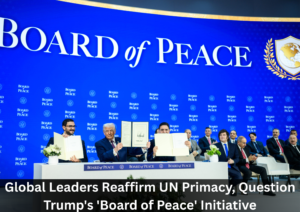

The Trump administration has unveiled plans for an international body called the Board of Peace, an initiative described as a vehicle for post-conflict stabilization with a particular emphasis on Gaza. However, a clause allowing governments to secure permanent seats through a $1 billion contribution has drawn international attention and prompted questions over the organization’s purpose, structure, and long-term global implications.
A High Cost for Permanent Influence
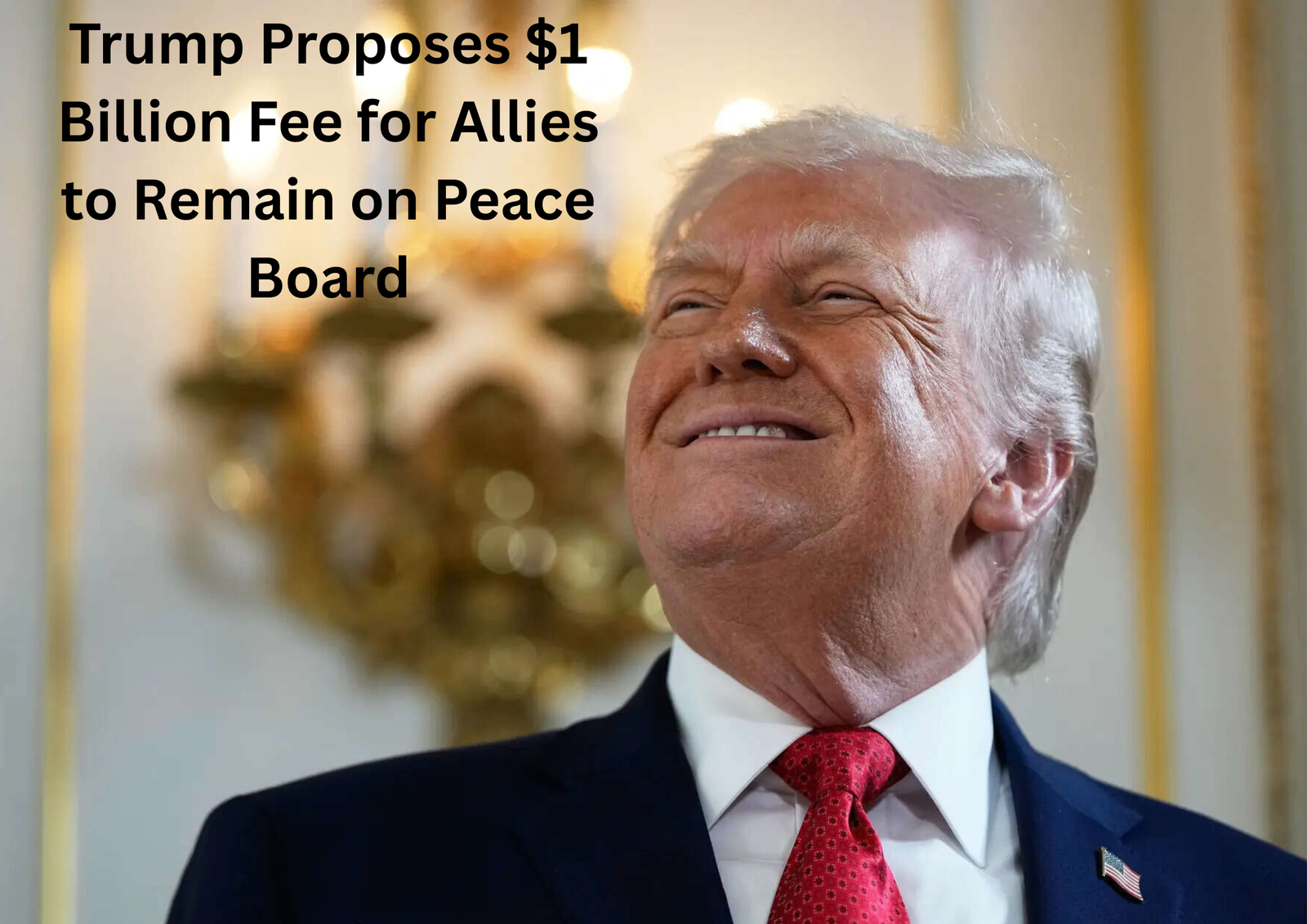
According to leaked language from a draft charter, countries may join the board without a fee, but those offering a $1 billion payment within the first year would obtain lifetime membership. Nations opting out of the contribution would be limited to three-year renewable terms. U.S. officials have argued that nearly all collected funds would support reconstruction efforts rather than administrative overhead, promising minimal bureaucracy and streamlined spending.
Power Structure and Leadership Model
The charter outlines an unusually strong leadership role for the chair – a position initially assigned to President Donald Trump. Under the proposed framework, the chair would set agendas, approve decisions, invite members, and oversee the organization’s branding and strategic direction. The document also includes authority to remove member states under certain voting procedures and requires the chair to name a designated successor. The mandate of the body is described in broad terms, emphasizing conflict resolution, stability, governance reforms, and rebuilding vulnerable regions. Notably, specific references to Gaza are absent from the main charter, appearing instead in descriptions of a specialized executive committee beneath the broader organization.
Executive Committee and Global Outreach
Ahead of the board’s formal launch, the White House revealed a provisional executive committee focused on Gaza. Invitations have been sent to governments in Europe, the Middle East, South Asia, and the Americas. Confirmed invitees include leaders from France, Germany, Italy, Canada, Argentina, Hungary, and the European Commission. Other nations have publicly acknowledged receiving invitations and are evaluating their participation.
Mixed International Reactions
Responses to the proposal have varied widely. Some governments have adopted a cautious tone, pledging to review the invitation through diplomatic channels before making commitments. Others have signaled discomfort with what they view as a separate international power center that could challenge existing institutions – particularly the United Nations. Diplomats in several European capitals have raised concerns over the concentration of authority in the chair’s office and the financial conditions associated with permanent seats. Israeli officials have publicly questioned aspects of the Gaza-focused components, while political figures in Australia criticized the funding model as unethical.
UN officials have taken a measured stance, emphasizing that member states are free to cooperate through new alliances. The Security Council previously acknowledged the concept in a 2025 resolution as part of an interim framework for addressing Gaza’s humanitarian crisis, which has persisted after years of conflict that devastated infrastructure and displaced civilians.
Context and Outlook
The United States remains the largest contributor to the UN budget, but relations between Washington and multilateral institutions have been strained. Over the past year, the administration has withdrawn from dozens of UN-affiliated entities and repeatedly criticized the organization’s performance. The Board of Peace now sits at the center of a complex geopolitical debate: supporters present it as a novel approach to reconstruction and global coordination, while critics view it as an emerging parallel system that may reshape existing diplomatic norms.
With invitations circulating and negotiations underway, the future of the Board of Peace – including which nations accept permanent seats and how the billion-dollar provision will be received – is poised to become a defining foreign policy story in 2026.
Deadly wildfires are ravaging central Chile amid an extreme heat wave. Read this blog for the latest updates and safety information.