
Federal immigration enforcement efforts intensified this week as authorities launched a new arrest-focused initiative in the northeastern United States, while a federal appeals court ruling reshaped how officers may respond to protests in the Midwest. Together, the developments signal a broader shift in how immigration policy is being carried out on the ground, drawing sharp reactions from state leaders, local officials, and advocacy groups.
In Maine, officials from the Department of Homeland Security began a targeted enforcement campaign led by U.S. Immigration and Customs Enforcement. The operation, described by federal officials as a public-safety-driven initiative, resulted in dozens of arrests on its opening day. According to DHS representatives, the effort focuses on individuals with prior criminal convictions, particularly offenses involving violence, impaired driving, or child welfare concerns. Authorities indicated that additional arrests may follow as the operation continues.
Federal officials emphasized that the campaign is intended to remove individuals they consider serious public safety risks. They also stated that those taken into custody come from a range of countries and have criminal records documented in U.S. courts. The Department of Homeland Security said the operation is part of a broader national strategy to prioritize enforcement against repeat and violent offenders.
However, the initiative has generated unease within immigrant communities across Maine. Local leaders in Portland noted that many immigrants play essential roles in healthcare, education, hospitality, and other sectors that support the local economy. City officials reiterated that local police departments do not participate in federal immigration enforcement, aiming to maintain trust between residents and law enforcement.
State leaders have also voiced objections. Maine’s governor, Janet Mills, criticized what she described as confrontational federal tactics, saying they undermine community stability. Meanwhile, the state’s secretary of state announced administrative steps to limit cooperation with certain federal agencies, citing concerns over civil liberties and enforcement practices.
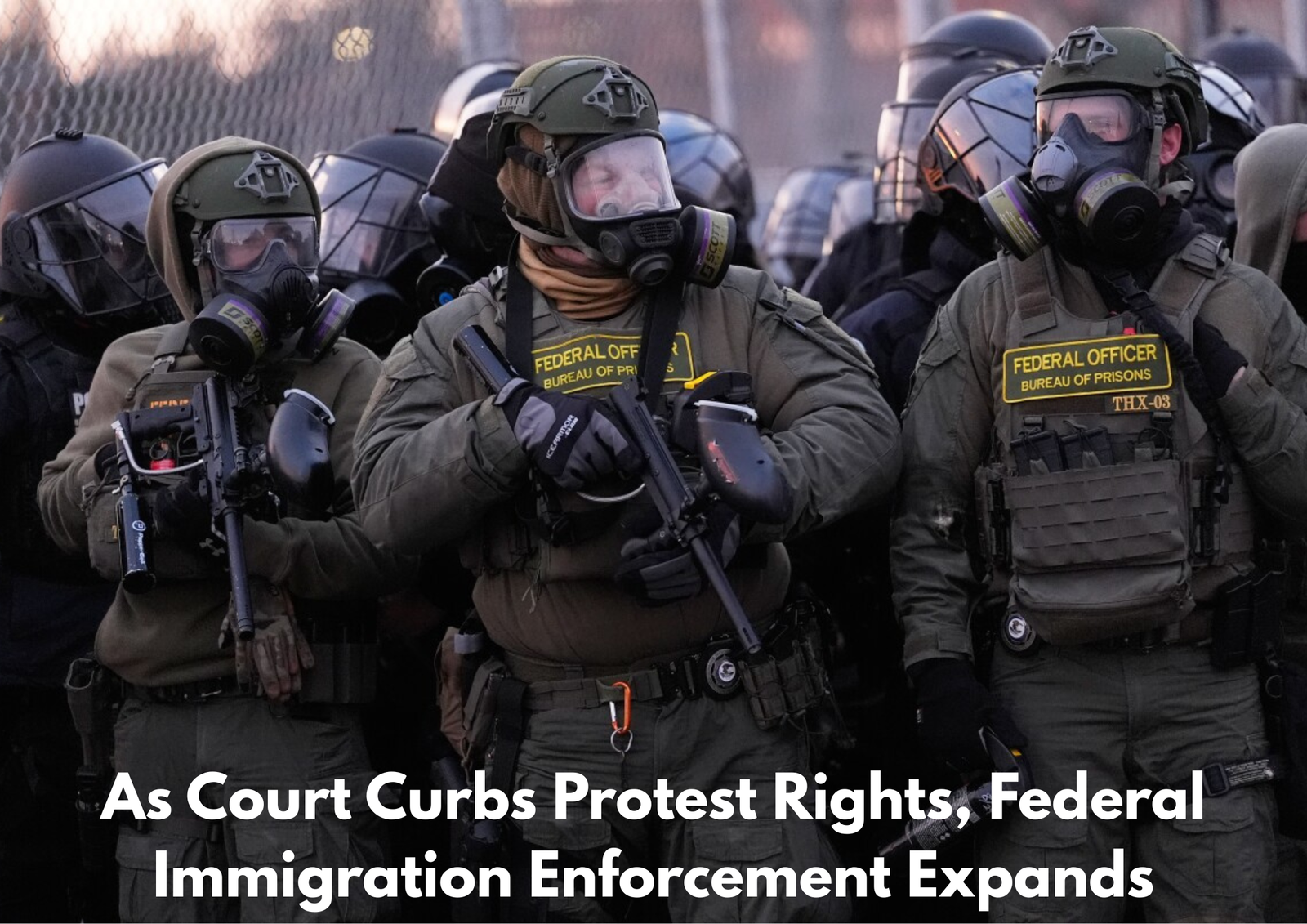
At the same time, a significant legal development unfolded in Minnesota. The 8th U.S. Circuit Court of Appeals temporarily lifted restrictions that had limited how federal officers could respond to protesters. The earlier ruling had barred the use of chemical agents such as tear gas or pepper spray against peaceful demonstrators. The appellate court’s stay now allows these methods while the case proceeds through the appeals process.
Following the decision, federal officers overseeing immigration operations in the Twin Cities were seen using crowd-control measures during demonstrations. Video footage circulated online showed officers warning demonstrators before deploying smoke canisters. The scenes sparked renewed debate over protest rights and law enforcement accountability.
The Minnesota enforcement effort, known as a large-scale urban operation, has been praised by federal officials and criticized by local leaders. U.S. Attorney General Pam Bondi welcomed the court’s decision, stating that the Justice Department would continue to support federal agents carrying out their duties. Supporters argue that the operation has led to thousands of arrests of individuals living in the country unlawfully, including those accused of serious crimes.
Advocacy organizations and local officials dispute those claims, saying there is limited transparency around arrest numbers and the severity of alleged offenses. Legal groups in Minnesota have raised concerns about due process, pointing to cases where charges were questioned or defendants were released after conflicting testimony.
One incident drawing particular attention involves the fatal shooting of a motorist during an enforcement encounter earlier this month. Federal authorities say the officer involved acted in self-defense, while community advocates have called for an independent investigation, citing video evidence that they say raises questions about the official account.
Political tensions have also risen. Federal subpoenas were issued to several state and local officials who oppose the enforcement campaign, seeking records related to their actions and communications. In response, a political action committee associated with Kamala Harris announced fundraising efforts to support Minnesota Governor Tim Walz amid the legal and political pressure.
As enforcement actions continue in both states, local governments are exploring measures to protect residents. In Minneapolis and Saint Paul, city council members have urged the state to consider temporary eviction protections, arguing that families should not be forced to choose between housing security and fear of detention.
The unfolding events highlight the growing divide between federal immigration authorities and state and local governments. With court challenges ongoing and community responses intensifying, immigration enforcement remains one of the most contested policy issues in the country, with implications for public safety, civil rights, and local economies nationwide.
Before you miss the bigger implications, read this in-depth blog on “Supreme Court Raises Doubts About Presidential Power to Remove Federal Reserve Governor” to understand what this decision could mean next.