
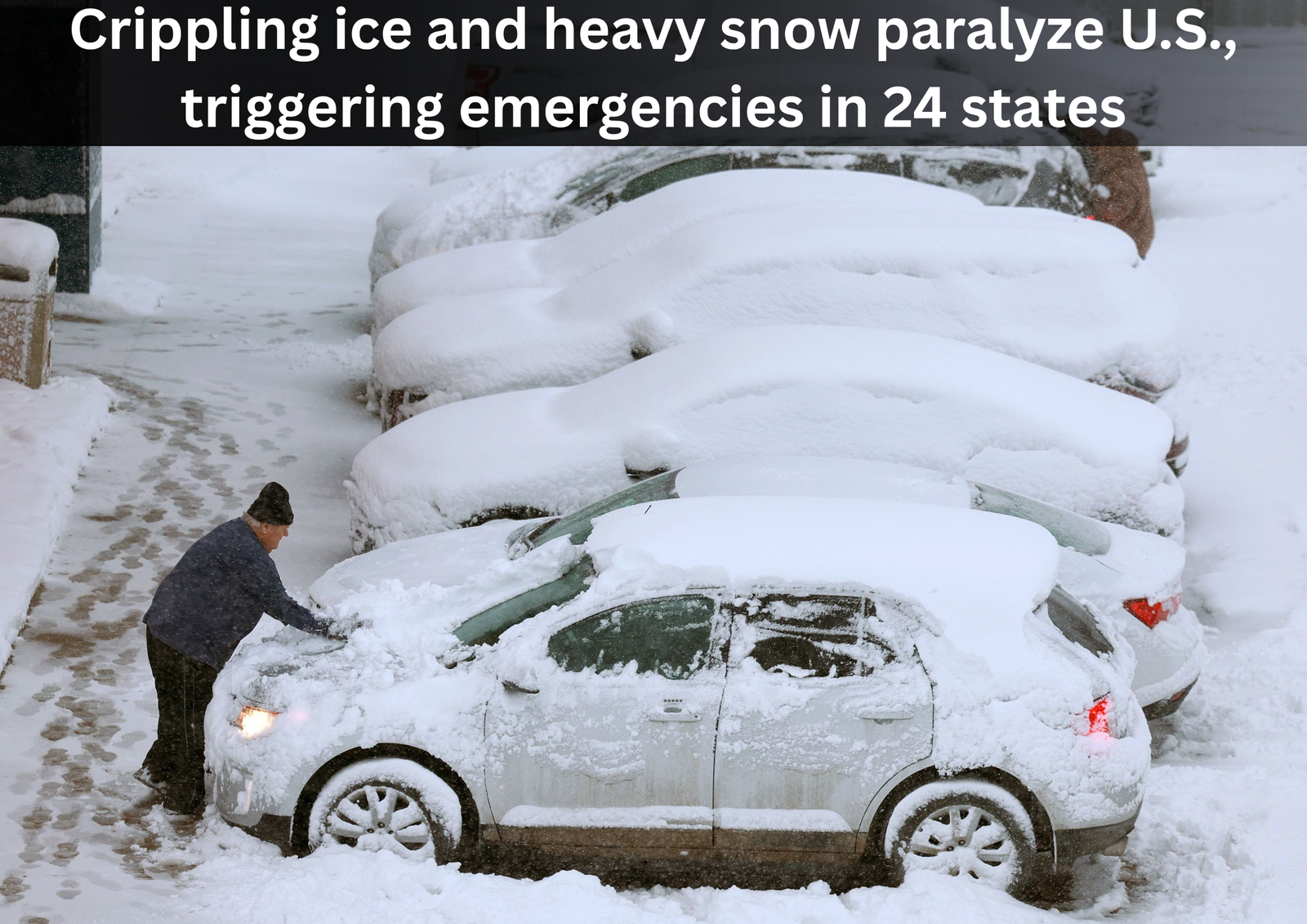
A powerful winter storm has brought large portions of the United States to a near standstill, unleashing a dangerous mix of heavy snow, ice, and extreme cold that has disrupted daily life for millions. The widespread system has caused extensive power outages, led to multiple fatalities, and triggered one of the most significant travel breakdowns seen in years.
The storm’s reach extended from the southern Rockies to the Northeast, impacting an estimated 245 million people. At least 24 states, along with Washington, D.C., declared states of emergency as officials raced to manage hazardous conditions and protect public safety.
Ice Damage and Widespread Power Outages
One of the storm’s most destructive elements has been severe ice accumulation, which weighed down power lines and snapped trees across several regions. Utility providers reported more than one million customers without electricity at the height of the storm, particularly in the South and mid-Atlantic.
Tennessee experienced extensive outages, with the Nashville area reporting large-scale infrastructure damage that left hundreds of thousands without power. Mississippi also saw significant disruptions, where ice-covered roads and fallen trees caused blackouts affecting roughly one in eight residents statewide. Energy officials warned that freezing temperatures and continued demand were placing immense pressure on power grids, potentially delaying full restoration for several days.
Residents were urged to conserve electricity where possible and to take precautions against cold exposure, especially in homes without heat.
Historic Air and Road Travel Disruptions
Transportation systems across the country were severely affected. U.S. airports reported tens of thousands of flight cancellations over the weekend, marking the largest wave of disruptions since the pandemic era. Some major airports temporarily halted operations altogether, while others saw the vast majority of scheduled flights grounded due to unsafe conditions.
Road travel proved equally dangerous. Heavy snowfall overwhelmed plowing efforts in parts of the Northeast and Midwest, while ice turned highways into slick, impassable routes in the South. Several states implemented emergency driving restrictions, including bans on commercial vehicles, after multiple accidents left cars stranded on major interstates.
Officials repeatedly urged drivers to stay off the roads unless travel was absolutely necessary.
Heavy Snowfall and Rare Weather Phenomena
The Northeast bore the brunt of the snowfall, with major cities recording some of their highest totals in years. Urban centers such as New York City and Boston saw snow measured in double digits, while surrounding areas faced prolonged whiteout conditions.
Further south, the storm delivered unusual weather events, including rare thunder-related winter precipitation in parts of Louisiana and tornado watches across portions of the Southeast. Meteorologists described the system as highly complex, combining winter hazards with severe weather risks more typical of warmer seasons.
Emergency Declarations and Public Closures
Governors across affected states activated emergency protocols, deploying National Guard units and opening warming shelters. Some state governments ordered remote work for non-essential employees, while local authorities suspended public services to reduce travel risks.
Schools and universities across dozens of major cities canceled in-person classes or shifted to online learning. Cultural institutions, libraries, and museums also closed temporarily as officials prioritized safety.
Health Risks and Safety Warnings
The storm’s intense cold has been linked to multiple deaths, underscoring the serious health risks posed by prolonged exposure. Authorities emphasized the dangers of hypothermia and carbon monoxide poisoning, particularly for residents using alternative heating sources during power outages.
Public safety agencies advised households to limit generator use to outdoor areas, avoid grills indoors, dress in layers, and seek medical attention at the first signs of cold-related illness.
Recovery Efforts Continue as Cold Lingers
Although the storm system began moving off the East Coast late Sunday, its aftermath is expected to persist. Crews face a long recovery process as icy conditions continue to complicate repairs and cleanup efforts.
Meteorologists warned that freezing temperatures could linger, slowing the restoration of power and normal travel. Officials encouraged residents to remain cautious, follow local guidance, and check on vulnerable neighbors as communities begin to recover from one of the most disruptive winter storms in recent memory.
For a detailed look at how Minneapolis sees widespread protests after the fatal shooting of a healthcare worker during a federal immigration action, make sure to read this blog before you go!