
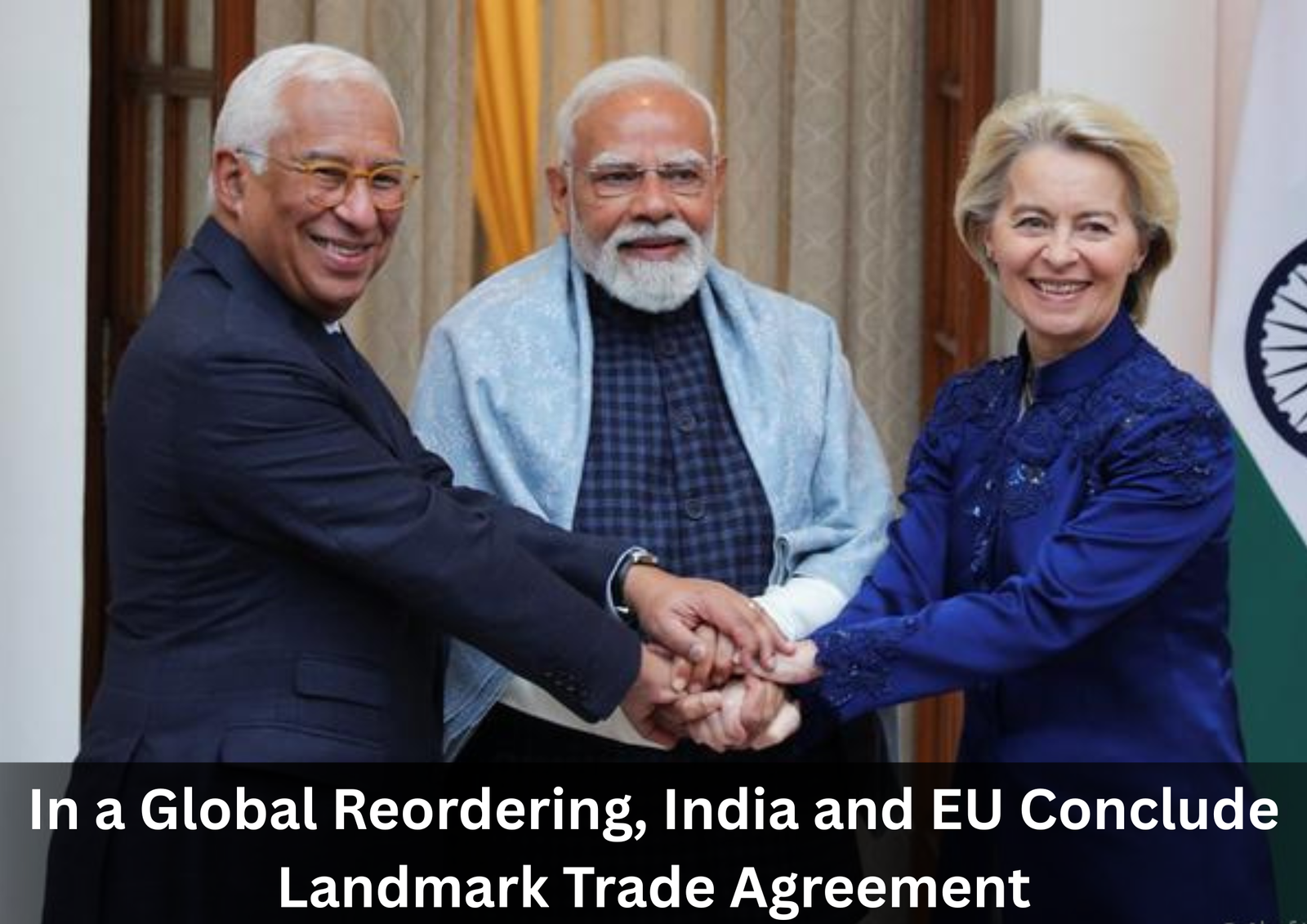
India and the European Union have reached a long-anticipated free trade agreement, marking one of the most significant economic partnerships in recent global trade history. The deal, concluded after nearly two decades of negotiations, establishes a vast free trade framework covering close to two billion people and signals a strategic shift amid rising global trade uncertainty.
The agreement strengthens commercial ties between two of the world’s largest economies at a time when protectionist measures and tariff disputes continue to reshape international trade. In 2024, bilateral trade between India and the EU exceeded $140 billion, positioning the European bloc as India’s largest trading partner. Officials expect the new pact to substantially expand that figure over the next decade by easing market access on both sides.
A central pillar of the agreement is the gradual removal of tariffs across most traded goods. The EU will phase out duties on nearly all Indian exports over several years, while India will significantly lower barriers on European products, including automobiles, industrial machinery, electrical equipment, chemicals, and metals. High import duties on premium European vehicles, wines, and spirits will be sharply reduced under a staged timeline, opening new opportunities for European manufacturers while increasing consumer choice in the Indian market.
Some politically sensitive agricultural sectors, including dairy, rice, sugar, beef, and soya, have been excluded from the deal to address domestic concerns on both sides. Despite these exclusions, trade analysts describe the agreement as one of the most comprehensive the EU has signed with a major emerging economy.
Beyond economics, the pact carries strong geopolitical weight. Both India and the EU are seeking to reduce exposure to volatile global trade policies, particularly as recent tariff actions by the United States have affected exporters worldwide. The agreement is widely viewed as a move toward diversifying supply chains and reinforcing economic resilience in an increasingly fragmented global order.
European leaders have emphasized that the deal supports strategic autonomy while preserving long-standing transatlantic relationships. Indian officials, meanwhile, have highlighted the agreement’s role in strengthening supply chains, boosting exports, and supporting long-term growth without compromising national interests.
The accord also includes cooperation on sustainability and climate goals. The EU has committed financial support to assist India in reducing greenhouse gas emissions, although Indian exporters will continue to face environmental compliance measures such as the Carbon Border Adjustment Mechanism once implemented.
Before taking effect, the agreement must undergo legal finalization and ratification by EU member states and the European Parliament, a process expected to take several months. While observers note potential political hurdles during ratification, both sides have expressed confidence in securing approval.
If implemented as planned, the India–EU trade agreement could redefine economic engagement between developed and emerging markets, offering a new model for large-scale cooperation in an era of global trade realignment.
Don’t miss the full breakdown in “Carney Denies Retreat on Davos Remarks After U.S. Treasury Secretary’s Claim”-read this blog to understand the political stakes, reactions, and what it could mean going forward.