
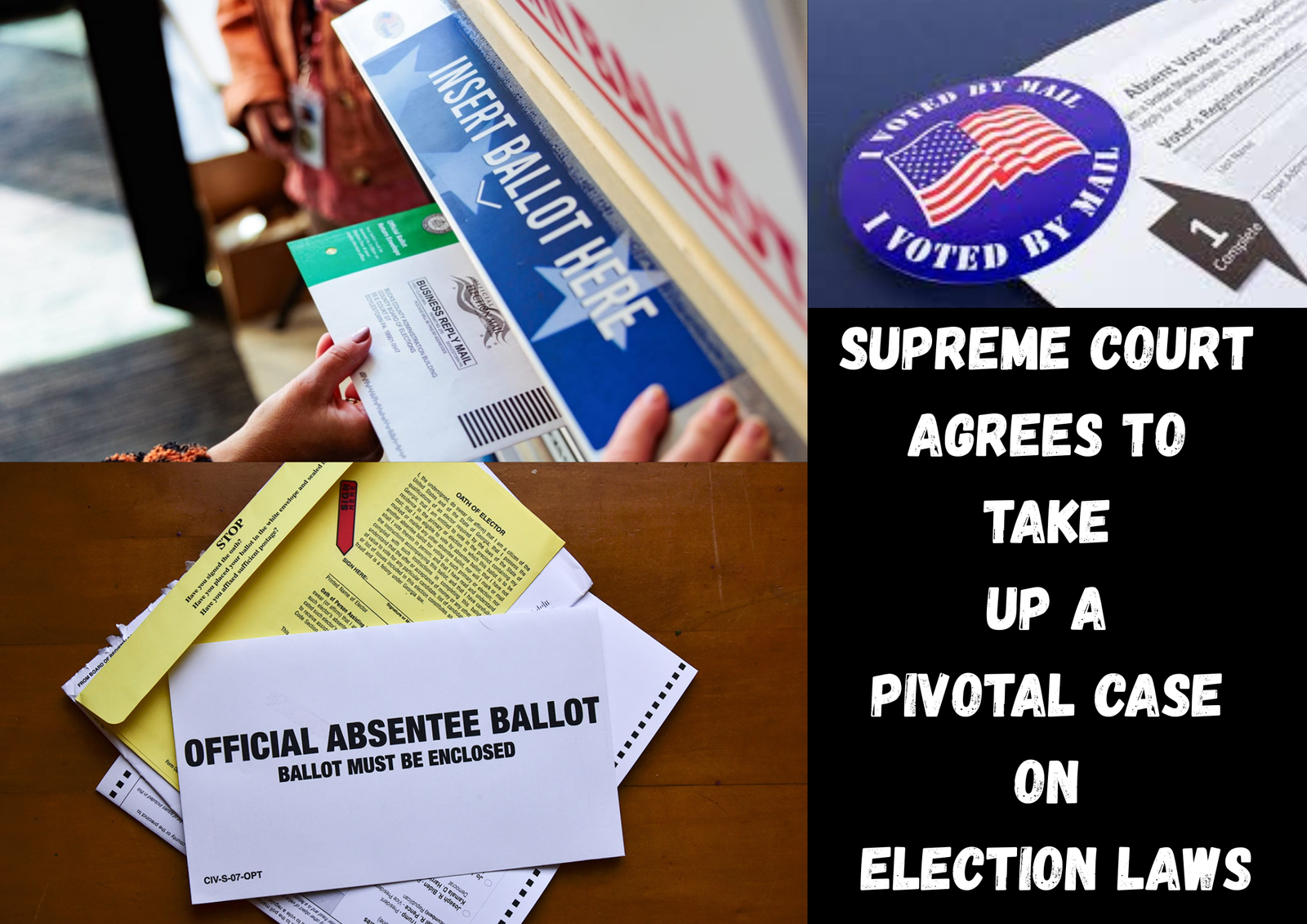
The U.S. Supreme Court has agreed to review a landmark case that could redefine how Americans vote by mail in upcoming elections. Originating from Mississippi, the case challenges long-standing rules requiring voters to have their mail-in ballots witnessed or notarized before submission – a provision struck down by lower courts as unconstitutional.
The dispute, titled Watson v. Republican National Committee, began when a federal judge ruled that Mississippi’s witness requirement placed an undue burden on voters, especially during health emergencies such as the COVID-19 pandemic. The 5th U.S. Circuit Court of Appeals later upheld that decision, prompting Republican groups to escalate the issue to the nation’s highest court.
At the heart of the case lie two pivotal questions. First, whether states can lawfully mandate that mail-in ballots be verified by witnesses or notaries. Second, what constitutional standards should apply when courts evaluate laws that affect the right to vote. The latter could have sweeping implications for how judges nationwide interpret voting restrictions under the Equal Protection Clause.
Election law experts suggest that the Court’s decision-expected by June 2026-may become one of the most consequential rulings in recent history. Depending on the outcome, it could either broaden access to mail-in voting or reinstate tighter verification rules in states that have rolled back pandemic-era voting reforms. Currently, at least 19 states enforce some form of witness or notarization requirement, all of which could be directly impacted.
The case also reignites the ongoing national debate between voter access and election security. Opponents of Mississippi’s rule argue that requiring a witness or notary creates unnecessary barriers for seniors, disabled voters, and residents in remote communities. Supporters, however, insist that such measures are vital to maintaining the integrity of elections and preventing potential fraud.
Oral arguments are expected to take place in the spring of 2026, with a decision likely before the Court’s summer recess. Whatever the outcome, the ruling will shape how millions of Americans cast their votes in the 2026 midterm elections-and may set a lasting precedent for election laws across the United States.