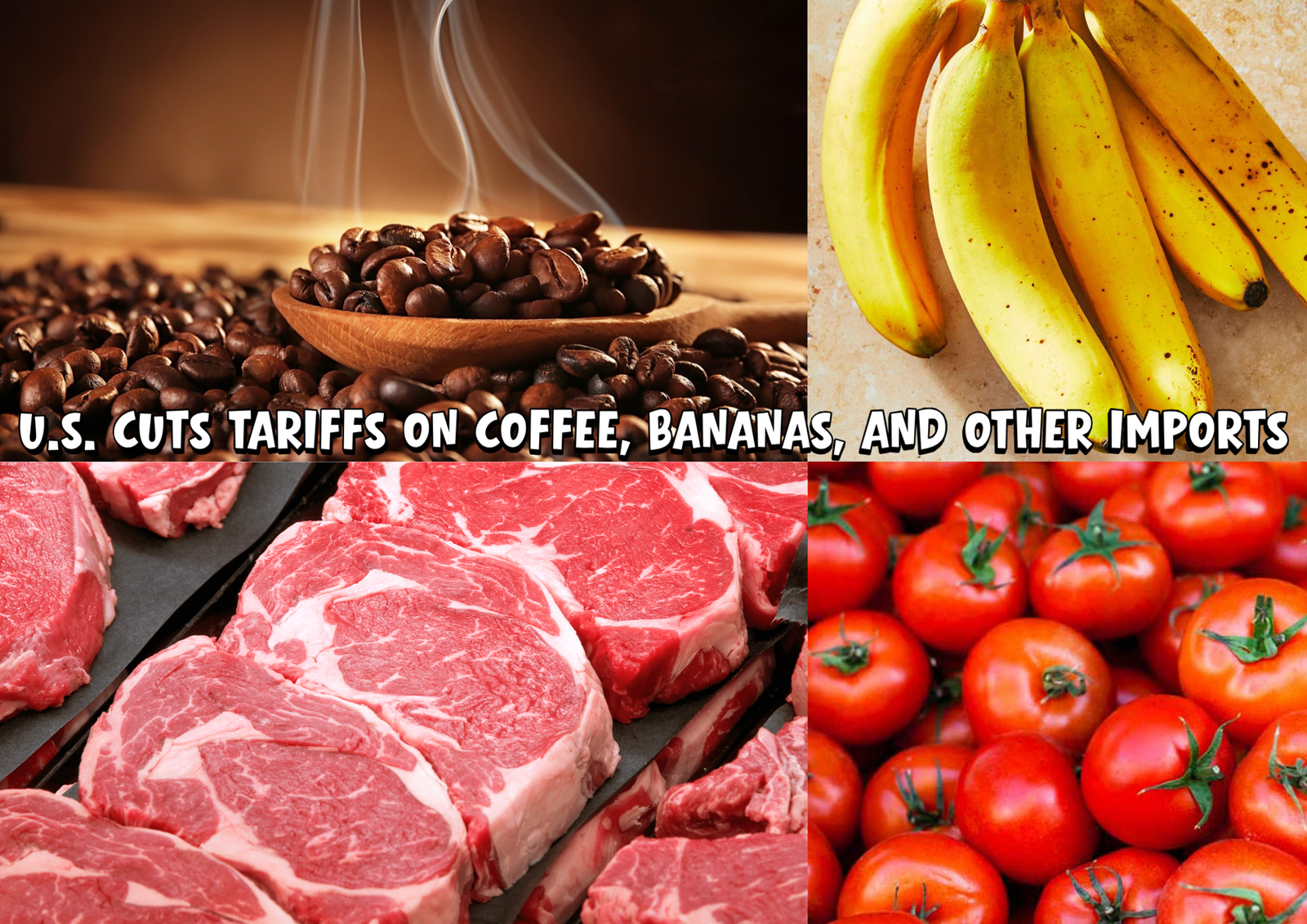
The Trump administration has rolled out a pair of trade measures that push U.S. markets in sharply different directions, creating uncertainty for consumers and import-dependent industries. On one hand, a new blanket 10 percent tariff has been placed on the majority of imported goods, a sweeping policy the White House describes as a cornerstone of its effort to bolster domestic manufacturing. At the same time, selected food imports-including coffee, beef, bananas, and other fresh produce-are receiving targeted tariff cuts meant to ease grocery costs.
The contradictory nature of the policies has sparked debate among economists, who note that the broad tariff hike is likely to raise prices across multiple sectors, including food production and distribution. While the reductions on certain agricultural items may soften some of that impact, analysts caution that the relief is limited and uneven.
Business groups are expressing concern that the mixed approach complicates planning for importers and retailers. Many companies rely on predictable price structures, and the combination of universal increases with selective reductions has left supply chains unsettled.
Administration officials insist the strategies are not at odds. According to trade advisers, the goal is to support American industries through long-term protective measures while preventing a sharp rise in supermarket prices that could affect households in the short term.
Critics, meanwhile, argue that the policies highlight a lack of direction in Washington’s broader trade agenda. With both protective and price-stabilizing mechanisms being introduced simultaneously, they say the long-term effects could be difficult to manage and may strain relationships with trading partners.
As the policies take effect, consumers are likely to experience a mix of upward and downward price shifts, depending on the products they buy. Economists expect several weeks of market adjustment before the full impact becomes clear, but many agree that the conflicting strategy marks a significant change in how the United States is approaching global trade.