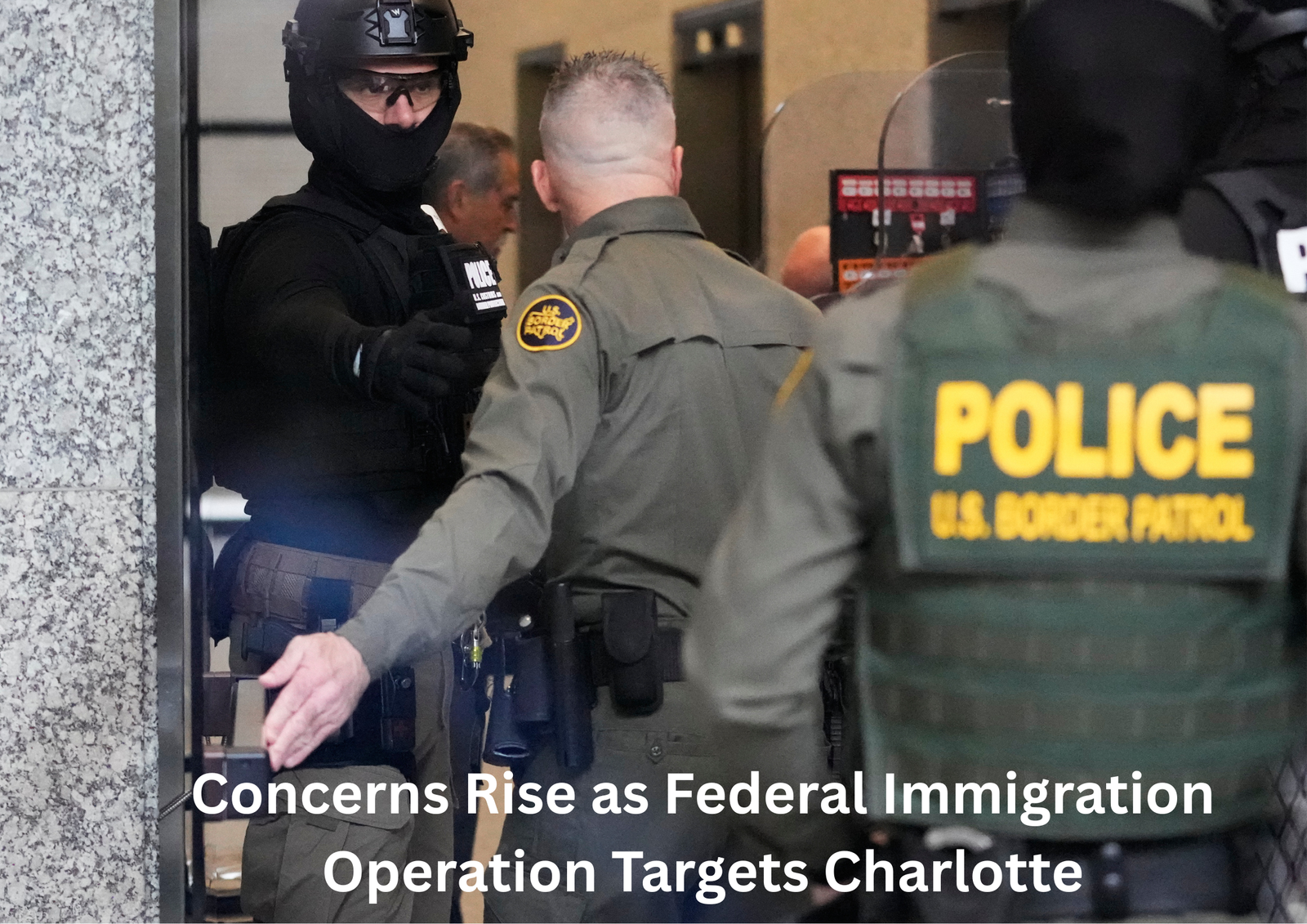
Federal immigration authorities are preparing to carry out a targeted enforcement operation in Charlotte, North Carolina, drawing attention from community members, city officials, and immigrant-rights advocates. The mission, confirmed by multiple local and federal sources, involves the temporary deployment of U.S. Border Patrol agents to support immigration enforcement efforts inside the city.
Mecklenburg County Sheriff Garry McFadden publicly disclosed the planned operation after being notified by federal officials. According to his statement, around two dozen agents will assist in the enforcement push, which is part of a broader federal strategy involving several cities across the country. New Orleans is among the other locations expected to see similar action in the coming days.
Federal authorities say the operation is aimed at identifying individuals without legal immigration status, particularly those who were recently released from local jails or have past criminal arrests. A federal document reviewed by local reporters indicates the effort is scheduled to last for about ten days, marking one of the more visible immigration operations in the region under the Trump administration.
Charlotte’s city government quickly addressed the concerns circulating through the community. Mayor Vi Lyles and the Charlotte City Council issued a joint statement clarifying that the city does not take part in enforcing federal immigration laws. They emphasized that the operation is entirely federal and that Charlotte’s own public safety agencies remain focused on building trust with residents, regardless of immigration status.
The announcement has sparked anxiety among many families, particularly within neighborhoods with large immigrant populations. Local advocacy groups have urged residents to stay informed while city leaders continue to highlight their commitment to maintaining a welcoming environment. Officials reiterated that the primary mission of the Charlotte-Mecklenburg Police Department is community safety, not immigration enforcement.
Charlotte is one piece of a larger national effort as federal agencies renew their focus on interior immigration actions far from the U.S. border. With several cities expecting similar operations, the developments in Charlotte may offer early insight into how communities nationwide will respond to increased federal enforcement activity.