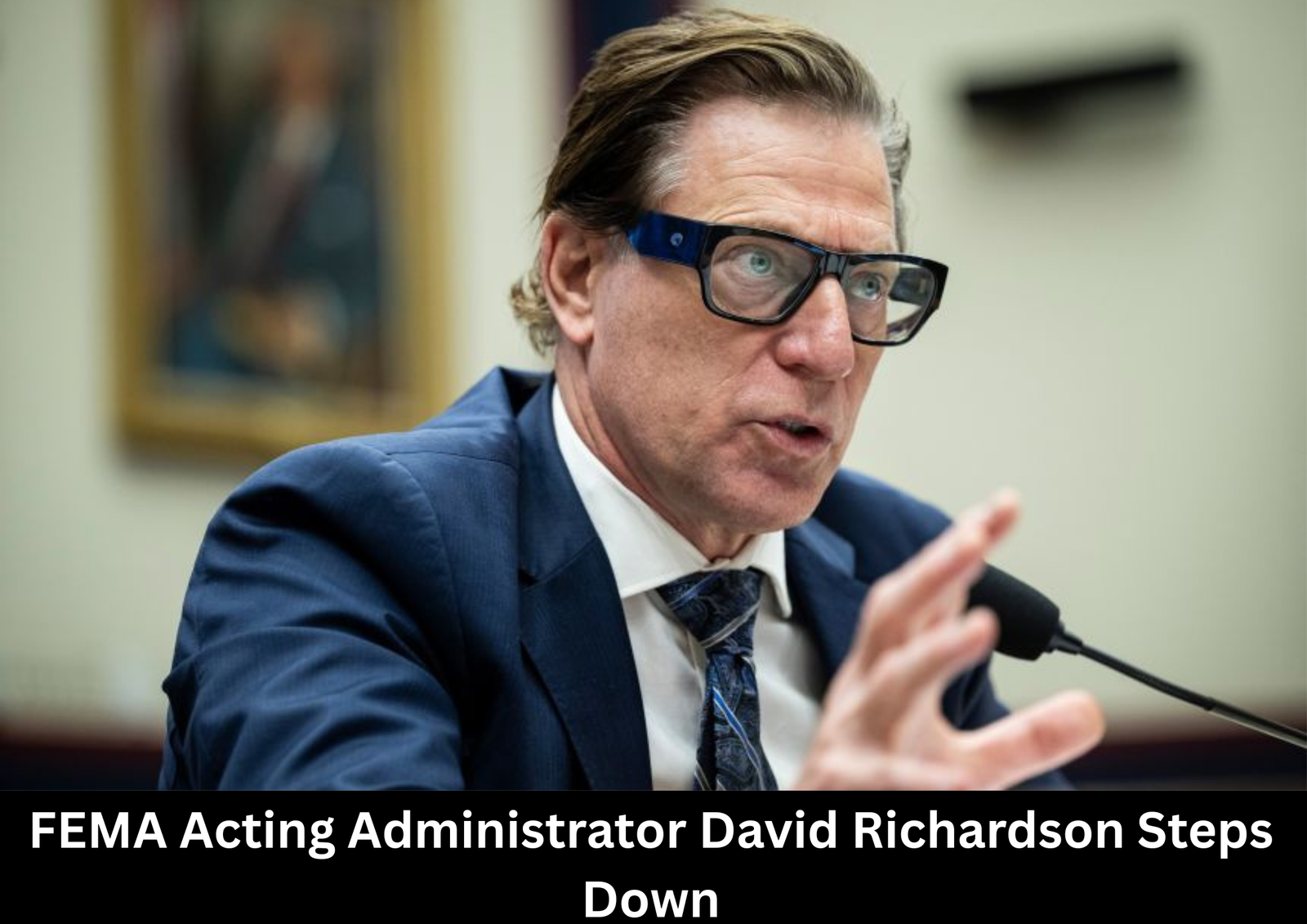
David Richardson, who has served as the acting administrator of the Federal Emergency Management Agency for nearly a year, abruptly resigned on Monday, marking a significant leadership shift at a time when the agency is considering one of the most consequential structural changes in its history.
Richardson, a longtime emergency-management official, announced that he is leaving government service to return to the private sector. His resignation took effect immediately. In a brief internal message, he thanked FEMA staff for their “resilience and commitment” during a year marked by major hurricanes, widespread flooding, and escalating wildfire seasons.
FEMA Chief of Staff Karen Evans has been appointed to serve as the new acting administrator. Evans, a career emergency-response strategist, is expected to oversee ongoing disaster operations while guiding FEMA through a period of strategic debate within the Biden administration.
Richardson’s departure coincides with internal discussions over a proposal to move FEMA’s headquarters – along with hundreds of senior personnel – from Washington, D.C., to Texas. The idea, which remains under review, is framed as an effort to place the agency’s top decision-makers closer to regions that face frequent and severe natural disasters.
Supporters of the move argue that shifting operations to a disaster-prone state would improve coordination and on-the-ground responsiveness. Critics, however, warn that distancing FEMA from other federal agencies in Washington could complicate intergovernmental crisis management.
No final decision has been made, but officials familiar with the proposal say it has gained renewed attention amid increasing climate-related emergencies across the Gulf Coast and Southwest.
Evans is expected to brief White House officials later this week on FEMA’s leadership transition and the status of relocation deliberations, according to people familiar with the matter.
Richardson’s exit leaves open questions about how the agency will navigate a challenging period of overlapping disasters and major policy considerations. For now, FEMA’s work continues under new interim leadership – with the possibility of a geographic shake-up still looming.