A new nationwide survey indicates that most Americans do not support the ongoing U.S. attempt to assume control over Greenland from Denmark, revealing a significant gap between public opinion and the foreign policy ambitions of the Trump administration. The development comes as diplomatic negotiations between Washington, Copenhagen, and Nuuk remain stalled.
Public Resistance Reflected in Polling
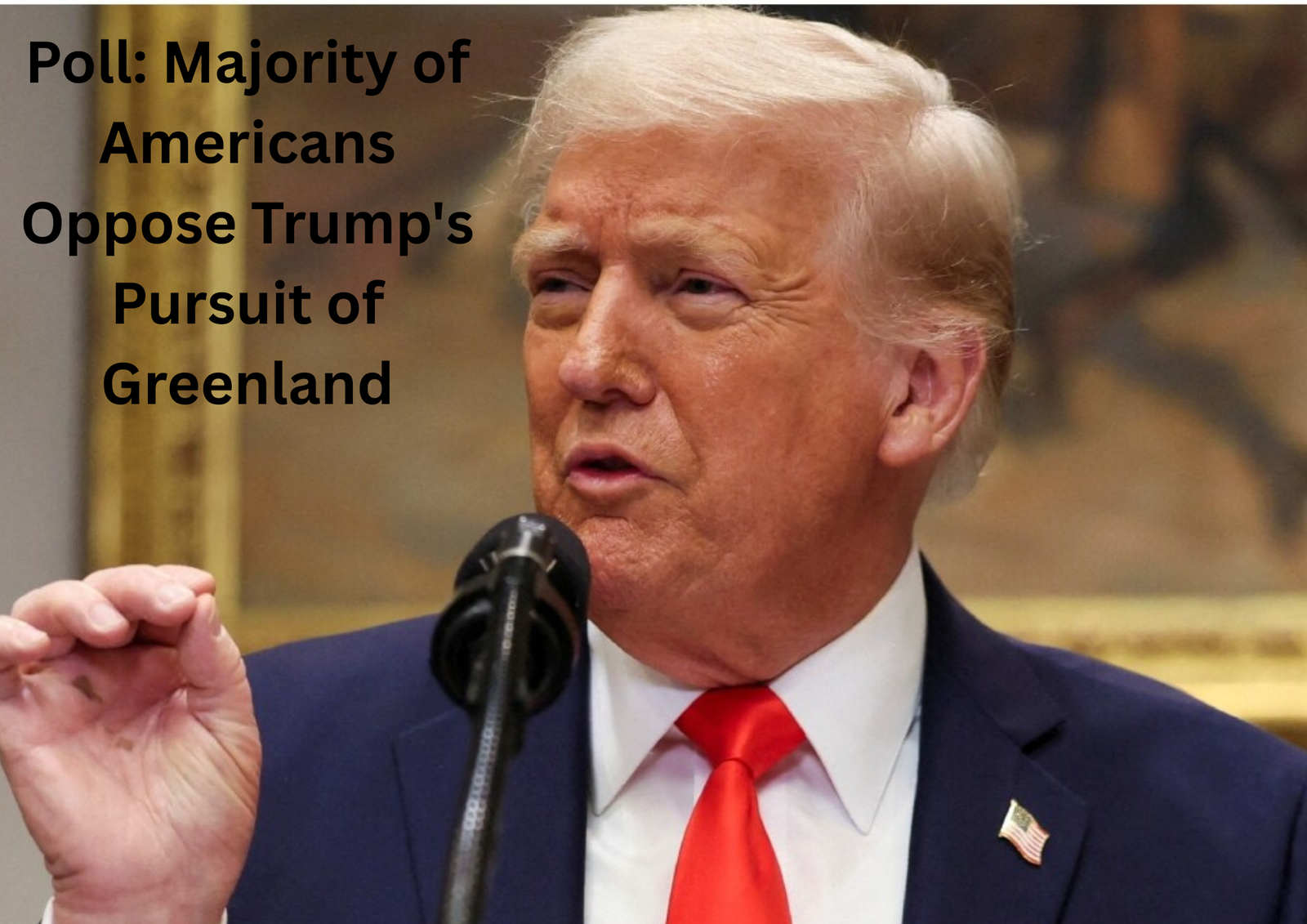
The poll, conducted earlier this month, found that three out of every four adults oppose the United States “attempting to take control of Greenland,” and more than half of respondents expressed strong opposition. Support for the move sits at 25 percent. The numbers show clear partisan sorting: nearly all Democratic respondents disapproved, while Republican participants were evenly divided.
Talks End Without Breakthrough
Diplomats from Denmark and Greenland met with senior U.S. officials at the White House on January 14, yet talks concluded without resolution. Danish Foreign Minister Lars Løkke Rasmussen said the two sides remain at odds on fundamental issues of sovereignty, calling any arrangement that sidelines territorial rights unacceptable. U.S. officials countered that American control of Greenland would strengthen NATO defenses and offer the island increased protection in a rapidly changing Arctic environment.
Concerns Over Presidential Authority Abroad
The survey results also highlight increasing public skepticism about the president’s broader foreign policy strategy. A majority believes President Trump has expanded U.S. power beyond reasonable limits, with more than half saying his reliance on military tools has gone too far. Americans are similarly split on recent U.S. military involvement in Venezuela, and most doubt it will deliver long-term stability.
A Century of Strategic Interest
Washington’s attention toward Greenland has historic roots. The United States first engaged with the island in the late 19th century and later secured military access during World War II to block the possibility of Nazi intervention. The Cold War deepened that relationship, leading to the establishment of major installations such as Thule Air Base and subterranean research outposts including the now-abandoned Camp Century, which still contains hazardous waste now threatened by climate-driven ice melt.
Geopolitical Risks Loom
Foreign policy experts warn that forcing control over Greenland could fracture the NATO alliance, providing geopolitical openings for U.S. rivals. Analysts note that a weakened or fractured NATO would benefit Russia and could heighten tensions across Europe. Concerns also include the possibility that a distracted United States might embolden China to escalate pressure on Taiwan. Despite these warnings, White House officials argue that no country would challenge the United States militarily over Greenland.
Climate and Development Challenges
The island is also undergoing rapid environmental transformation. Greenland’s ice sheet is melting at accelerating rates, holding enough water to raise sea levels by more than 20 feet. Melting has damaged infrastructure, destabilized permafrost, increased landslide events, and exposed new terrain where critical minerals are believed to be located. However, commercial extraction remains difficult due to the terrain and harsh climate.Political Pushback and Allied Response
In Congress, bipartisan lawmakers have introduced legislation that would forbid federal funding for any attempt to annex, blockade, or occupy the territory of a NATO ally without consent. European allies have also taken notice. Denmark has reinforced its military posture in Greenland, and other NATO nations are weighing deployments to the island as a symbolic defense of the alliance.
Curious about how Governor Polis Outlines Housing, Tax, and Education Priorities in Final State of the State Speech? Dive into my detailed blog post for the full insights!