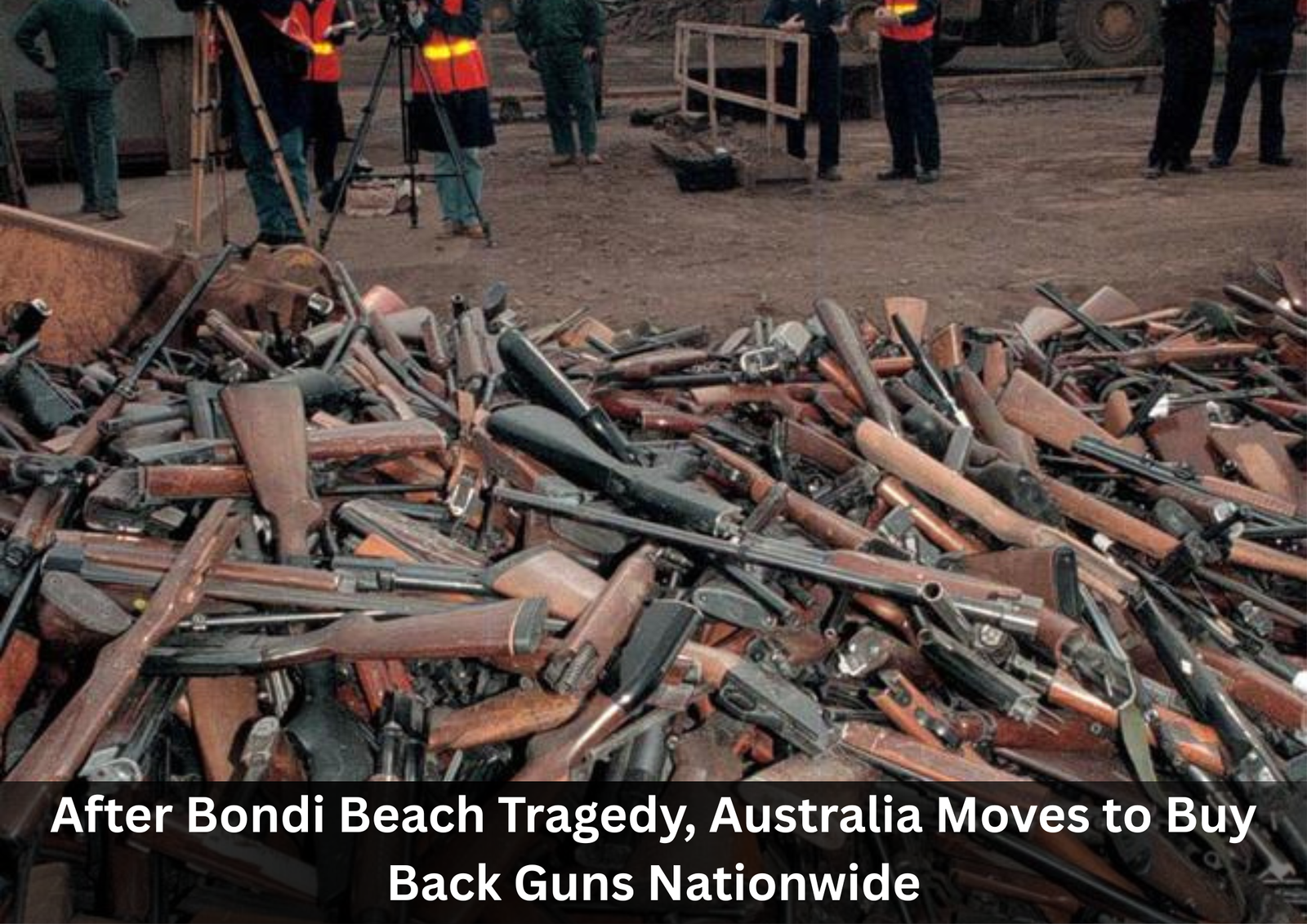
Australia has announced a new nationwide gun buyback program and declared a National Day of Reflection following a deadly shooting at a public Hanukkah gathering on Sydney’s Bondi Beach. The attack, which claimed 15 lives, has shaken the country and prompted renewed debate over firearm regulation, public safety, and extremism.
The incident occurred on the evening of December, when two armed individuals opened fire on a crowd assembled for a religious celebration near the shoreline. Police responded within minutes, killing one suspect at the scene and critically injuring the second, who later survived and has since been charged with multiple counts of murder and terrorism-related offenses.
Authorities have stated that investigators are treating the shooting as a terror-motivated act fueled by antisemitic ideology. Law enforcement officials confirmed that extremist materials were discovered during the investigation, intensifying concerns about radicalization and domestic security threats.
National Mourning and Public Remembrance
In response to the tragedy, federal and state leaders designated December 21 as a National Day of Reflection. Australians across the country were asked to observe a minute of silence at the exact time the shooting began one week earlier.
Major landmarks lowered flags to half-staff, while memorials emerged across Sydney, particularly near Bondi Beach, where flowers, candles, and handwritten messages were placed by members of the public. Community and faith leaders led remembrance ceremonies emphasizing unity, compassion, and resilience in the face of violence.
Government Moves to Strengthen Gun Laws
Prime Minister Anthony Albanese announced a comprehensive gun buyback initiative aimed at removing a large number of privately held firearms from circulation. The program marks the most significant firearm reform effort since the landmark measures introduced after the 1996 Port Arthur massacre.
According to officials, the proposed reforms may include limits on the number of firearms an individual can own, tighter license reviews, enhanced information sharing between agencies, and stricter eligibility requirements for gun ownership. The government also confirmed plans to accelerate the development of a long-delayed national firearms registry.
While Australia is internationally recognized for having strict gun laws, recent data indicates that firearm ownership has increased steadily over the past two decades, with millions of registered weapons now in civilian hands.
Broader Security and Hate Crime Measures
Beyond gun reform, the federal government has ordered a comprehensive review of intelligence and law enforcement coordination to assess whether existing systems adequately identify and monitor extremist threats.
Separately, New South Wales officials announced forthcoming legislation to prohibit the public display of symbols associated with designated terrorist organizations. The move comes amid growing concern from community groups over rising hate incidents and the spread of extremist ideology.
Community Reaction and Ongoing Recovery
Leaders from Australia’s Jewish community expressed grief and frustration, calling for sustained action against hate-driven violence. Gun safety advocates welcomed the buyback announcement, while some sporting and recreational shooting groups cautioned against broad restrictions, arguing that enforcement and prevention should remain the focus.
Bondi Beach has since reopened, with surf lifesavers returning to patrol after a period of closure. Several victims remain hospitalized, though officials report that most are in stable condition.
As memorials continue and investigations proceed, national leaders have emphasized the importance of collective healing while reaffirming a commitment to public safety.
The tragedy has once again placed Australia at a crossroads, balancing its legacy of gun reform with emerging challenges posed by extremism and social division-issues the nation now confronts with renewed urgency.