
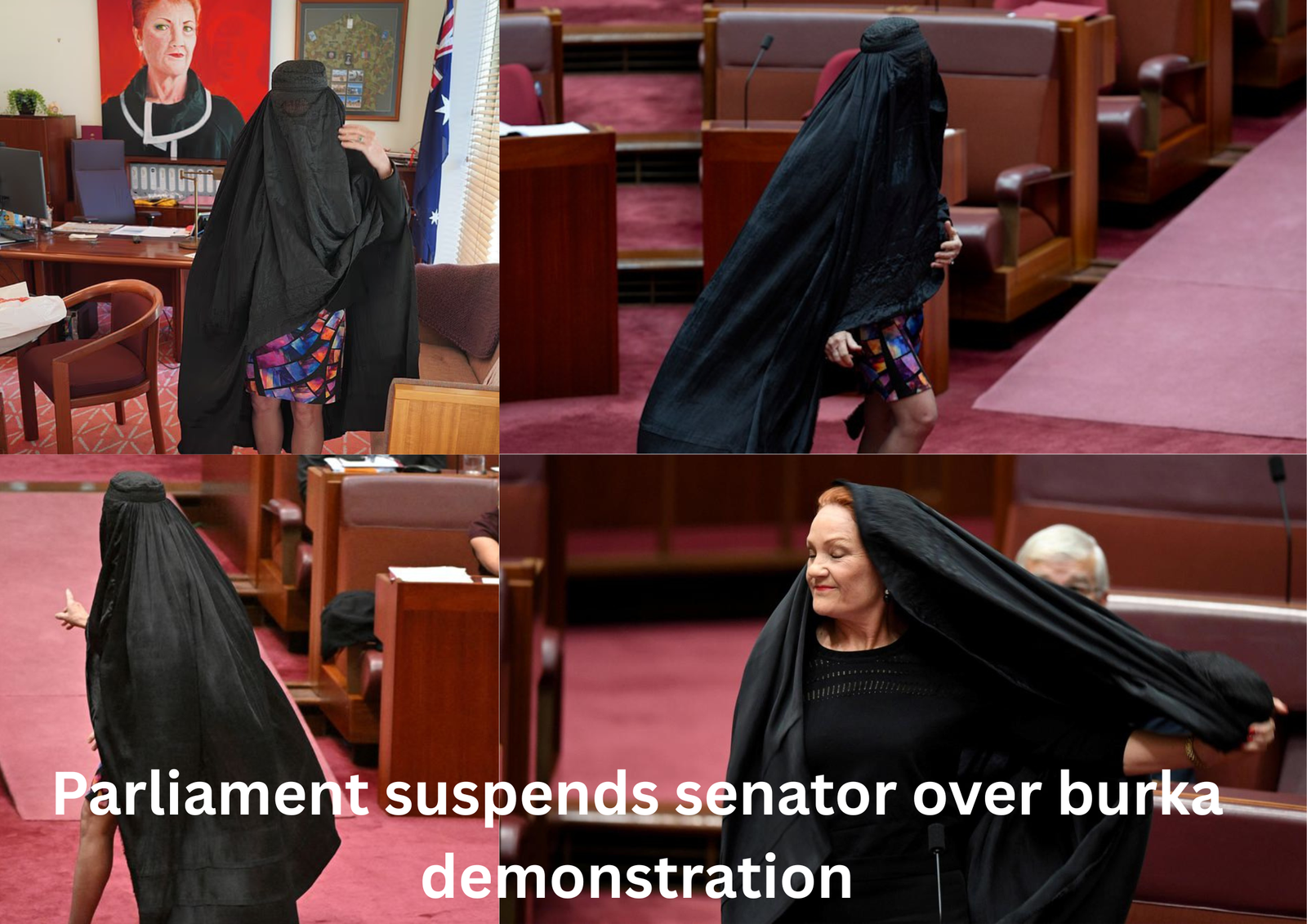
Australian politics faced renewed tension this week after Senator Pauline Hanson was suspended from the upper house for staging a controversial protest that saw her walk into the Senate chamber wearing a full-face burqa.
The incident unfolded on Monday during a routine parliamentary session. Hanson, who leads the right-wing One Nation party, entered the chamber dressed in a long black burqa and glove before removing the garment at her seat. She used the moment to argue that full-face coverings pose security risks and hinder identification in public spaces.
Her actions immediately drew criticism from across the political spectrum. Senators interrupted proceedings to label the stunt disrespectful and racially charged. Greens Senator Mehreen Faruqi, the chamber’s first Muslim woman, condemned the display as a “deliberate attempt to spread fear,” adding that it reflected deeper issues of intolerance in Australian politics.
By Tuesday morning, senators voted overwhelmingly to suspend Hanson for one week, citing contempt of Parliament and inappropriate conduct. Parliamentary leaders said the move was necessary to reinforce standards of behavior inside the chamber.
Facing backlash, Hanson defended the protest as a demonstration of what she insists is a security vulnerability. She argued that anyone could conceal their identity under such clothing and insisted her act targeted policy, not religion. Her explanation did little to soften criticism from government and opposition figures.
The incident has reignited debate over religious expression, security policies, and long-standing cultural tensions. Hanson, widely known for her hardline stance on immigration and multiculturalism, has been suspended before – most recently after refusing to leave the chamber during a heated dispute.
Despite the uproar, the government confirmed it does not plan to pursue any national ban on full-face coverings. Political analysts say the controversy may have a lasting impact, intensifying discussions about the responsibilities of elected officials and the boundaries of political protest.


