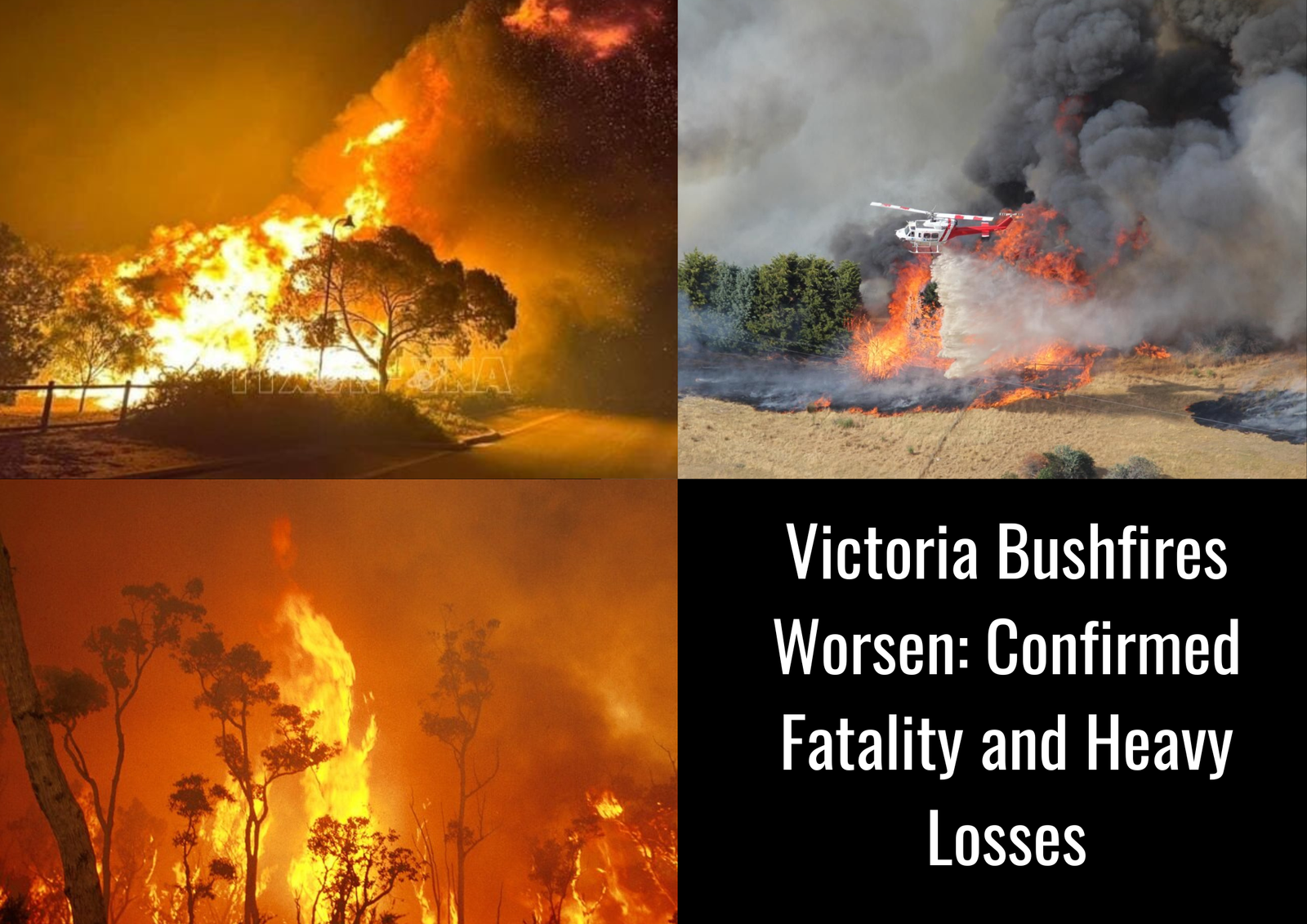
Victoria is in the grip of a severe bushfire disaster, with authorities confirming one fatality, hundreds of structures destroyed, and vast landscapes burned in what is being described as the most extreme fire emergency since the historic 2019–2020 season. Nearly 900,000 acres have already been consumed as hot, dry and windy conditions fuel dozens of blazes across the state.
Communities Under Emergency Measures
A statewide emergency was declared following days of escalating fire activity. Officials report that at least 350 buildings have been lost, though emergency crews expect that figure to climb as isolated regions become accessible and damage inspections continue. The fires, ignited after lightning storms swept through during record temperatures, remain active in multiple districts.
Victorian Premier Jacinta Allan confirmed that 12 major fires were still burning as of Monday, prompting mass evacuations across rural towns and farming communities as fire fronts shifted in unpredictable patterns.
Fatality Confirmed and Local Trauma
Authorities confirmed the death of a man north of Melbourne, where human remains were found near a vehicle discovered off a roadside. A separate incident in Harcourt involving a man in his 60s is under investigation after he died during a suspected medical emergency while fires burned nearby. Entire neighborhoods are reporting losses, including volunteer firefighters who saw their own homes destroyed while defending others.
Premier Allan called the situation devastating, saying the emotional toll on small towns had been “immeasurable” as families fled and properties burned.
Widespread Damage Across Small Townships
The destruction stretches across western and north-central Victoria. Natimuk saw at least 30 homes lost to the Grass Flat fire. The Longwood fire corridor, running through Euroa and Yarck, has accounted for more than 150 destroyed structures, while Streatham recorded 59 lost buildings, including numerous residential homes.
Additional losses include:
- 47 homes and 3 businesses across Ravenswood and Harcourt
- Livestock deaths and agricultural damage in Walwa
- Outbuildings and sheds destroyed in Mount Mercer
- Single-property losses in Kennedys Creek and Dargo
Emergency officials caution that many rural losses involve farms, fencing, livestock and equipment that will require long-term recovery and financial assistance.
Firefighting Response and Weather Outlook
More than 70 firefighting aircraft and thousands of personnel continue to operate across the region. Cooler temperatures brought brief relief over the weekend, enabling crews to contain several major fronts. Even so, warnings remained active for Walwa and for the Carlisle River area, where residents were instructed to shelter in place.
CFA Chief Officer Jason Heffernan warned that the season is far from over, noting that significant heat and wind conditions may return later in the month. A statewide fire ban remains in force.
Government Assistance and Recovery Measures
Both state and federal governments have mobilized support in an effort to stabilize affected communities. A recovery appeal has been launched to consolidate donations, while uninsured households will become eligible for grants up to $52,250 to help rebuild primary homes. Community funding will also be offered for events promoting emotional and mental health recovery starting January 16.
Counseling services, financial assistance programs, and business support initiatives are being expanded, particularly for farming communities facing the dual challenge of structural damage and livestock losses.
Broader Environmental & Climatic Context
Experts emphasize that although single bushfire events cannot be attributed exclusively to climate change, rising temperatures and prolonged drought cycles are increasing the likelihood and intensity of Australia’s fire seasons. Smoke has also spread across Victoria, impacting air quality as far as metropolitan Melbourne.
The current emergency marks the most destructive fire period in south-eastern Australia since the devastating “Black Summer” season that killed 33 people and burned millions of hectares in 2019–2020.
Read this blog to understand why Meta removed over half a million accounts as Australia enforces its under-16 social media ban. I will post this in my other blog.