Bangladesh is experiencing heightened tension and nationwide security alerts following the death of prominent student activist Sharif Osman Hadi, an event that has ignited widespread protests, violent clashes, and political uncertainty just weeks before a critical national election.
The interim government has declared a day of national mourning as demonstrators across major cities demand justice for the 32-year-old leader, whose fatal shooting has become a rallying point for student movements and opposition voices.
A Killing That Reignited a Movement
Sharif Osman Hadi, spokesperson for the student-led platform Inqilab Mancha, died Thursday in a Singapore hospital after spending nearly a week on life support. He had been shot in the head by unidentified assailants in Dhaka on December 12, an attack that shocked the nation and raised fears of political violence returning to the streets.
Hadi rose to national prominence during the July 2024 student uprising that ultimately led to the removal of then-Prime Minister Sheikh Hasina. In recent months, he had announced plans to contest the upcoming February 2026 elections, positioning himself as a symbol of youth-driven political change.
Protests Turn Violent Across Cities
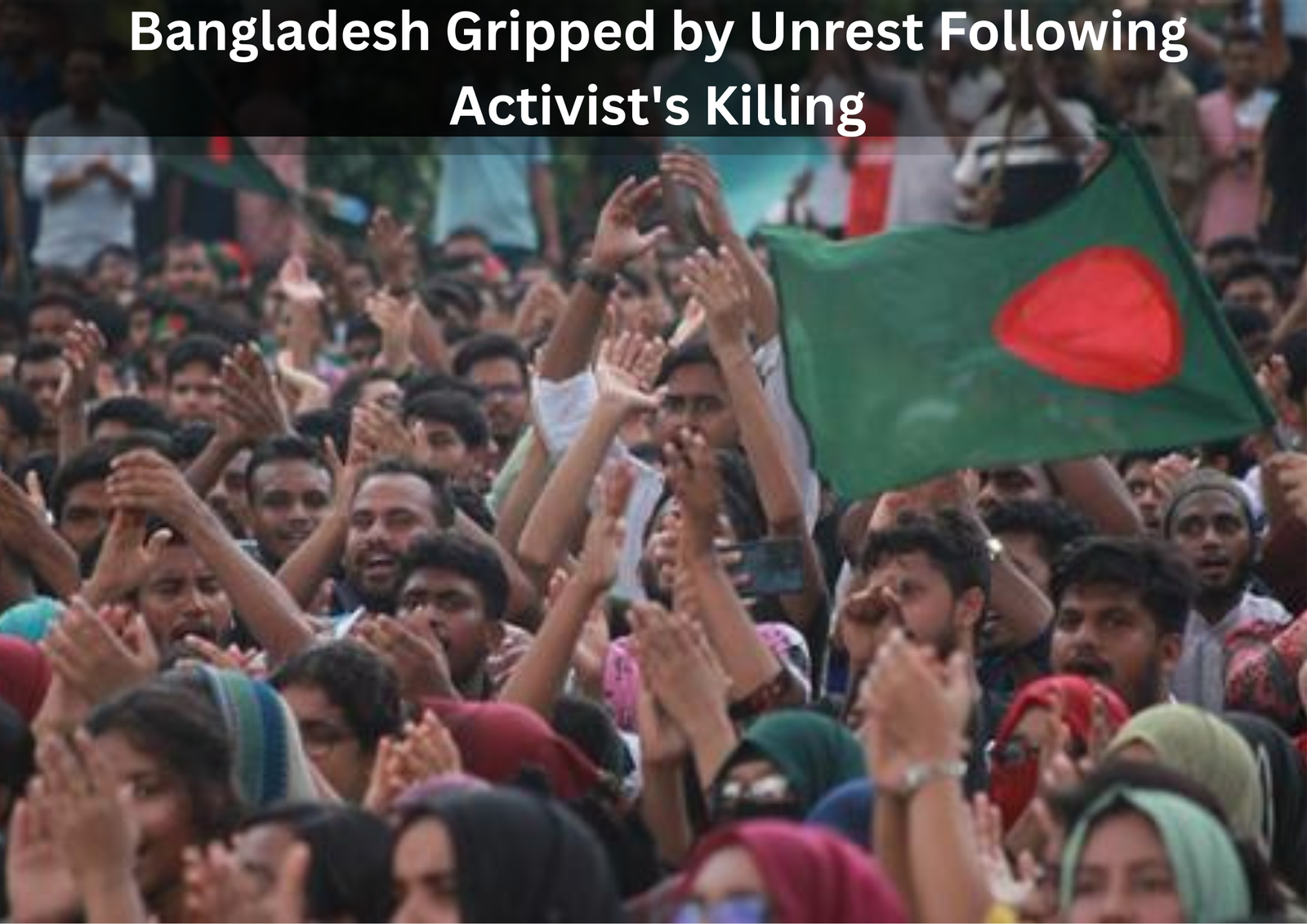
Following confirmation of Hadi’s death, protests erupted in Dhaka, Gazipur, Sylhet, and Chattogram, with demonstrators calling for the immediate arrest of those responsible. While many rallies began peacefully, several devolved into violence overnight.
Media organizations were among the hardest hit. Offices of leading newspapers were set ablaze, forcing staff to seek emergency rescue and disrupting newspaper distribution. Cultural institutions and political offices were vandalized, and historic landmarks suffered damage amid the unrest.
Security officials reported that additional forces, including military units, were deployed in sensitive areas to prevent further escalation.
Interim Government Faces Pressure
Interim Prime Minister Muhammad Yunus addressed the nation, condemning both the killing and the subsequent violence. He described Hadi’s death as a grave loss and warned that attacks on journalists and public institutions threaten democratic stability.
Authorities have launched an intensive investigation, releasing images of suspects and announcing a financial reward for information leading to arrests. At least one individual believed to be connected to the attackers has been detained, while others remain at large.
To maintain order during funeral proceedings, security restrictions have been tightened, including drone bans near the National Parliament complex.
Regional Tensions Add Complexity
The unrest has also fueled strong anti-India sentiment among sections of the protest movement. Demonstrators allege that individuals linked to the crime may have crossed borders, claims that remain unverified. India has stated it is monitoring the situation but denies involvement in Bangladesh’s internal affairs.
The political backdrop remains fragile. Former Prime Minister Sheikh Hasina, now living in India, was sentenced to death in absentia last month for crimes related to the 2024 crackdown on protesters. Her continued exile remains a flashpoint in public discourse.
Funeral and Uncertain Days Ahead
Hadi’s body arrived in Dhaka late Friday, with funeral prayers scheduled at the National Parliament grounds. In accordance with family wishes, there will be no public viewing, and he will be laid to rest near the grave of national poet Kazi Nazrul Islam.
Student leaders have called for disciplined demonstrations, emphasizing that their movement must remain focused on justice rather than destruction. Despite these appeals, uncertainty hangs over the nation as Bangladesh navigates grief, anger, and the fragile path toward elections.