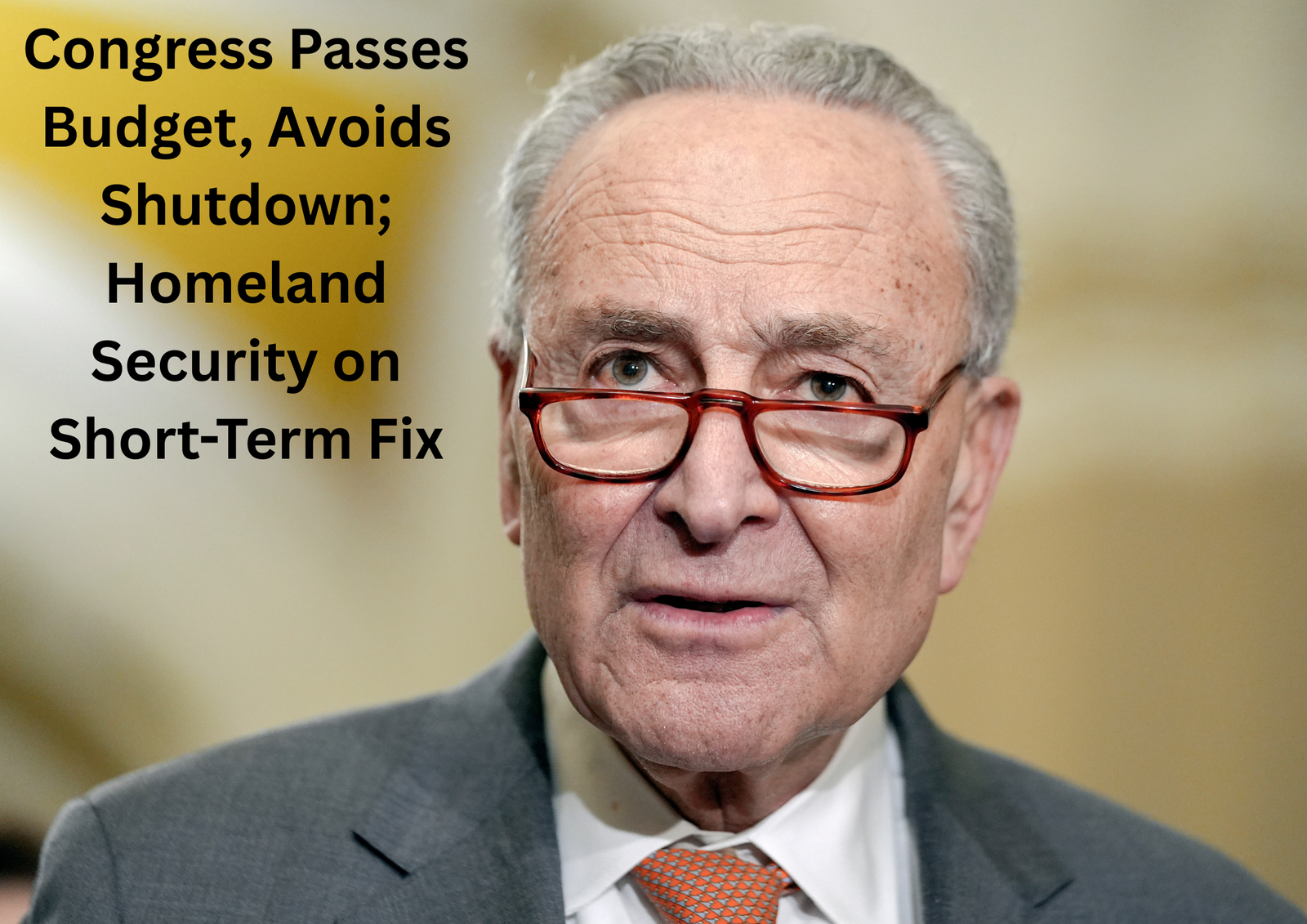
Lawmakers from both major parties reached a late-stage budget agreement on Thursday that will keep most federal agencies funded through the end of the fiscal year, narrowly avoiding a deeper and longer government shutdown. However, the Department of Homeland Security (DHS) will receive only a short-term funding extension, leaving major policy questions unresolved.
The agreement, announced jointly by President Donald Trump and Senate Democratic leaders, provides funding for the bulk of federal operations through September 30. At the same time, DHS will operate under a temporary two-week continuing resolution, giving Congress additional time to negotiate changes related to immigration enforcement.
What the Agreement Covers
Under the deal, roughly 95 percent of federal agencies will receive full-year funding, ensuring continuity for most government services. The exception is DHS, which will continue operating at current funding levels for approximately two more weeks.
Lawmakers described the DHS extension as a strategic pause, allowing negotiations over immigration enforcement authorities and oversight to continue without triggering an immediate shutdown of the department. Funding for several agencies was set to expire just before midnight Friday, increasing pressure on lawmakers to act.
Senate Setbacks Paved the Way
The compromise followed a failed Senate vote on a sweeping House-approved spending package earlier in the day. That bill, totaling more than $1 trillion and combining six appropriations measures, fell short of the 60 votes needed to advance.
Several Republican senators joined Democrats in opposing the package, citing concerns about overall spending levels and the inclusion of DHS funding without policy changes. Senate leadership ultimately shifted course, opting for a narrower agreement to keep most agencies operating while isolating the most contentious issues.
Senate leaders signaled that votes on the new plan could move quickly, potentially within hours of the announcement.
Short Shutdown Still Likely
Despite the breakthrough, a brief partial shutdown appears unavoidable. The House of Representatives is currently in recess and is not expected to reconvene until early next week. Without immediate House action, funding for agencies covered by the new deal will lapse temporarily.
Congressional aides downplayed the immediate impact, noting that most federal offices operate with limited staffing over the weekend. Still, the lapse underscores the fragility of the agreement and the challenges ahead.
If enacted, DHS would remain the only major department without long-term funding, with its temporary authorization expiring around mid-February.
Political Pressures Driving the Deal
The decision to separate DHS funding reflects mounting political tension surrounding immigration enforcement. Senate Democrats have pushed for new limitations following a recent fatal encounter involving federal agents, an incident that has intensified scrutiny of DHS and Immigration and Customs Enforcement (ICE).
President Trump urged lawmakers from both parties to support the compromise, warning that extended shutdowns could harm the economy and disrupt essential services. While some Republicans signaled openness to limited reforms, others criticized the decision to remove DHS from the broader funding package.
Agencies Already Secure
Several major departments are unaffected by the current deadline, having already received full-year funding. These include Agriculture, Veterans Affairs, Justice, Energy, Commerce, and Interior, along with the Environmental Protection Agency, federal science programs, the Food and Drug Administration, and congressional operations.
What Comes Next
The agreement eases immediate fiscal uncertainty but shifts attention squarely to DHS, where lawmakers now face a tight deadline to resolve deep disagreements over immigration policy and enforcement authority.
As Congress prepares for another round of negotiations, the next two weeks are expected to be critical in determining whether DHS receives long-term funding-or whether the department becomes the focal point of another funding standoff.
South Carolina Records Unprecedented Measles Surge as Cases Climb Past 800-don’t miss this crucial blog exploring causes, consequences, and urgent public health lessons everyone should read and share.