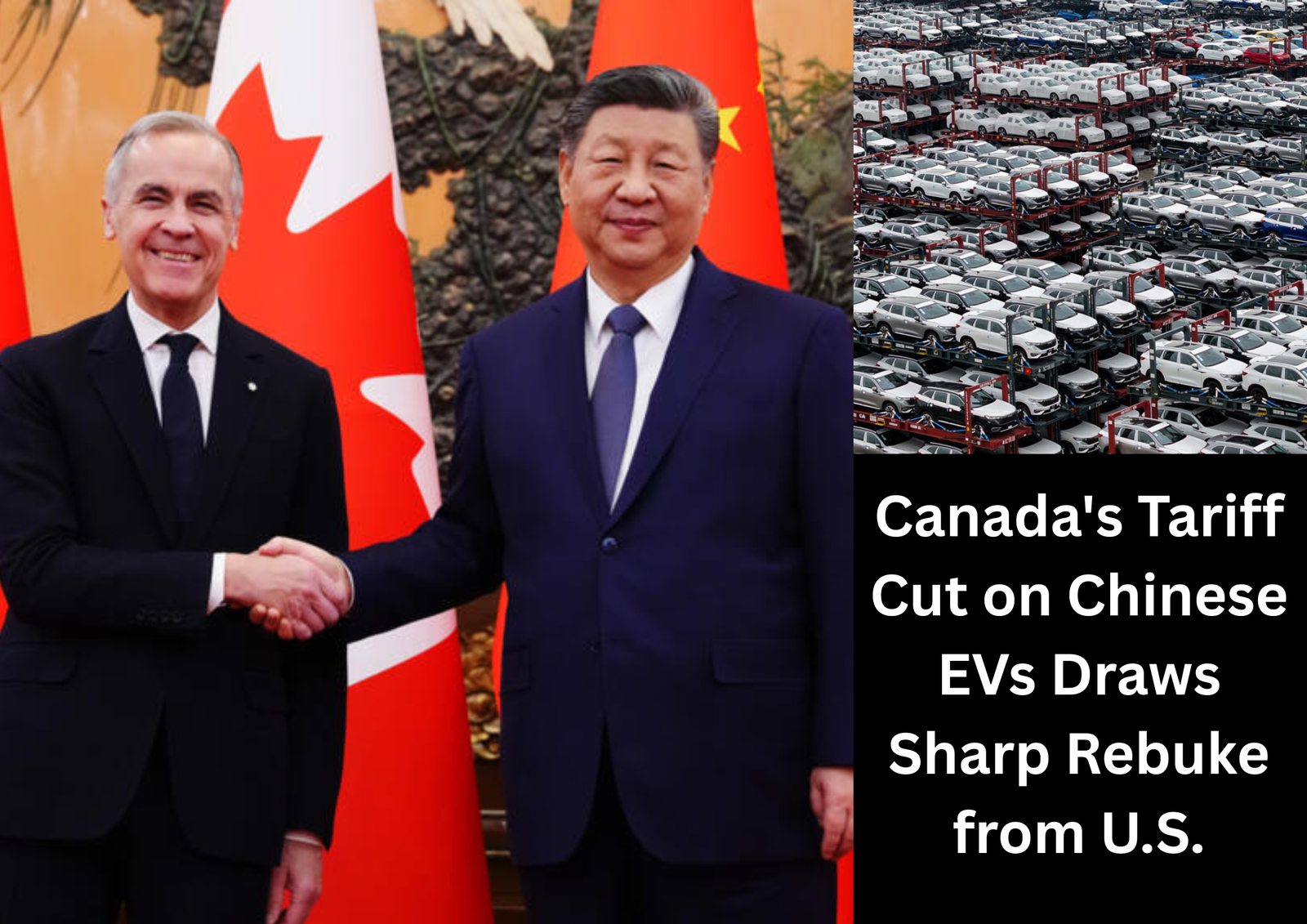
Canada has moved forward with a major policy change in the electric vehicle (EV) sector, slashing tariffs on imported Chinese models in a decision that has already drawn criticism from the United States and is expected to reshape trade dynamics in North America.
Under the new agreement, Canada will reduce its tariff on Chinese electric vehicles from 100% to 6.1%. This lower rate applies to the first 49,000 EVs imported annually. According to Carney, this import quota may increase to 70,000 vehicles within five years. The Canadian government described the adjustment as part of a broader strategy to stimulate EV adoption, increase affordability for domestic consumers, and strengthen industrial capacity.
Officials confirmed that the tariff reduction was negotiated under a new bilateral arrangement with Beijing. As part of the deal, Chinese manufacturers are expected to invest in production and assembly facilities within Canada-a move Ottawa says will generate local jobs and support its clean energy transition.
Tension With Washington
Reaction from Washington was immediate and negative. A spokesperson for the U.S. Trade Representative said the move was “problematic,” warning that lower-cost Chinese EVs could flow into the North American market through Canada, bypassing Washington’s own protectionist measures. The United States continues to maintain steep tariffs on Chinese electric vehicles as it seeks to shield domestic automakers from subsidized foreign competition.
The U.S. has also signaled that it will review the agreement to determine whether it undermines regional trade commitments outlined in the United States–Mexico–Canada Agreement (USMCA), the successor to NAFTA that governs cross-border commerce across the continent.
Strategic Realignment in North America
Analysts say the tariff cut marks an important divergence between Canada and its closest ally on economic policy toward China. While the U.S. has doubled down on restricting access for Chinese automakers, Canada appears to be pursuing a mixed approach-opening its consumer market while bargaining for industrial investment in return.
Trade observers argue that this could create competitive ripple effects across the automotive sector, particularly as North America races to scale domestic EV production.
A Market Shift With Global Implications
Beyond the regional dispute, the tariff reduction may play into China’s ambition to expand its EV footprint in global markets. Chinese EV brands have rapidly increased exports in recent years, benefiting from strong government subsidies, advanced battery technology, and large-scale production advantages.
Although Canada emphasized affordability and climate goals, industry experts note that the decision also signals a willingness to deepen trade ties with Beijing at a moment when other Western countries are adopting more restrictive stances.
“Trump Unveils Gaza Reconstruction Board as Ceasefire Diplomacy Gains Momentum” – don’t miss this blog, it explains the situation clearly and is worth reading.