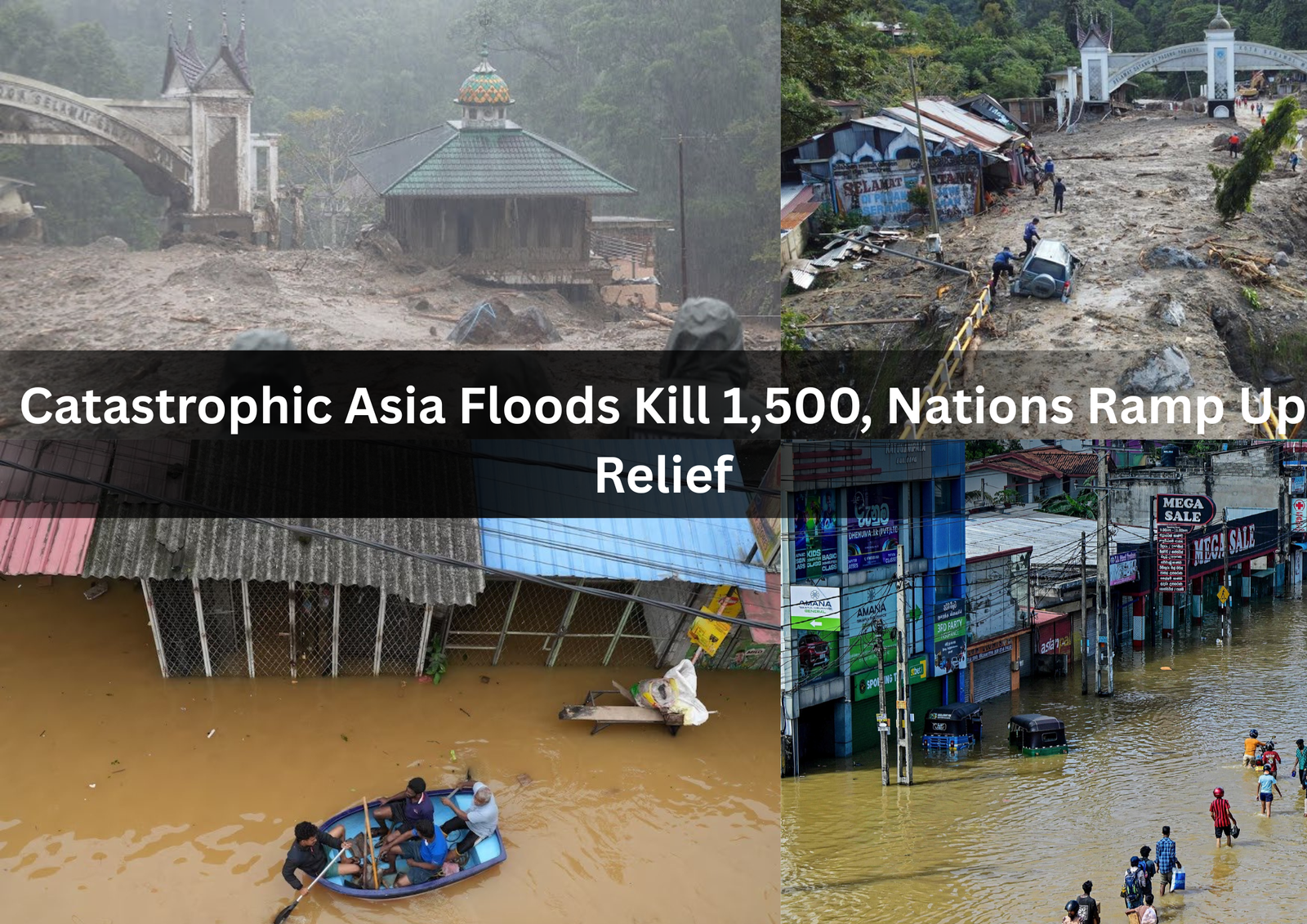
Severe flooding triggered by a combination of rare, overlapping storms has devastated large parts of South and Southeast Asia, leaving more than 1,500 people dead and millions displaced, officials and humanitarian agencies reported on Friday. The unfolding crisis has overwhelmed regional disaster-response systems and renewed urgent discussions about the impact of climate change on extreme weather events.
In Indonesia, the island of Sumatra has borne the brunt of the destruction. Torrential rains submerged entire districts, sweeping away homes, damaging major roadways, and cutting off communication lines. The Indonesian military has expanded its operations across the affected zones, conducting search-and-rescue missions, assisting with mass evacuations, and delivering food, clean water, and medical supplies to communities cut off by the floods. Local authorities described the situation as “unlike anything witnessed in recent decades,” citing the widespread damage to infrastructure and the growing number of displaced families.
Across South Asia, meteorologists have been tracking an extremely unusual weather pattern: simultaneous severe storms developing in both the Bay of Bengal and the Arabian Sea. Experts say the convergence of these systems is rare and has intensified rainfall across several nations, triggering additional landslides, river overflows, and flash floods. Emergency shelters in multiple countries are now operating beyond capacity as survivors seek safety from rising waters.
Humanitarian organizations warn that the real toll of the disaster may climb further in the coming days, as access to remote regions remains limited. Aid groups and regional governments are calling for increased international assistance, noting that millions of people urgently require shelter, food, medicine, and long-term recovery support. Public health officials have also raised concerns about potential outbreaks of waterborne diseases in overcrowded relief camps.
Climate analysts say the scale of the catastrophe highlights the need for stronger climate-resilience policies, pointing to early evidence that warming oceans and shifting weather patterns may be contributing to the severity of such storms.
As relief efforts continue across the region, officials emphasize that the coming weeks will be critical-not only for rescuing those still stranded, but for stabilizing communities facing one of the most destructive environmental disasters in recent memory.