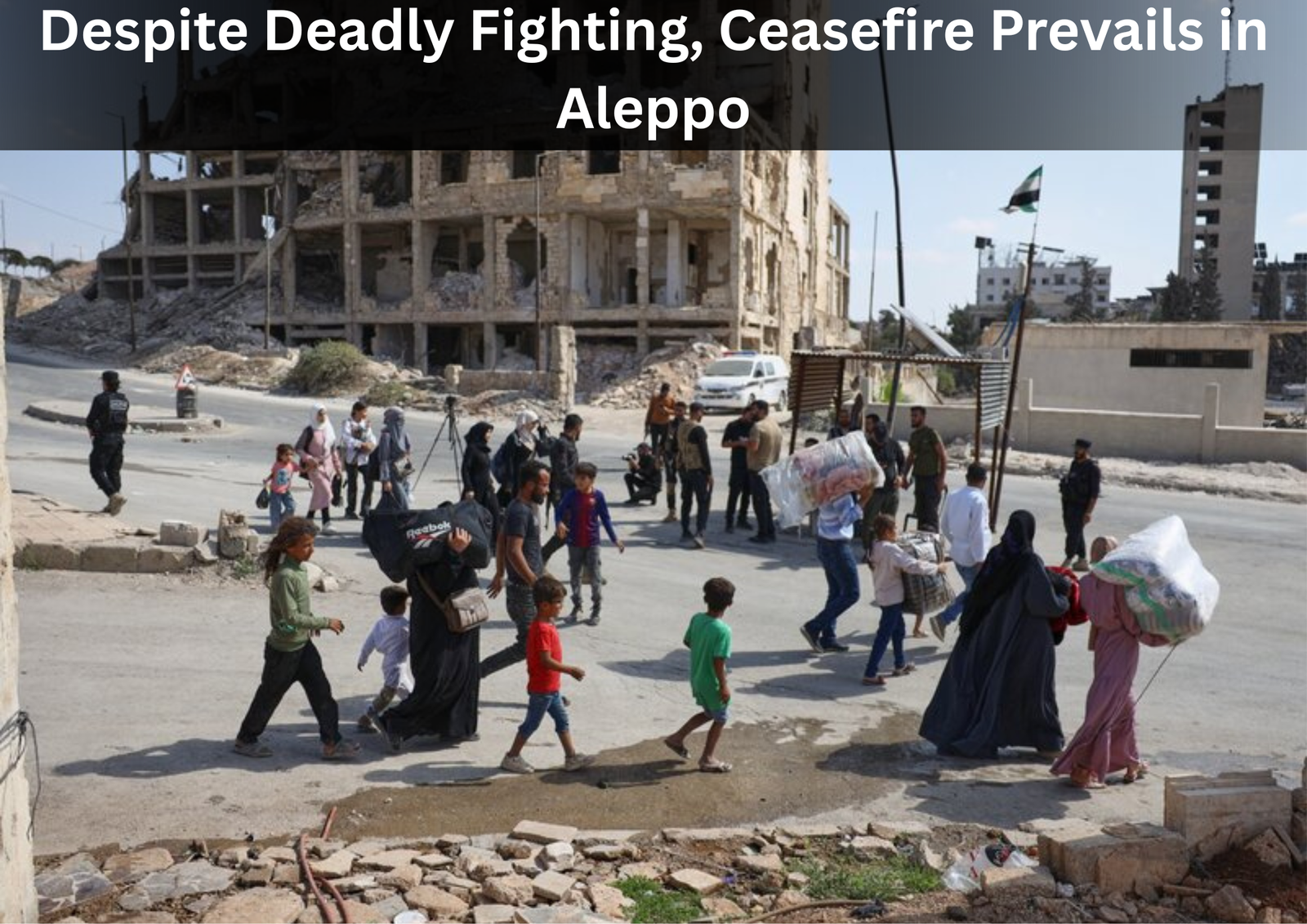
A fragile ceasefire took effect in the northern Syrian city of Aleppo late Monday after intense fighting broke out between Syrian government troops and the Kurdish-led Syrian Democratic Forces (SDF), leaving civilians dead and many injured.
The clashes erupted in densely populated neighborhoods of Aleppo, triggering panic among residents and forcing families to flee their homes. Local authorities confirmed that shelling struck residential areas, damaging property and disrupting daily life. Emergency services reported that first responders were also wounded while attempting to reach affected areas.
Both sides blamed each other for initiating the violence. Syrian military officials said their forces responded to attacks on army positions and civilian districts, while SDF representatives accused government-aligned units of launching sudden artillery and tank assaults on areas under Kurdish control. Independent verification of the initial trigger was not immediately possible.
By Monday evening, officials on both sides announced that communication channels had been activated to prevent further escalation. Orders were issued to halt military operations, and gunfire subsided across most contested zones. The Aleppo governor’s office temporarily suspended schools, universities, and public offices in the city center as a precautionary measure.
The violence comes at a sensitive political moment, as talks over integrating the SDF into Syria’s national military framework remain stalled. A previously announced agreement aimed to bring SDF units under state authority by the end of the year, but progress has been slow, with both parties accusing one another of delaying implementation.
Regional dynamics have further complicated the situation. The clashes coincided with a high-profile visit to Damascus by senior Turkish officials, underscoring Ankara’s growing involvement in Syria’s security landscape. Turkey has repeatedly warned against any arrangement that would allow Kurdish forces to retain significant autonomy near its border, citing national security concerns.
Analysts say the Aleppo fighting highlights the fragility of Syria’s post-war stabilization efforts. While large-scale combat has decreased across much of the country, unresolved power-sharing arrangements and foreign influence continue to fuel localized confrontations.
The SDF, backed by international partners during the campaign against the Islamic State group, maintains control over large parts of northeastern Syria, including key energy resources and detention facilities. Government officials argue that full national reconciliation cannot occur without reintegrating these territories and forces into state institutions.
For now, the ceasefire appears to be holding, but residents remain cautious. Many fear that without a clear political breakthrough, Aleppo and other flashpoint areas could again descend into violence, threatening hopes for lasting peace after more than a decade of conflict.