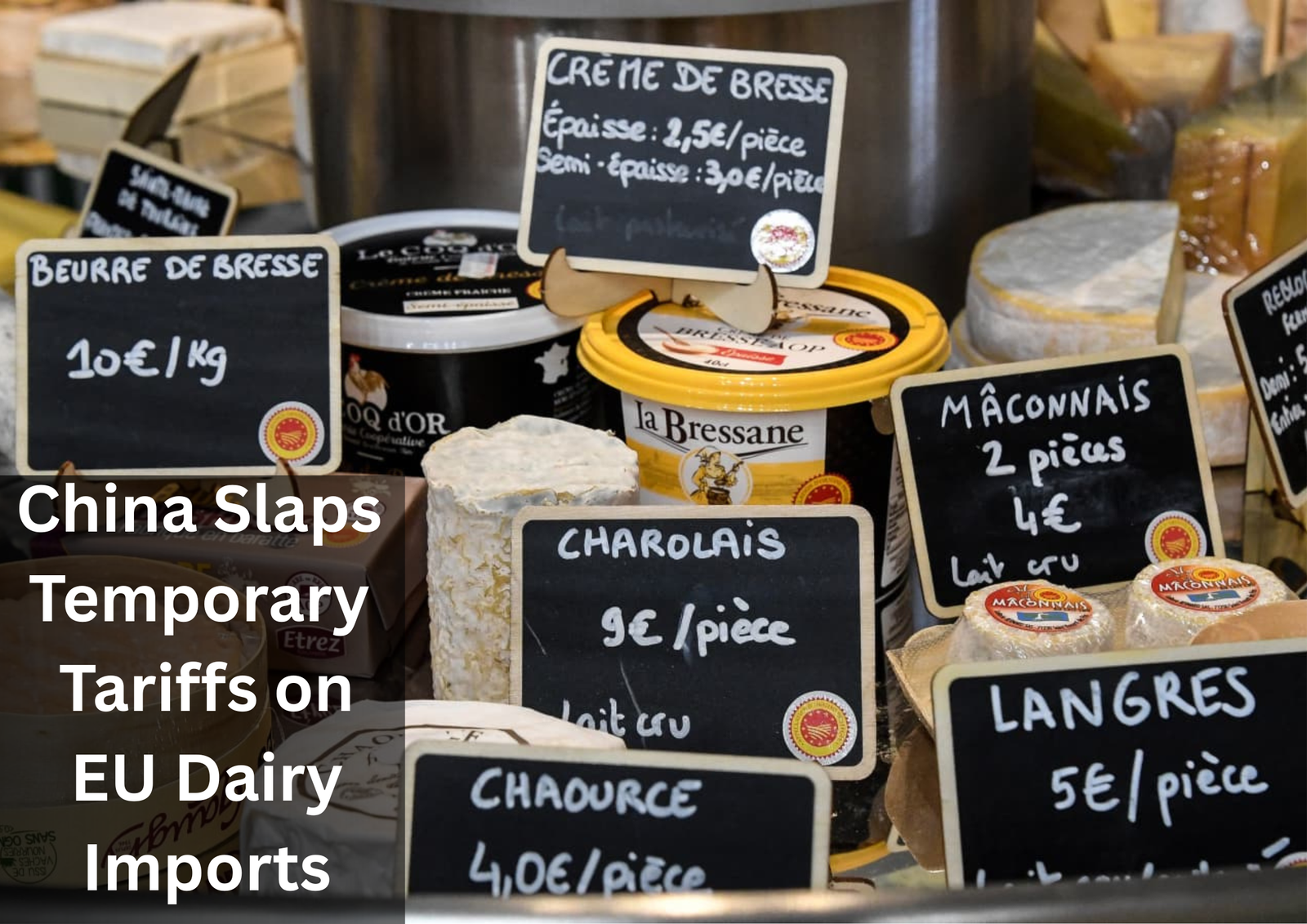
China has announced provisional anti-subsidy tariffs on a range of dairy products imported from the European Union, marking another escalation in trade tensions between the two major economies. The measures, confirmed by China’s Ministry of Commerce on Monday, are scheduled to take effect on December 23 and will apply to specific categories of European dairy goods.
According to Chinese officials, the decision follows an extended investigation that examined financial support programs available to dairy producers in several EU member states. The ministry stated that preliminary findings indicate certain subsidies may have given European exporters an unfair advantage, contributing to pressure on China’s domestic dairy market.
The temporary duties vary by exporter and product type, with rates ranging from roughly 20% to over 40%. Products affected include unsweetened milk, cream, and various types of cheese, both fresh and processed. Infant formula has been excluded from the current measures, a move analysts say may help limit consumer impact in China.
Several well-known European dairy companies are expected to be affected. Firms from countries including France, Denmark, the Netherlands, and Italy face different tariff levels depending on their individual export profiles. Some companies have already indicated they plan to continue engaging with Chinese authorities during the remainder of the investigation.
Trade observers view the move as part of a broader pattern of retaliatory actions between Beijing and Brussels. The dairy tariffs come against the backdrop of ongoing disputes over industrial subsidies, particularly following European scrutiny of Chinese electric vehicle exports. Since then, China has launched investigations into multiple European products, signaling its willingness to respond forcefully to trade measures it views as unfair.
European officials reacted critically to the announcement. Representatives from the European Commission said they strongly disagreed with China’s preliminary conclusions and argued that EU agricultural support schemes comply with international trade rules. Brussels has indicated it will closely review the decision and continue consultations through bilateral channels and the World Trade Organization.
The economic impact could be significant. China is an important destination for European dairy exports, though it also sources large volumes from other suppliers such as New Zealand and Australia. Market analysts suggest higher tariffs may prompt Chinese buyers to shift sourcing to alternative markets if European products become less competitive on price.
Within China, the decision is expected to provide short-term relief to local dairy producers, many of whom have faced challenges from oversupply, declining farm-gate milk prices, and softer consumer demand. News of the tariffs briefly lifted shares of some domestic dairy companies in early trading.
Chinese authorities emphasized that the duties are provisional and may be adjusted before a final ruling is issued. A conclusive decision is expected in early 2026, leaving room for negotiation and potential revisions as talks between China and the European Union continue.