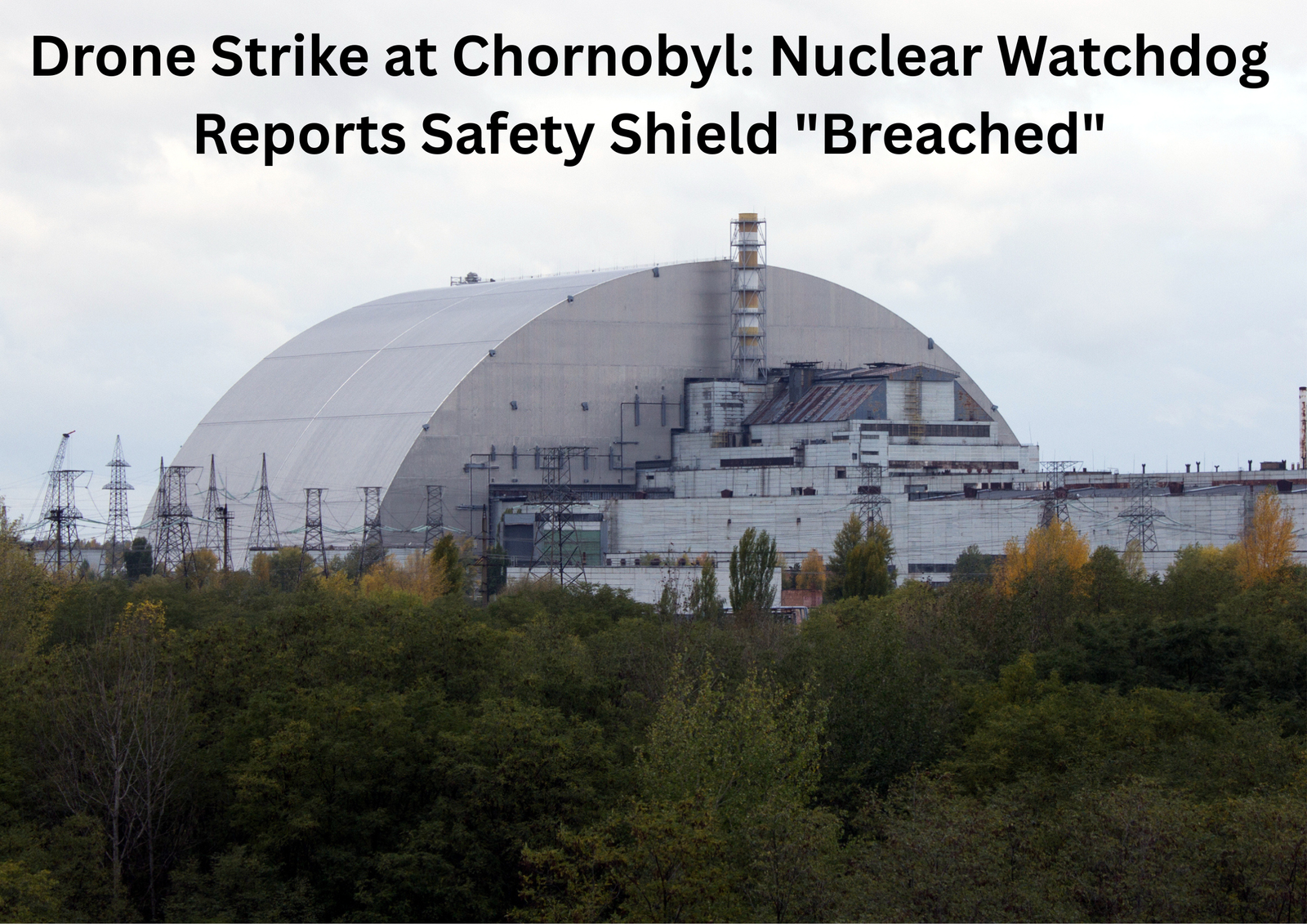
The massive protective structure built over the damaged reactor at Chornobyl has suffered structural damage that weakens its ability to contain radiation, according to a statement issued by the International Atomic Energy Agency on Saturday.
The compromised structure, known as the New Safe Confinement (NSC), was struck earlier this week during a drone attack. The IAEA confirmed that critical protective functions of the steel enclosure have been impaired, meaning it can no longer fully serve its purpose of safely isolating radioactive materials or shielding personnel working at the site. Extensive repair work is now expected to restore its protective capabilities.
While the agency verified the impact, it did not disclose precise technical details regarding the sections of the structure affected. Officials emphasized that radiation monitoring systems continue to operate normally and that no abnormal radiation levels have been detected following the incident.
Responsibility for the drone strike was claimed by a Russian volunteer militia group aligned with Ukraine. The group said the attack was aimed at equipment they allege was being utilized for military surveillance inside the restricted zone. The area remains under the control of Russia, which has held the site since the early stages of the full-scale invasion in 2022.
Completed in 2016 at a cost exceeding €2 billion, the NSC was engineered to serve as a long-term safety barrier over the remains of Reactor No. 4, which exploded in 1986. The giant arch-shaped structure was designed to last a century, preventing radioactive leaks while allowing for the future dismantling of the aging concrete sarcophagus beneath it.
The Chornobyl Exclusion Zone continues to be closely monitored by international safety experts. The IAEA confirmed it maintains personnel presence across several nuclear facilities in Ukraine, including Chornobyl, to ensure ongoing nuclear safety amid the conflict.
Nuclear safety analysts noted that while no immediate radiation threat has emerged, any damage to the NSC remains a serious concern due to the long-term environmental and health risks tied to the site.