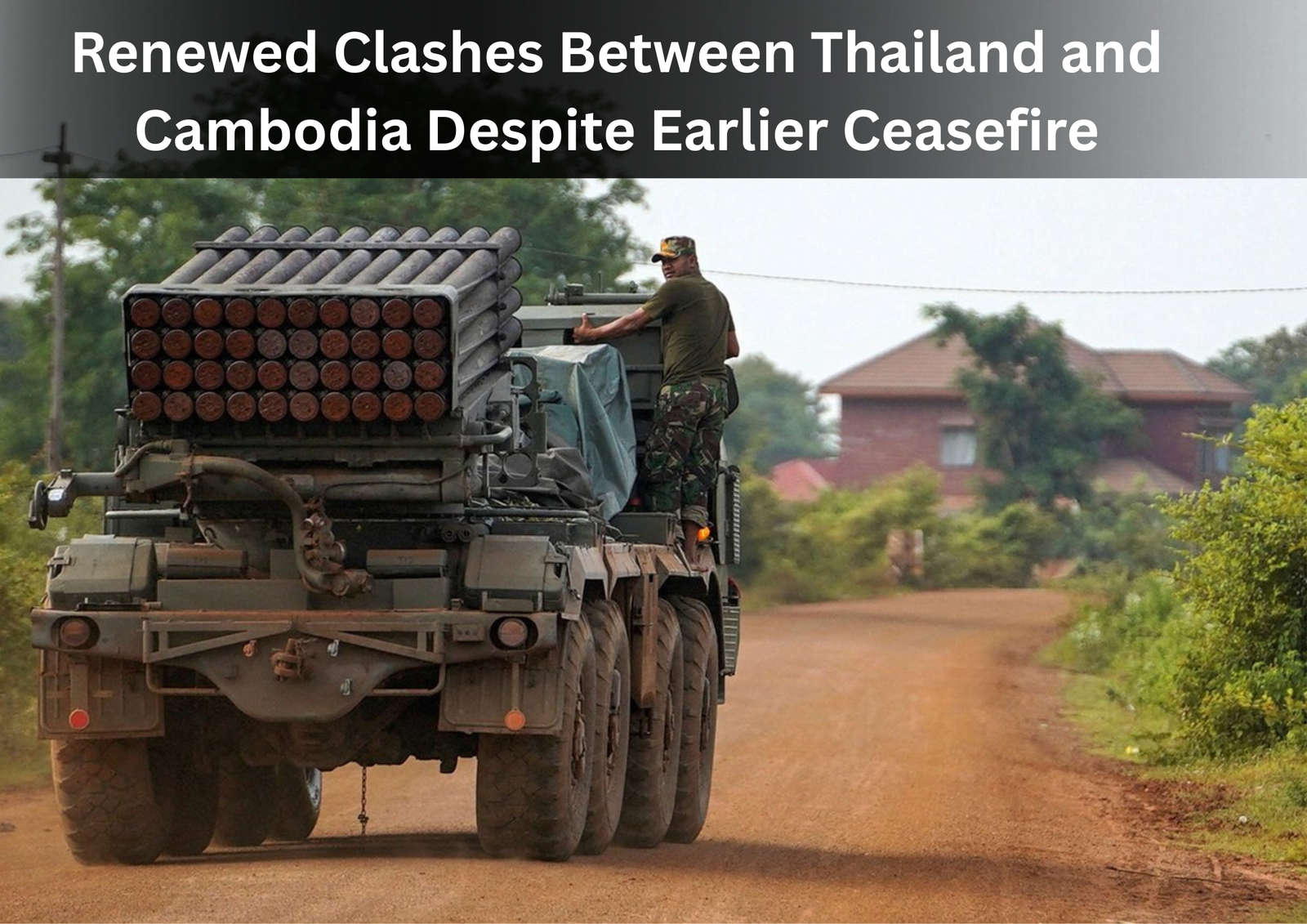
Tensions along the Thai–Cambodian border escalated on Friday as fighting entered its fifth straight day, prompting renewed concern over the stability of the region and the safety of civilians caught in the conflict. Local authorities in both countries confirmed fresh shelling overnight, reporting impacts across several Cambodian provinces near the frontier.
Humanitarian organizations estimate that between half a million and 600,000 people have now been displaced since hostilities resumed earlier in the week. Families have taken shelter in temples, schools, and makeshift evacuation centers as artillery fire continues to echo across the contested terrain. Medical teams on both sides report that more than 20 people have been killed and close to 200 injured in the latest surge of violence. Many evacuees expressed uncertainty about when, or if, they will be able to return home, describing the atmosphere as “fearful and unpredictable.”
The renewed clashes mark the most serious breakdown in relations since a U.S.-brokered ceasefire collapsed in late October. Thai military officials confirmed that fighter jets had carried out strikes on Cambodian positions, while Cambodian authorities accused Thailand of authorizing new ground assaults in Oddar Meanchey, Preah Vihear, and Banteay Meanchey. Phnom Penh also denied allegations circulating on Thai social media that foreign mercenaries or advanced missile systems were being deployed in the conflict, calling the claims “baseless and inflammatory.”
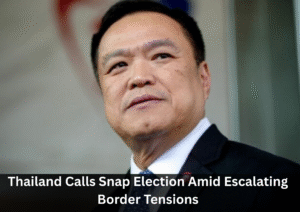
The dispute, which centers on overlapping claims around historic temple sites and centuries-old boundaries, has long been a source of nationalist tension. The situation shifted further on Thursday when Thailand’s caretaker Prime Minister, Anutin Charnvirakul, dissolved parliament after failing to break a political standoff with the opposition. The decision, endorsed by the monarchy, sets the stage for national elections within two months. Analysts say the move could harden Bangkok’s resolve at the border, as political leaders face increased pressure to project strength ahead of the vote.
Meanwhile, Washington has re-entered the diplomatic arena. U.S. President Donald Trump, whose administration previously leaned on tariff threats to push both sides toward temporary truces, said he would contact the leaders of Thailand and Cambodia in an effort to bring the violence under control. Prime Minister Anutin confirmed late Friday that a call with Trump had been scheduled, following earlier discussions between Thai Foreign Minister Sihasak Phuangketkeow and U.S. Secretary of State Marco Rubio. The State Department has reiterated that the United States is willing to support de-escalation efforts “in a constructive and peaceful manner.”
Despite these renewed diplomatic overtures, skepticism remains widespread among those directly affected by the conflict. Interviews with displaced residents reveal deep frustration and dwindling faith in international mediation. One evacuee sheltering in northeastern Thailand remarked, “People keep saying help is coming, but we’re still running from the same explosions.”
With the humanitarian situation worsening and political pressures rising in Bangkok, regional experts warn that the coming days will be critical. Whether the scheduled diplomatic talks can slow the momentum of the violence-or whether domestic politics will overshadow peace efforts-remains uncertain as communities along the border brace for what may come next.