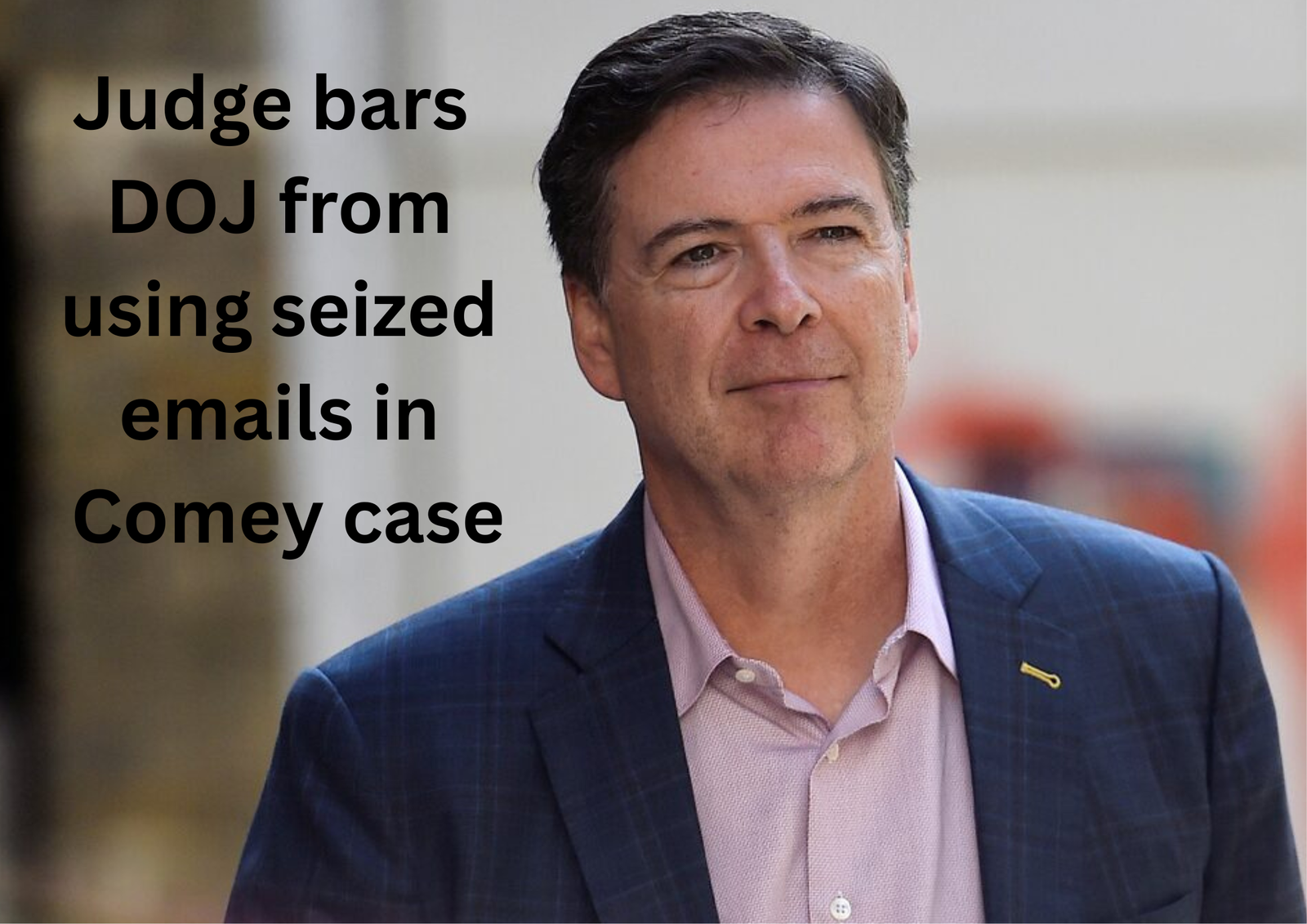
A federal judge in Washington has ruled that prosecutors may not use personal email evidence in a criminal case involving the former director of the Federal Bureau of Investigation, delivering a major limitation on the government’s case ahead of a scheduled trial next year.
In a decision issued Sunday, U.S. District Judge Colleen Kollar-Kotelly determined that email messages retrieved from a private Gmail account were collected under a warrant that did not meet constitutional standards. The judge ruled that the affidavit used to obtain the warrant failed to establish probable cause of a crime, relying instead on what she described as possible violations of internal agency policy.
The case stems from events following a private 2017 conversation between President Donald Trump and the former FBI director regarding the bureau’s investigation into the national security adviser. After that meeting, a memo was drafted describing the exchange, which included a comment interpreted as urging the FBI to drop the inquiry.
That memo was written using a personal email account and later shared with longtime associate Daniel Richman, a law professor. Portions of the memo were later provided to a reporter, making the contents public. Prosecutors argue that the process bypassed official safeguarding procedures.
The Justice Department, represented by U.S. Department of Justice prosecutors, charged the former FBI official earlier this year with one misdemeanor count related to the unauthorized disclosure of government information. He has pleaded not guilty.
In her ruling, Judge Colleen Kollar-Kotelly stated that internal policy concerns alone cannot justify a criminal search warrant, warning that such reasoning could improperly turn routine procedural infractions into criminal acts. As a result, the government is now prohibited from using the personal emails seized during the investigation as trial evidence.
However, the judge declined to dismiss the case entirely. She also rejected arguments that the prosecution unfairly targeted the defendant while ignoring similar conduct by others, stating that the legal standard for proving selective prosecution had not been met.
Although the email evidence has been excluded, the case itself will move forward. The court has scheduled the trial for April 2026, and both sides have been ordered to submit updated pre-trial motions by January 6, 2026.
Daniel Richman has not been charged in connection with the matter. Meanwhile, officials from the Justice Department declined to comment on the ruling. The FBI, now under different leadership, has also issued no formal response.
Legal analysts say the decision significantly narrows the scope of evidence available to prosecutors and may complicate their efforts to secure a conviction.