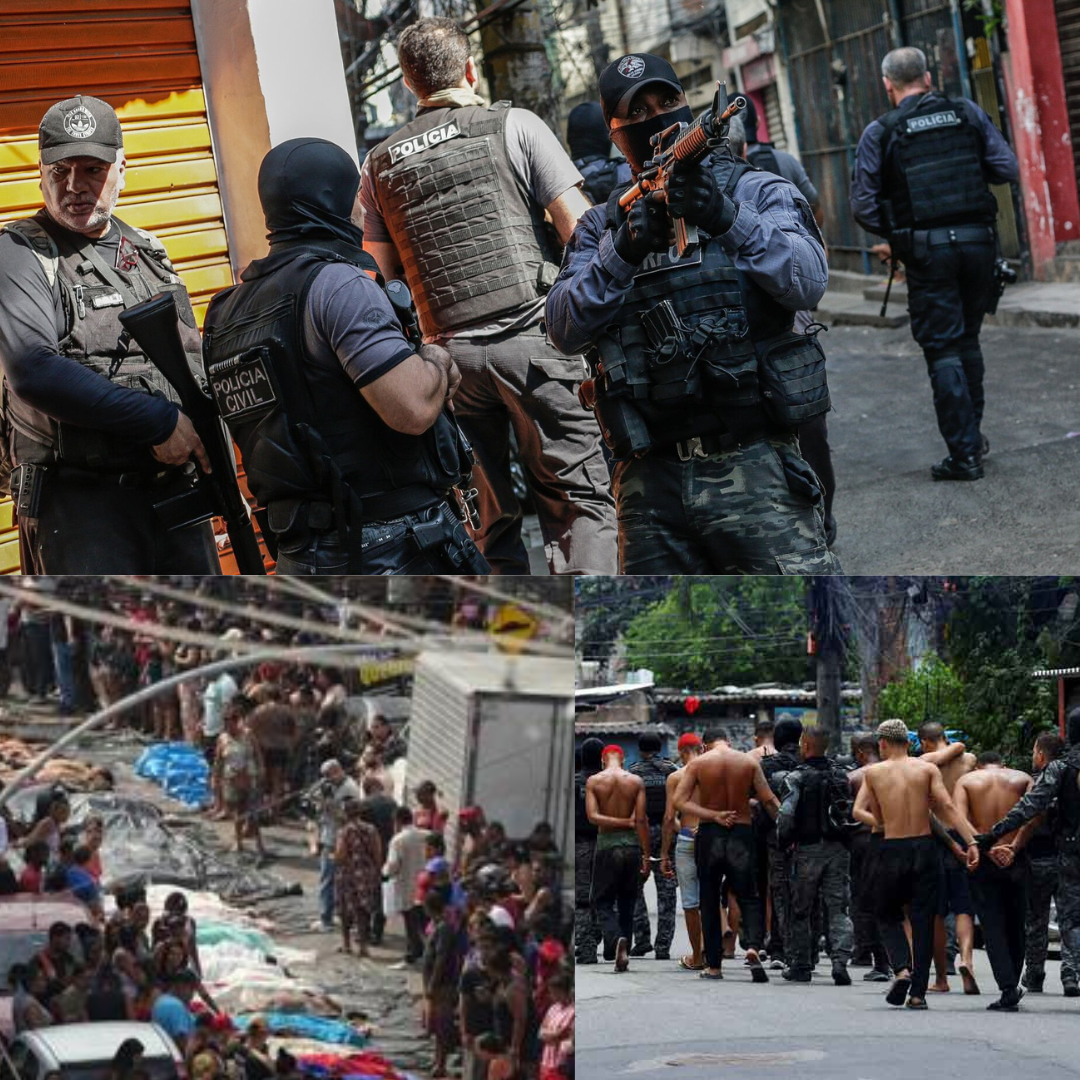
A police operation in the Rio favela of northern Rio de Janeiro has resulted in one of the highest death tolls from a single raid in the city’s history, prompting national and international condemnation.
According to state officials, at least 46 people were killed during the raid on October 30, which authorities said targeted members of a powerful local criminal faction. By late October 31, 41 victims had been identified, while forensic experts continued working to identify the rest. The large-scale operation, carried out by hundreds of military police officers, was aimed at dismantling an alleged extortion network that had been preying on small businesses in the area.
Police reported that as they entered the favela, they were met with heavy gunfire. Criminal groups reportedly set buses and vehicles ablaze to block access routes, and a helicopter providing aerial support was shot at. Authorities claimed the operation was necessary to disrupt the so-called “Friends of Friends” gang, which they accused of imposing illegal taxes on local merchants and controlling drug trafficking routes.
Residents, however, painted a far more harrowing picture. Many described hours of continuous gunfire that trapped families inside their homes. “It was like being in a war zone,” said one witness, who requested anonymity. Community organizations reported several unarmed civilians among the dead and accused the police of using excessive force. Local schools were closed, and the neighborhood remains tense and largely deserted.
In a statement, Rio’s state security secretariat defended the operation, saying it was based on “solid intelligence” and that officers had acted “within the law.” Still, the state prosecutor’s office has opened an inquiry into the conduct of the police, citing the unusually high number of fatalities. The governor of Rio de Janeiro described the raid as a “necessary response to organized crime” but acknowledged the need for transparency in the investigation.
The deadly encounter has reignited debates over police violence in Brazil’s urban communities. On October 31, hundreds of protesters gathered along the city’s Red Line highway, blocking traffic and demanding accountability. Signs reading “Stop the killing” and “Justice for the favelas” were held high as demonstrators decried what they called a pattern of state-backed brutality against poor residents.
Human rights advocates have long criticized Rio’s militarized policing strategies, arguing they disproportionately target marginalized neighborhoods while failing to reduce gang control. The United Nations Human Rights Office has called for an impartial investigation into the raid.
As the city reels from the bloodshed, families continue to search for missing relatives, and the favela remains under heavy police presence. The tragedy has once again brought global attention to Brazil’s deep divide between security enforcement and social justice – a divide that continues to claim innocent lives in the name of order.