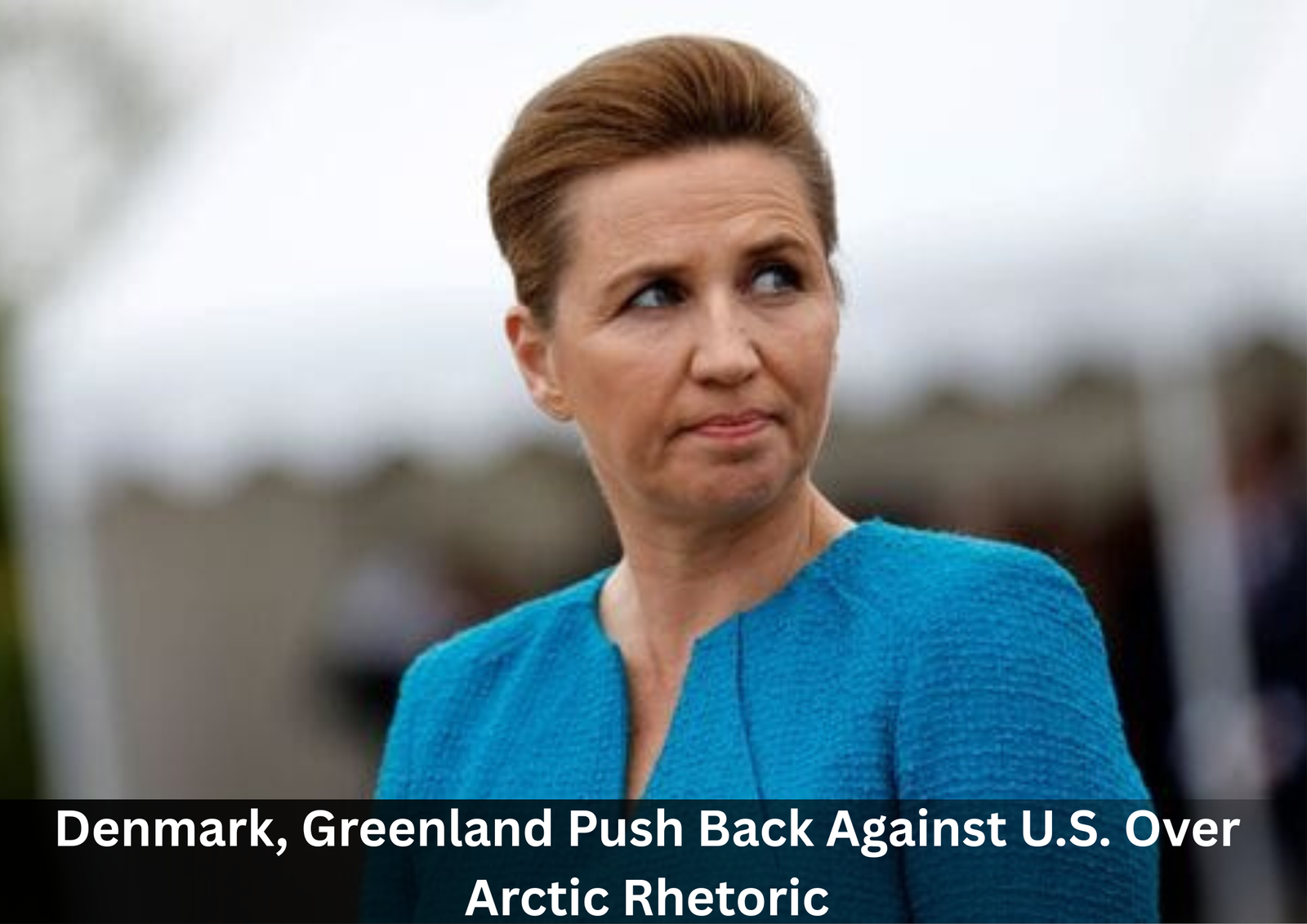
Diplomatic relations between the United States, Denmark, and Greenland have come under renewed strain after firm public statements from leaders in Copenhagen and Nuuk rejected any suggestion of U.S. control over Greenland. The remarks follow recent comments by U.S. President Donald Trump that reignited debate over the Arctic island’s strategic importance.
Clear Messages from European Leaders
Denmark’s Prime Minister emphasized that Greenland’s status is not open to negotiation, stating that the island’s future rests solely with its people. Greenland’s leadership echoed this position, stressing that the territory is a democratic society and not a geopolitical bargaining chip.
Officials in both governments underlined that while dialogue with international partners is welcome, it must respect international law, sovereignty, and established diplomatic norms. Statements released over the weekend made it clear that provocative language or informal messaging does not replace formal diplomatic engagement.
Strategic Importance of Greenland
Greenland occupies a critical position in the Arctic region, an area gaining global attention due to climate change, emerging shipping routes, and access to rare earth minerals. The island also hosts key defense infrastructure, including a long-standing U.S. military presence under existing bilateral agreements with Denmark.
Experts note that these agreements already grant the United States significant operational access, making any discussion of ownership or annexation unnecessary from a security perspective. Danish officials reiterated that Greenland and Denmark remain committed NATO allies and continue to meet their defense obligations within the alliance.
Rising Sensitivity After Recent Global Events
The renewed focus on Greenland comes amid heightened global tensions following recent U.S. military actions in Latin America. Analysts suggest that these developments have amplified concerns among European allies about unpredictability in foreign policy rhetoric and its potential consequences.
Political observers point out that while past comments about Greenland were often dismissed as symbolic or rhetorical, the current international climate has made allies more cautious. As a result, public reassurances of sovereignty have become more direct and frequent.
Social Media and Diplomatic Fallout
Adding to the controversy were recent social media posts by individuals linked to U.S. political circles, which were widely interpreted as symbolic threats regarding Greenland’s future. Greenlandic leaders criticized such messaging as disrespectful and counterproductive, noting that international relations require seriousness and mutual respect.
Denmark’s diplomatic representatives responded by reaffirming long-standing defense cooperation with the United States while also reminding observers that territorial integrity remains a fundamental principle of international relations.
Greenland’s Path Forward
Greenland is a self-governing territory within the Kingdom of Denmark, with expanded autonomy since the introduction of home rule decades ago. While public opinion surveys consistently show interest in eventual independence, there is little support among Greenlanders for becoming part of another country.
Local officials have emphasized that economic development, environmental protection, and responsible resource management are the territory’s primary concerns. Any future changes to Greenland’s political status, they insist, will be decided internally through democratic processes.
International Reactions and Expert Views
Foreign policy analysts warn that continued speculation about territorial acquisition, even if not backed by formal policy, can undermine trust among allies. Some experts argue that Arctic cooperation is better served through multilateral frameworks focused on security, environmental protection, and sustainable development.
Others note that the Arctic’s growing importance makes clear communication essential. Ambiguous or confrontational rhetoric, they say, risks destabilizing a region that has traditionally been governed through cooperation rather than confrontation.
Emphasis on International Law
In concluding remarks, leaders from Denmark and Greenland reiterated that borders cannot be altered through pressure or unilateral declarations. They reaffirmed their commitment to international law, diplomatic dialogue, and peaceful cooperation, calling on all partners to uphold these principles.
As Arctic geopolitics continue to evolve, the situation highlights the delicate balance between strategic interests and respect for sovereignty-a balance that European leaders say must not be compromised.
For deeper context and verified insights into global reactions, read this detailed analysis on “Venezuelan Leadership Crisis Deepens as Nicolás Maduro Appears Before U.S. Federal Court” to understand what happens next.