
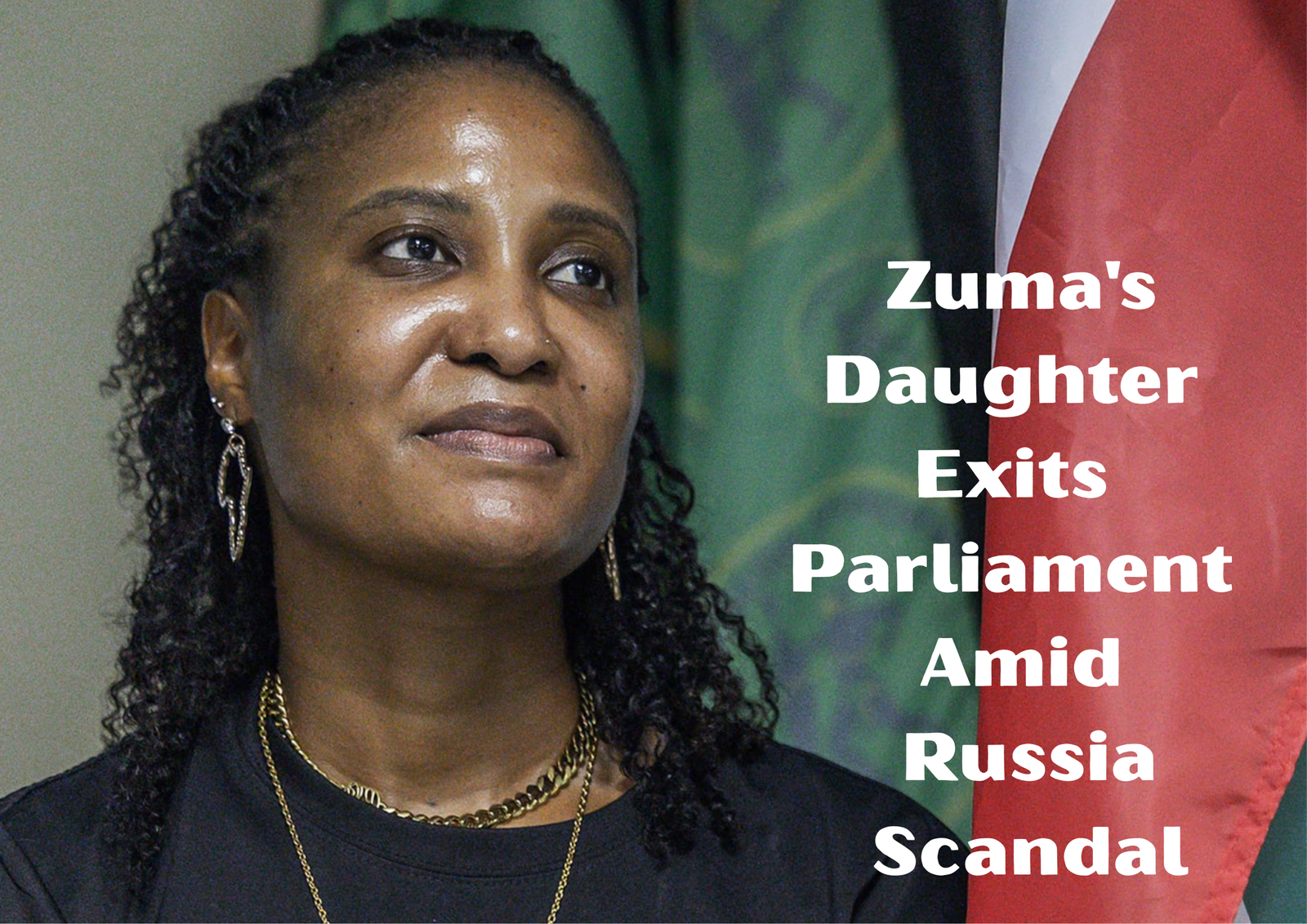
Duduzile Zuma-Sambudla, daughter of former South African President Jacob Zuma, has formally resigned from her position in the National Assembly, sparking a wave of political debate both inside and outside the country. Her resignation letter, submitted on November 28 and read aloud by Deputy Speaker Lechesa Tsenoli, accused the government of misleading citizens about South Africa’s role and stance in the ongoing Russia-Ukraine war.
A Dramatic Exit from Parliament
Zuma-Sambudla stated that she could no longer serve in a legislative body that, according to her, “has been used to advance the interests of other nations at the expense of our own.” She alleged that South Africans were being “tricked into a fight with Russia,” claiming the public had not been given accurate information about the conflict.
Her resignation comes at a time when foreign policy remains a sensitive topic in the country, especially as global tensions continue to rise around the Russia-Ukraine war.
Challenging the Government’s Foreign Policy
Despite Zuma-Sambudla’s accusations, South Africa’s government maintains that it has followed a non-aligned approach throughout the conflict. The African National Congress (ANC)-led administration has repeatedly emphasized its commitment to peaceful dialogue and has distanced itself from military involvement of any kind. Officials insist that South Africa has not backed either Russia or Ukraine with troops, weapons, or financial support.
Zuma-Sambudla’s position also reflects long-standing political differences within the extended Zuma family. After Jacob Zuma’s split from the ANC, his supporters established the uMkhonto weSizwe (MK) Party, where Duduzile served as a candidate during the 2024 elections.
Political Ripples in the National Assembly
The immediate response in Parliament was swift. Members of the Economic Freedom Fighters (EFF) called for a full debate on South Africa’s foreign policy direction, requesting clarity on the country’s official stance and its communication with the public. As of November 29, the government has not issued a formal response to Zuma-Sambudla’s claims.
Growing Public and International Interest
Her resignation has fueled extensive discussion across South Africa, particularly on whether the government has adequately explained its diplomatic position to the public. Political analysts note that the controversy may intensify scrutiny on the country’s foreign policy decisions ahead of future political cycles.
Internationally, Zuma-Sambudla’s comments have attracted media attention due to South Africa’s role in global diplomacy and its long-standing ties with both Western nations and members of the BRICS bloc.
A Moment with Wider Implications
While her departure does not shake the balance of power in Parliament, it highlights ongoing divisions in South Africa’s political landscape. It also underscores how global geopolitical conflicts continue to influence domestic political narratives.
As public debate continues, many South Africans are watching to see whether the government will directly address the allegations-or whether the issue will evolve into a broader national conversation about transparency, foreign policy, and political accountability.


