
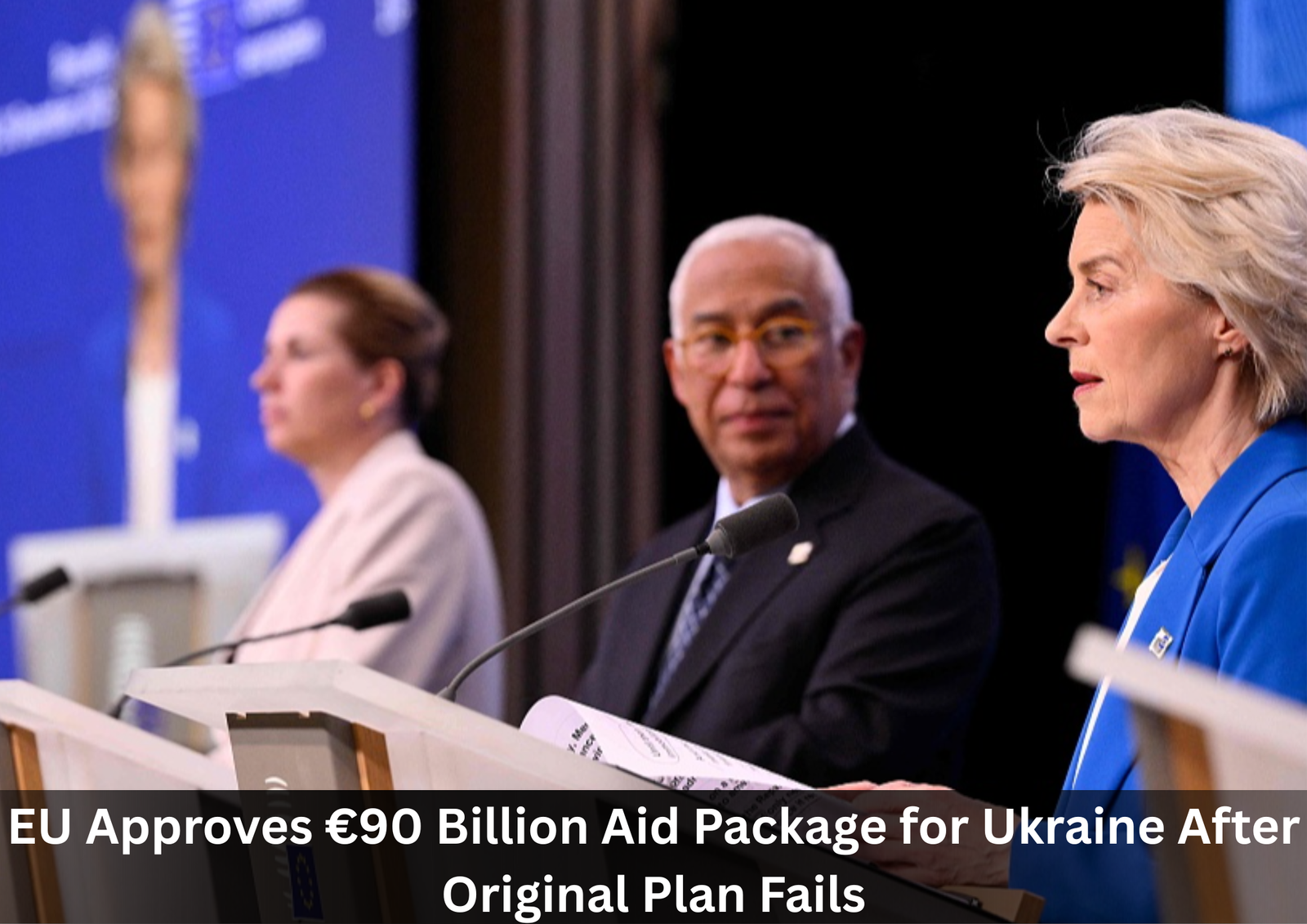
After marathon negotiations stretching deep into the night, European Union leaders have agreed to extend a €90 billion financial support package to Ukraine, marking one of the bloc’s largest collective funding commitments since the start of the war. The agreement follows the breakdown of an earlier proposal that sought to leverage frozen Russian state assets.
The decision was finalized early Friday morning after more than 16 hours of talks, underscoring both the urgency of Ukraine’s financial situation and the internal divisions among EU member states. The newly approved funds will be issued as interest-free loans designed to support Ukraine’s defense capabilities and stabilize its economy through 2027.
According to international financial estimates, Ukraine faces a substantial funding gap over the next two years and risked severe budget shortfalls as early as next year without additional assistance. EU officials acknowledged that swift action was necessary to prevent economic instability that could undermine the country’s war effort.
Initially, EU leaders had explored using roughly €210 billion in Russian central bank assets frozen within Europe as collateral for the loan. However, that approach was ultimately abandoned amid legal concerns. Belgian officials warned that such a move could expose financial institutions to lawsuits and potential retaliation, especially after Russia’s central bank initiated legal action related to the frozen funds.
Instead, the EU will raise €90 billion through international capital markets. Under the agreement, Ukraine would only be required to repay the loan if Russia eventually pays war reparations. European leaders emphasized that frozen Russian assets will remain immobilized until accountability for war damages is addressed.
The deal was not without opposition. Several Central European countries expressed reservations, arguing that increased financial aid could escalate the conflict. A compromise was reached allowing the package to move forward without their direct participation, while shielding them from potential financial risks.
Despite the late hour and intense negotiations, EU officials framed the outcome as a necessary step. Leaders described the agreement as pragmatic, balancing legal realities with geopolitical responsibility. Some analysts, however, characterized the decision as a cautious compromise rather than a bold strategic signal.
Ukrainian President Volodymyr Zelenskyy attended the summit and pressed for immediate action, warning that delays could have serious consequences on the battlefield. The talks unfolded amid demonstrations in Brussels over unrelated trade issues, adding to the tense atmosphere surrounding the summit.
Ultimately, EU leaders concluded that providing financial support now was preferable to facing greater humanitarian and security costs later. While debates over long-term funding mechanisms remain unresolved, the approved loan package ensures Ukraine will receive critical support at a pivotal moment.


