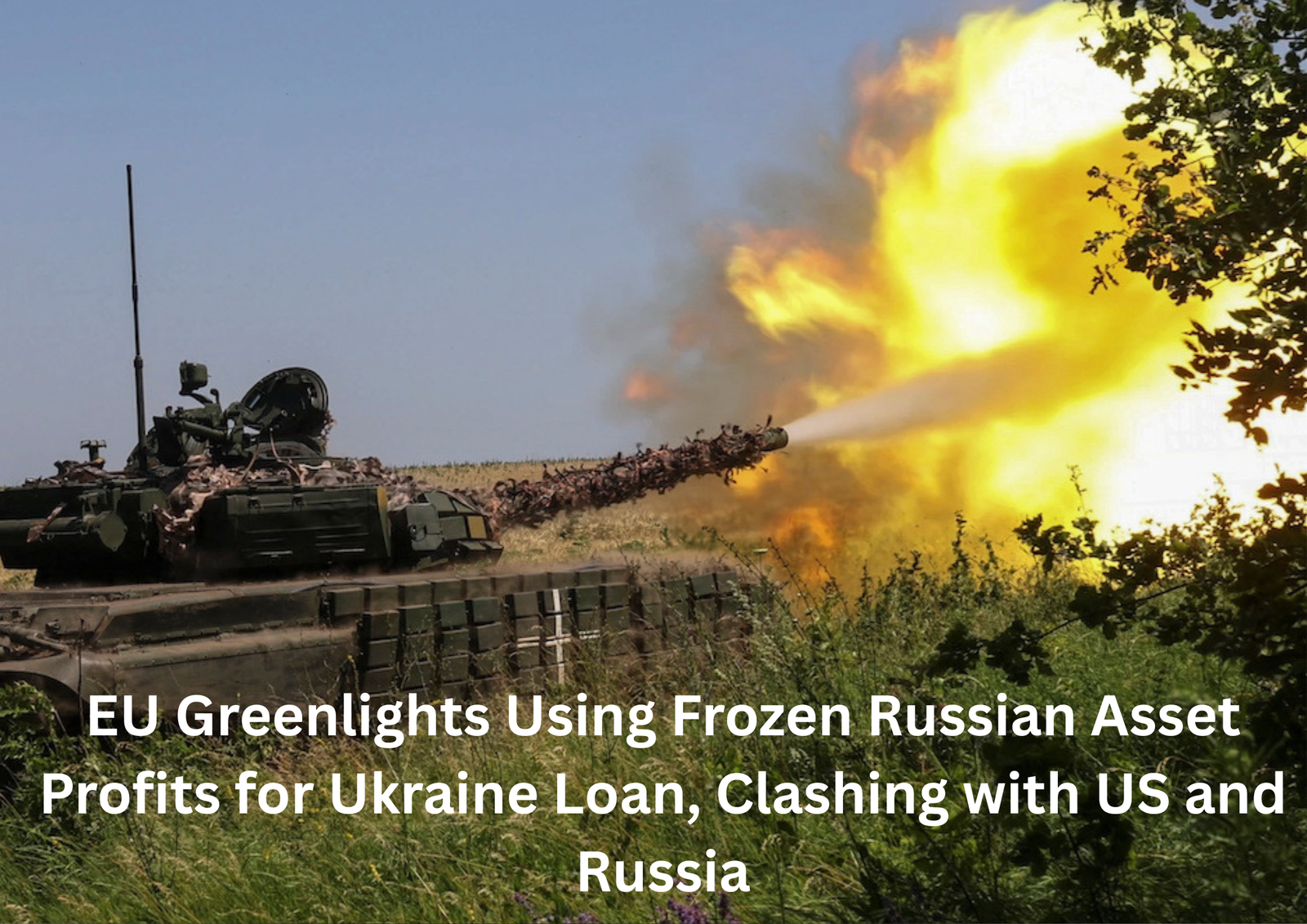
The European Union has endorsed a new financial package for Ukraine that will rely on revenue generated from frozen Russian sovereign assets, marking a significant policy shift that has already drawn objections from the United States and sharp warnings from the Kremlin.
EU ambassadors approved the initiative after weeks of internal debate, confirming that profits accumulated from Russia’s immobilized assets will be used as collateral to secure a large-scale loan for Ukraine. Officials expect the final lending amount to reach several billion euros once technical details are completed.
The plan represents the first time the EU will channel income tied to frozen Russian holdings directly into financial assistance for Kyiv. Instead of seizing the assets themselves, the bloc intends to use only the interest and other windfall gains generated annually, which European institutions estimate could total between €90 billion and €105 billion over the next few years.
Senior U.S. officials have pushed back against the EU’s approach, arguing in private and public exchanges that the structure is too slow to deliver urgently needed support. Washington has instead advocated an upfront cash model, where participating governments would immediately issue funds to Ukraine and be reimbursed later using future profits from the assets. U.S. representatives maintain this method would provide faster liquidity, describing the EU’s alternative as unnecessarily bureaucratic.
Russia reacted angrily to the announcement, denouncing the plan as an attempt to circumvent international norms. Kremlin spokesman Dmitry Peskov accused European leaders of engaging in “financial theft,” warning that Moscow would retaliate if any income linked to its sovereign reserves is redirected to Ukraine. The Russian Foreign Ministry echoed the criticism, asserting that the EU is attempting to “repackage illegality as policy.”
Despite these objections, EU officials described the decision as a demonstration of strategic independence. Diplomats involved in the negotiations emphasized that the bloc will not alter its course due to external pressure – whether from Moscow or from political uncertainties in the United States. The loan is expected to help Ukraine maintain essential government functions, stabilize its budget, and address reconstruction needs as the war continues.
The initiative also underscores a widening policy divide between Brussels and Washington over how to mobilize frozen Russian assets without triggering legal or geopolitical consequences. European governments have prioritized strict legal vetting to avoid challenges in international courts, while the United States has pressed for faster action, arguing that speed is more important than procedural caution.
Analysts say the debate reflects the broader struggle among Western allies to coordinate long-term financial support for Ukraine as the conflict shows no sign of ending. For now, the EU’s decision signals both a willingness to act independently and a commitment to sustaining Ukraine’s economy through innovative financial mechanisms.