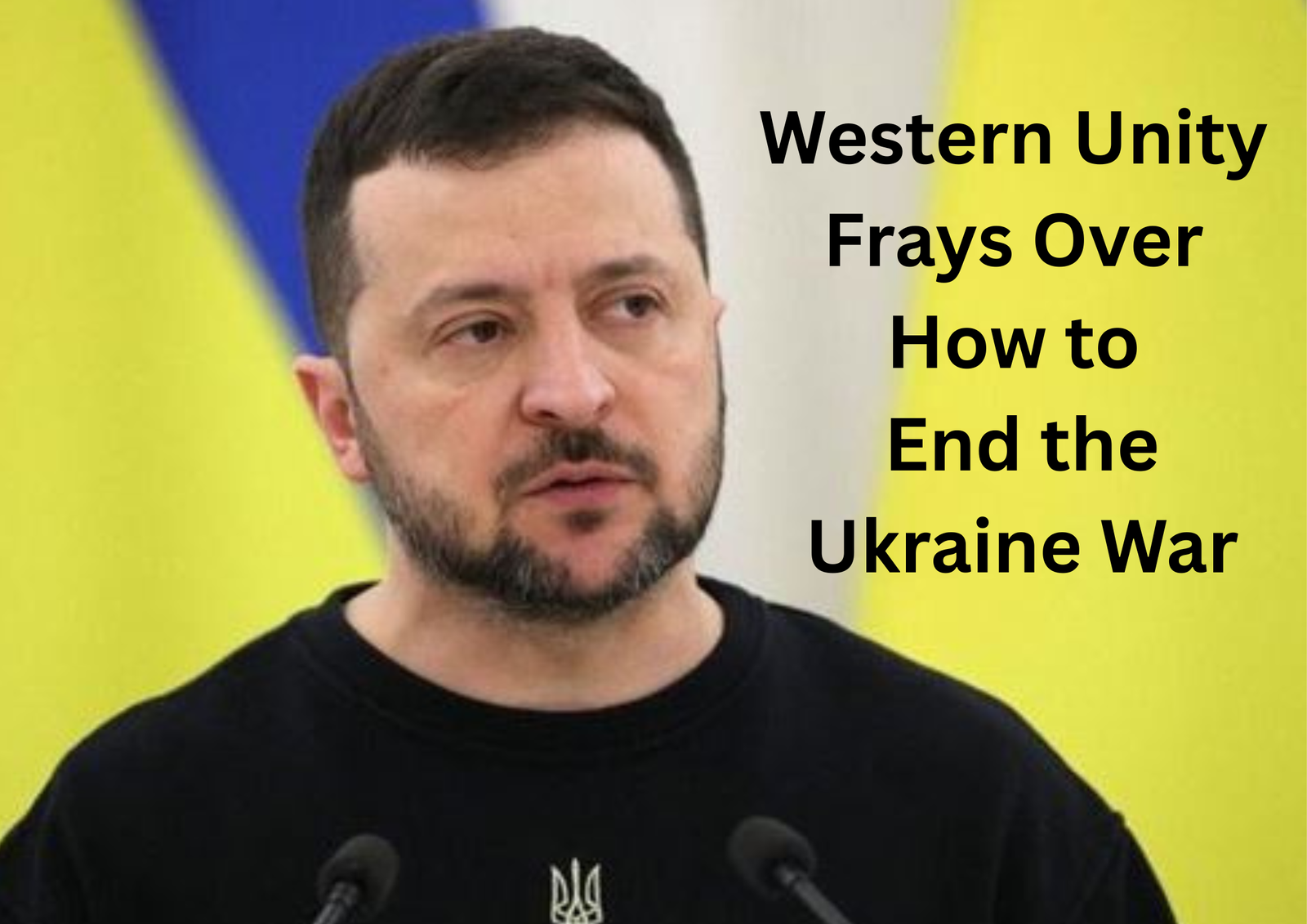
European efforts to present a united front on Ukraine’s war strategy faltered this week after high-level talks in London ended without consensus, underscoring growing uncertainty around the incoming U.S. administration’s approach to ending the conflict with Russia.
Leaders from several European nations gathered with Ukrainian President Volodymyr Zelenskyy on Monday in a bid to align their positions ahead of anticipated peace negotiations expected to involve Washington and Moscow. Instead, the meeting exposed sharp differences over the most sensitive issue of all: the future of Ukrainian territory currently under Russian control.
With the next phase of U.S. diplomacy still unclear under President-elect Donald Trump, European officials described the mood as cautious and unresolved. Several diplomats privately acknowledged that governments across the continent are operating in a “wait-and-see” posture, unsure whether Washington will pursue a hard-line territorial stance or seek compromise to accelerate a ceasefire.
President Zelenskyy emerged from the talks with a firm message. He confirmed that conversations with U.S. representatives have so far produced no concrete agreement on the status of eastern Ukraine. He stressed that Kyiv will not accept any settlement that involves surrendering land, stating that Ukraine will not give up “a single square meter” of its internationally recognized territory.
The Ukrainian leader reiterated that full Russian withdrawal from all occupied areas – including Crimea and the eastern Donbas region – remains the foundational requirement for lasting peace. Any deviation from that principle, he argued, risks freezing the conflict rather than resolving it.
However, the London discussions also revealed a growing gap between Kyiv and some of its Western partners. According to diplomatic sources familiar with the talks, certain European and U.S. policymakers are exploring possible frameworks that could involve limited territorial concessions in exchange for long-term security guarantees and eventual membership in NATO.
Zelenskyy dismissed that approach outright, calling it a simplistic and dangerous idea that would reward aggression while undermining the rules-based international order.
Compounding the uncertainty is the absence of a detailed public peace blueprint from the incoming Trump administration. Without clear signals from Washington, European capitals are left to speculate on whether future talks will prioritize rapid conflict de-escalation, territorial integrity, or strategic realignment with Russia.
The war, now entering its fourth year, continues to reshape global security dynamics. European economies remain under strain from defense spending and energy disruptions, while Ukraine depends heavily on continued Western military and financial support.
Monday’s inconclusive outcome in London illustrates how fragile diplomatic cohesion has become as major powers prepare for a possible reset in U.S. foreign policy. Until Washington defines its terms, both Europe and Ukraine face a prolonged period of strategic uncertainty – with the fate of occupied territory at the center of the impasse.