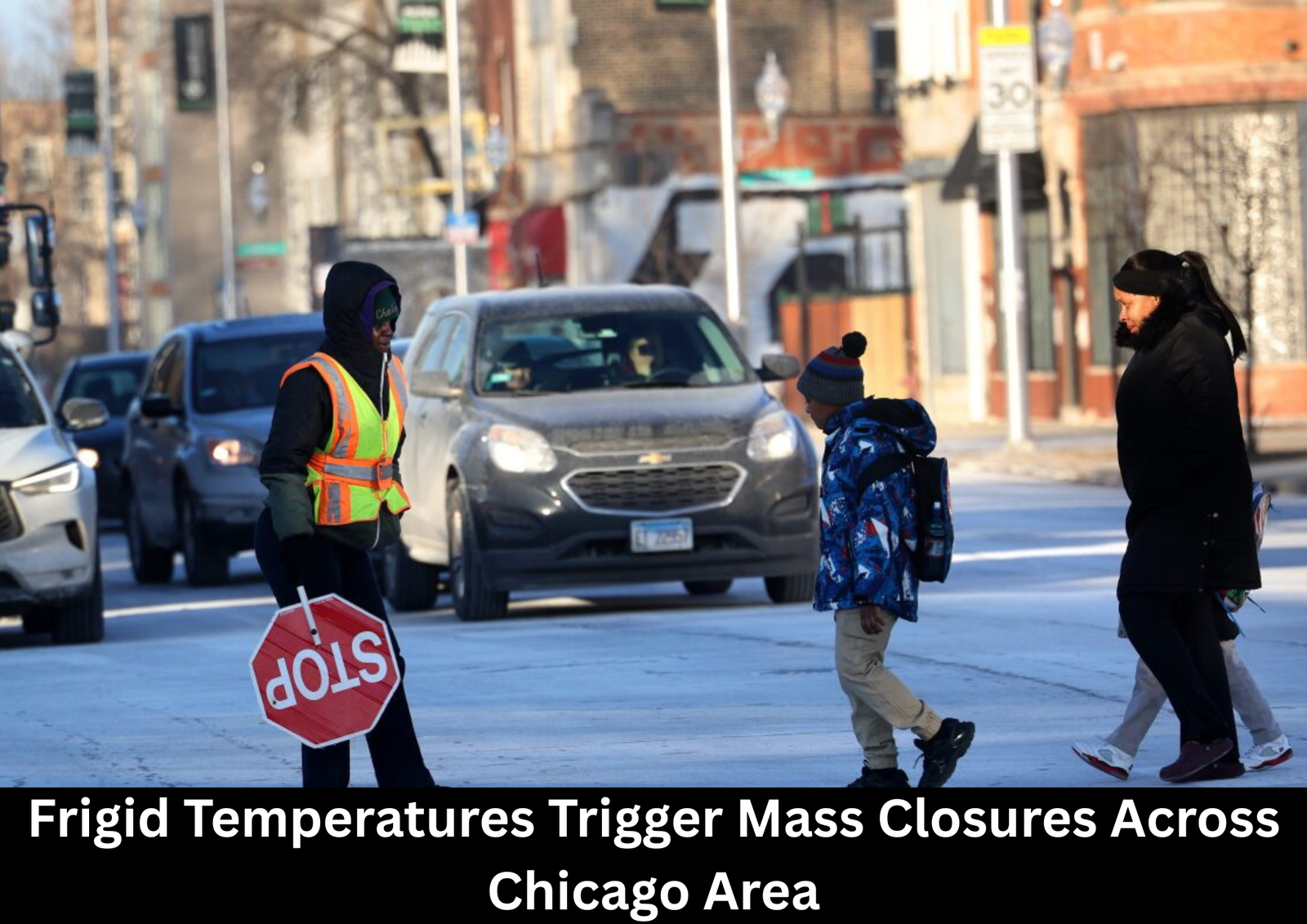
A surge of dangerously cold Arctic air swept across the Chicago metropolitan area on Friday, prompting widespread school cancellations and the shutdown of major public attractions as officials moved to protect public safety.
Chicago Public Schools announced the suspension of in-person classes for the day, citing hazardous wind chill conditions. Several suburban districts followed suit, either canceling classes outright or shifting students to remote learning as temperatures dropped to some of the coldest levels seen this winter.
The closures came after the National Weather Service issued an Extreme Cold Warning for much of northeastern Illinois. Forecasts warned of wind chills plunging between minus 30 and minus 40 degrees Fahrenheit, conditions that can cause frostbite within minutes of exposure.
Chicago’s leading cultural institutions also halted operations. The Shedd Aquarium, Adler Planetarium, and the Field Museum all announced temporary closures, reflecting the seriousness of the weather threat and the risks posed to staff and visitors.
Meteorologists described the cold wave as the most intense of the season so far, driven by a powerful Arctic air mass settling over the Great Lakes region. Officials urged residents to remain indoors when possible, dress in insulated layers if travel is unavoidable, and ensure that homes are properly heated.
Emergency services and city agencies remained on alert as the cold persisted, emphasizing that safety measures and early closures were critical to preventing weather-related injuries during the extreme conditions.
Trump Administration Broadens Foreign Aid Restrictions to Include DEI and Gender Identity Policies-don’t miss the full analysis and implications; read this blog for deeper insights and context behind the decision.