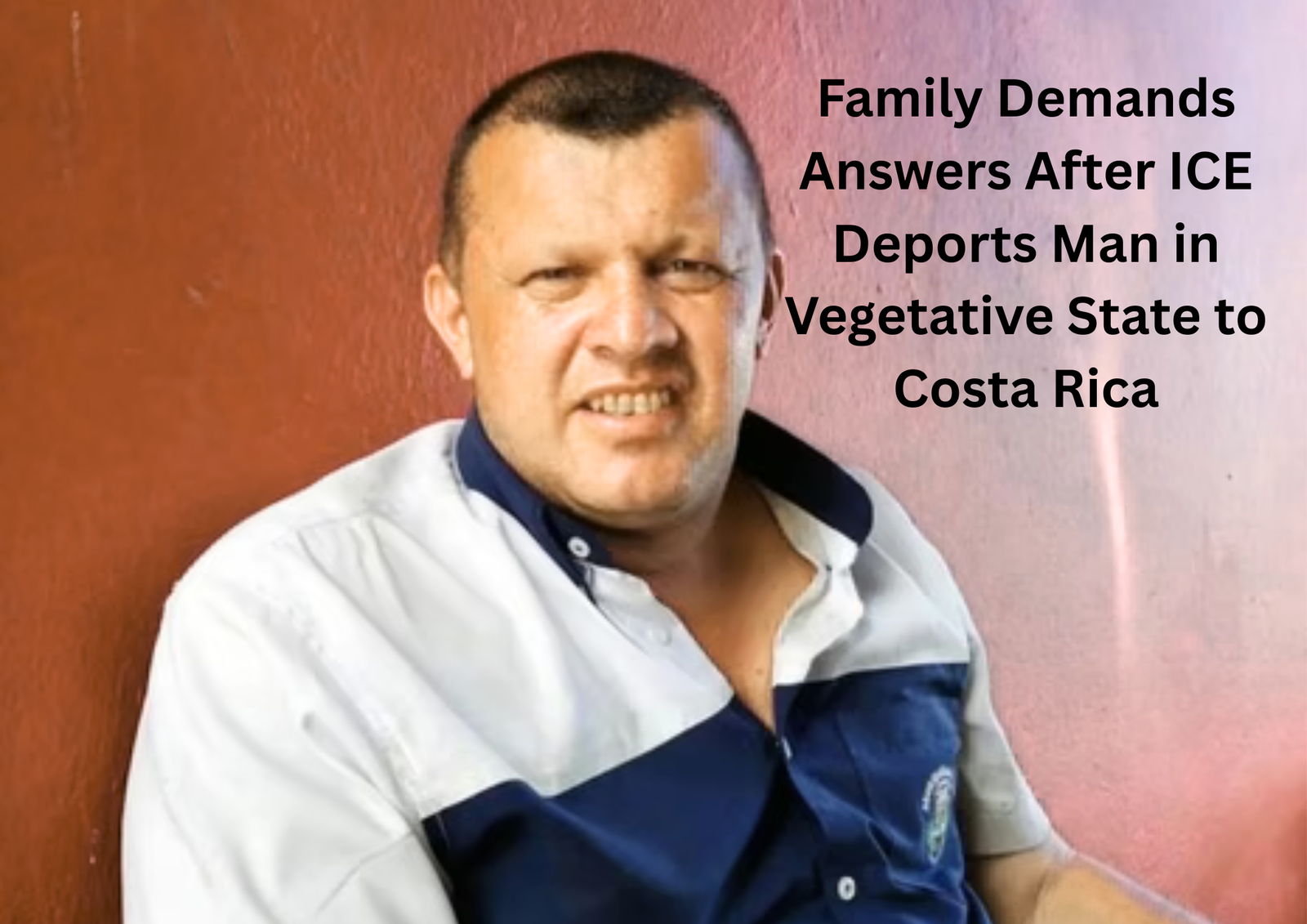
The family of Randall Gamboa Esquivel, a 52-year-old Costa Rican national, is demanding clarity from both United States and Costa Rican officials after he was deported in a vegetative state and died weeks later in his hometown. Relatives argue they were shut out of critical health information while Gamboa was held in U.S. immigration custody.
Gamboa had returned to the United States in December 2024, leaving Pérez Zeledón in southern Costa Rica in hopes of finding employment in New Jersey. He had previously lived for over a decade in the U.S. without legal status before returning home in 2013. Shortly after crossing the border, he was detained for unlawful re-entry and processed through federal immigration channels.
He was first taken to the Webb County Detention Center in Laredo, Texas, before being transferred to the Port Isabel Detention Center in Los Fresnos. According to his family, his final direct communication came during a cheerful video call on June 12, 2025. After that, weeks passed without any updates.
Medical records later revealed that his physical and mental condition deteriorated rapidly during his detention. On June 23, 2025, he was admitted to Valley Baptist Medical Center in Harlingen, Texas, with altered mental status. Notes from ICE’s Health Service Corps indicated that he was prescribed psychiatric medications, despite relatives insisting he had no prior mental health diagnoses.
In a written statement, U.S. Department of Homeland Security Assistant Secretary Tricia McLaughlin said medical personnel identified symptoms of an “unspecified psychosis” and hospitalized him for treatment. McLaughlin maintained that detained migrants have access to extensive health care services and also mentioned past criminal convictions attributed to Gamboa, though U.S. media outlets were unable to independently confirm those charges.
By early July, his medical file listed multiple serious diagnoses, including sepsis, toxic encephalopathy, and rhabdomyolysis. Physicians documented significant muscle breakdown, malnutrition, and neurological impairment. An August 2 assessment described him in a near-catatonic state, dependent on feeding tubes and with minimal movement.
For months, his family remained unaware of his emergency hospitalization. According to his sister, Costa Rican consular officials in Houston relayed that ICE claimed Gamboa did not want to speak to his relatives – a statement the family disputes. They only learned of his condition in August, after a lawyer they contacted tracked him down and confirmed he was largely unresponsive and facing removal proceedings.
On August 26, 2025, an immigration judge ordered his deportation. He was flown to Costa Rica in September on an air ambulance organized and funded by U.S. authorities. His sister described his condition upon arrival as shocking, recalling open wounds, signs of extreme malnutrition, and a strong odor. She said the sight made her initially fear he had been subjected to abuse.
Costa Rican officials acknowledged receiving notice of the deportation flight but said they were not briefed on his critical state. The Ministry of Foreign Affairs declined to answer questions about whether consular representatives visited him while hospitalized in Texas.
Gamboa died on October 26, 2025, in a hospital in Pérez Zeledón with relatives at his side. The final cause of death on his certificate was left blank pending additional forensic examinations. Authorities stated that neuropathological evaluations could take up to four months to complete.
His case unfolded during an unprecedented rise in immigration detention under the Trump administration. By late 2025, ICE was detaining more than 68,000 individuals nationwide, and at least 32 deaths occurred that year – the highest figure reported since 2004.
Former detainees who interacted with Gamboa said he often spoke lovingly about his family. One detainee said claims that he refused to contact relatives were inconsistent with how he spoke of them during detention.
For relatives, the grief remains paired with unanswered questions. They are calling for accountability and a transparent investigation into how a previously healthy man came home gravely ill and died shortly thereafter. Local residents in Pérez Zeledón say the case has rattled the community and reshaped perceptions of migration to the United States.
Bipartisan Senators Question Wisdom of Potential U.S. Strike on Iran Amid Unrest – read this blog for a deeper breakdown of the unfolding situation and its global implications.