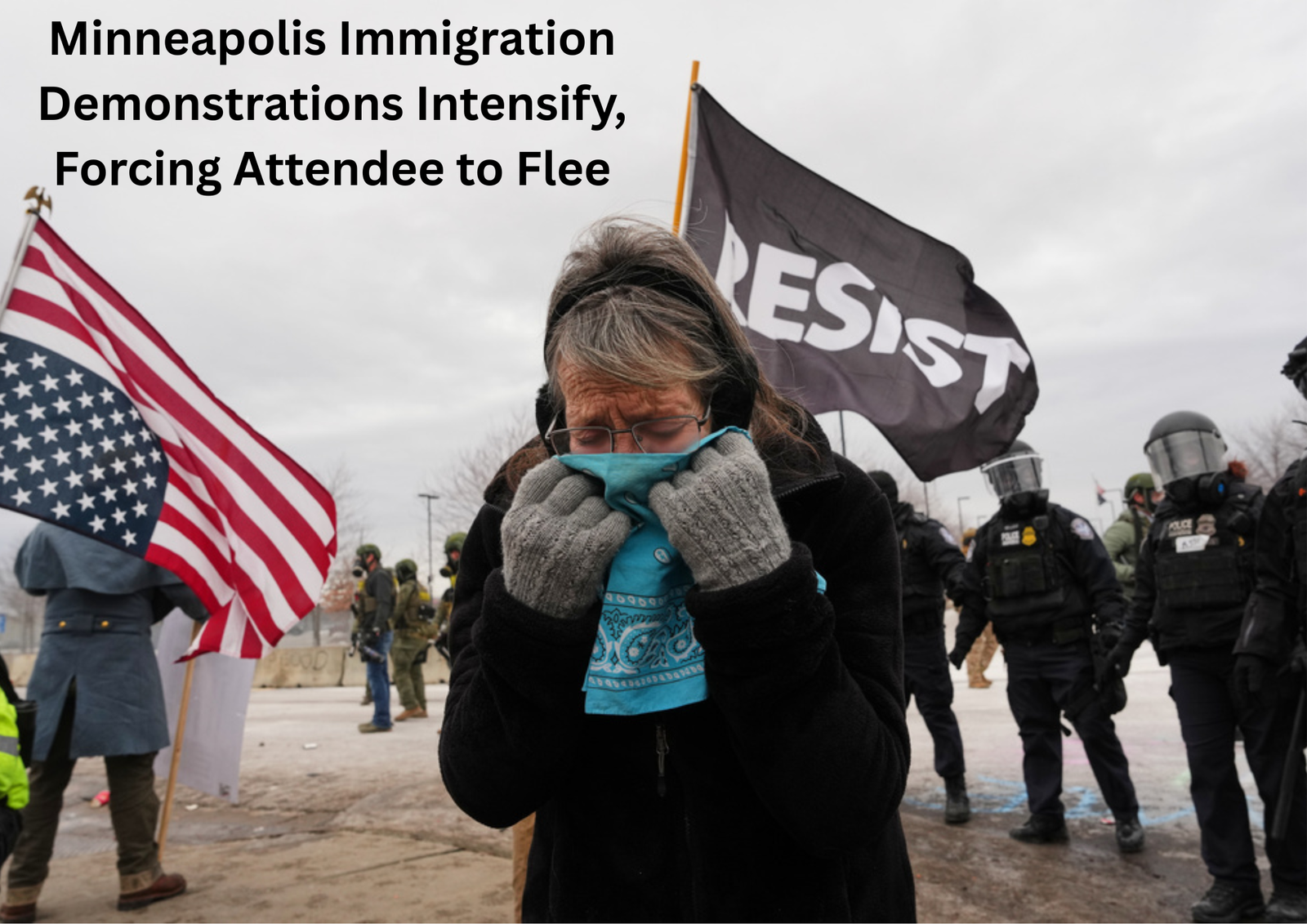
A small demonstration organized by far-right activist and aspiring political figure Jake Lang collapsed into chaos on Saturday, January 18, 2026, after hundreds of counter-protesters overwhelmed the gathering just blocks from Minneapolis City Hall. The city, already strained by ongoing protests over federal immigration enforcement actions, saw another day of turbulent street politics as competing groups met face-to-face.
Lang had promoted what he described as a pro-Immigration and Customs Enforcement (ICE) rally with messaging that targeted Somali and Muslim residents of the Twin Cities. Before arriving, he circulated posts online hinting he would publicly burn a Quran. Although those posts gained national attention, witnesses at the event expressed uncertainty about whether the stunt ever occurred. Lang appeared at the rally wearing a tactical vest and attempted to speak through a portable sound system as a collection of followers gathered briefly around him.
Counter-demonstrators, reportedly numbering in the hundreds, surged toward the plaza shortly after his remarks began. The group shouted chants that drowned out Lang’s speech and pelted his supporters with snowballs and water balloons. Witnesses said tensions escalated when counter-protesters demanded that one participant remove a shirt they viewed as Islamophobic. The confrontation intensified until Lang and his group began retreating from the area.
Video clips shared on social platforms showed Lang being shoved and pursued down several city blocks. At one point he appeared to fall on the slick pavement as demonstrators continued chasing him. Photos posted later showed him bleeding from a gash on his forehead and covered in scrapes. Minneapolis police did not immediately confirm how Lang sustained his injuries, and no formal police report had been filed regarding the altercation as of Sunday afternoon.
While attempting to escape, Lang approached a stopped vehicle at a traffic light driven by local resident Daye Gottsche and her friend, who were on their way to meet others for the evening. Lang pleaded to be let inside, according to their later account, and climbed into the back seat as an agitated crowd banged on the car and attempted to pull the door open. The vehicle’s taillight was damaged before the crowd parted and allowed the women to drive away.
Gottsche and her passenger drove Lang several blocks, during which he reportedly implied that President Donald Trump had “saved his life” and referred to himself as “a bad boy” in reference to his political persona. Upon exiting the vehicle, Lang entered another car waiting nearby. Later that night he posted messages online claiming he had survived a stabbing attempt that was stopped by his protective vest. However, Minneapolis Police spokesperson Trevor Folke told local outlets that authorities had received no report of such an attack and were not currently investigating a stabbing incident connected to the rally.
The dramatic encounter unfolded against a larger backdrop of simmering unrest over a major federal immigration operation in the Minneapolis–St. Paul metropolitan region. Early in January, federal officers from multiple agencies began sweeping raids and detentions targeting individuals believed to be in violation of immigration orders. Local immigrant-advocacy organizations estimate several hundred families have experienced home visits, workplace checks, or detentions since the campaign began.
Public outrage intensified after the fatal shooting of Renee Nicole Good, a U.S. citizen and mother of three, during a confrontation with an ICE officer on January 7. The Department of Homeland Security alleges Good attempted to run over federal officers with her vehicle. Video from nearby security cameras has fueled competing narratives, with civil-rights activists arguing that the footage contradicts the federal government’s characterization. Vice President J.D. Vance, speaking at a press briefing, labeled Good a “domestic terrorist,” a remark that triggered further protests and condemnation from local political leaders. Good’s spouse, Rebecca Good, is now under federal investigation for allegedly obstructing officers during the altercation.
Another case drawing national scrutiny involves 38-year-old Liberian immigrant Garrison Gibson, who came to the United States as a child and had been living under an immigration order of supervision for several years. Federal officers forcibly entered his home on January 11, detaining him despite his legal status. A judge later ordered his release on grounds that he had not been properly notified of changes to his immigration conditions. Gibson was unexpectedly detained again during a routine check-in last Friday before being released a second time. His family claims the re-arrest was directed by senior White House officials, though national spokespersons denied the allegation.
The Biden-Trump transition period laid groundwork for political polarization on immigration enforcement, and the current administration has shown no sign of backing down. President Trump has repeatedly signaled that the use of federal troops remains an option if state officials cannot quell protests or uphold immigration actions. According to multiple broadcast outlets, the Pentagon has issued “prepare-to-deploy” notices to approximately 1,500 soldiers from the 11th Airborne Division based in Alaska. While no deployment has been executed, the orders have raised alarms among civil-liberties groups.
Governor Tim Walz authorized Minnesota’s National Guard to be mobilized in a standby capacity more than a week ago. Guard spokesperson Maj. Andrea Tsuchiya confirmed units are prepositioned but not yet in the field. Walz criticized federal rhetoric, arguing that aggressive interventions risk escalating a public safety issue into a constitutional crisis. Minneapolis Mayor Jacob Frey echoed that sentiment, telling CNN it would be unlawful for active-duty soldiers to conduct domestic policing operations. “I never expected to see our own government talking about deploying troops into our streets,” Frey said.
Legal tensions escalated further on Friday when a federal judge issued an order limiting immigration officers’ ability to detain or use chemical agents on protesters who are not engaging in physical obstruction. The Department of Homeland Security condemned the ruling, stating that it undermines ongoing federal operations. Assistant Secretary Tricia McLaughlin vowed the agency would continue to pursue what it considers lawful immigration removals and enforcement actions.
Saturday’s street confrontation in Minneapolis illustrated how national debates over immigration policy are increasingly playing out in city centers. While Lang’s followers framed the rally as a defense of federal law enforcement, counter-protesters viewed it as an attack on the region’s large Somali and Muslim communities. Local organizers accused Lang of intentionally provoking conflict to generate media attention. By early evening, demonstrators dispersed without major arrests, though immigration protests continued elsewhere in the city.
Minnesota remains a flashpoint in the national conflict over immigration enforcement, civil liberties, and federal authority. With legal battles underway, investigations pending, and security forces mobilized on multiple levels of government, the next phase of the crisis appears poised to extend well beyond the Twin Cities.
President Trump’s Greenland Remarks Renew Debate Over U.S. Arctic Strategy, igniting global discussion on power, resources and influence. Check out the full blog now for deeper insights.