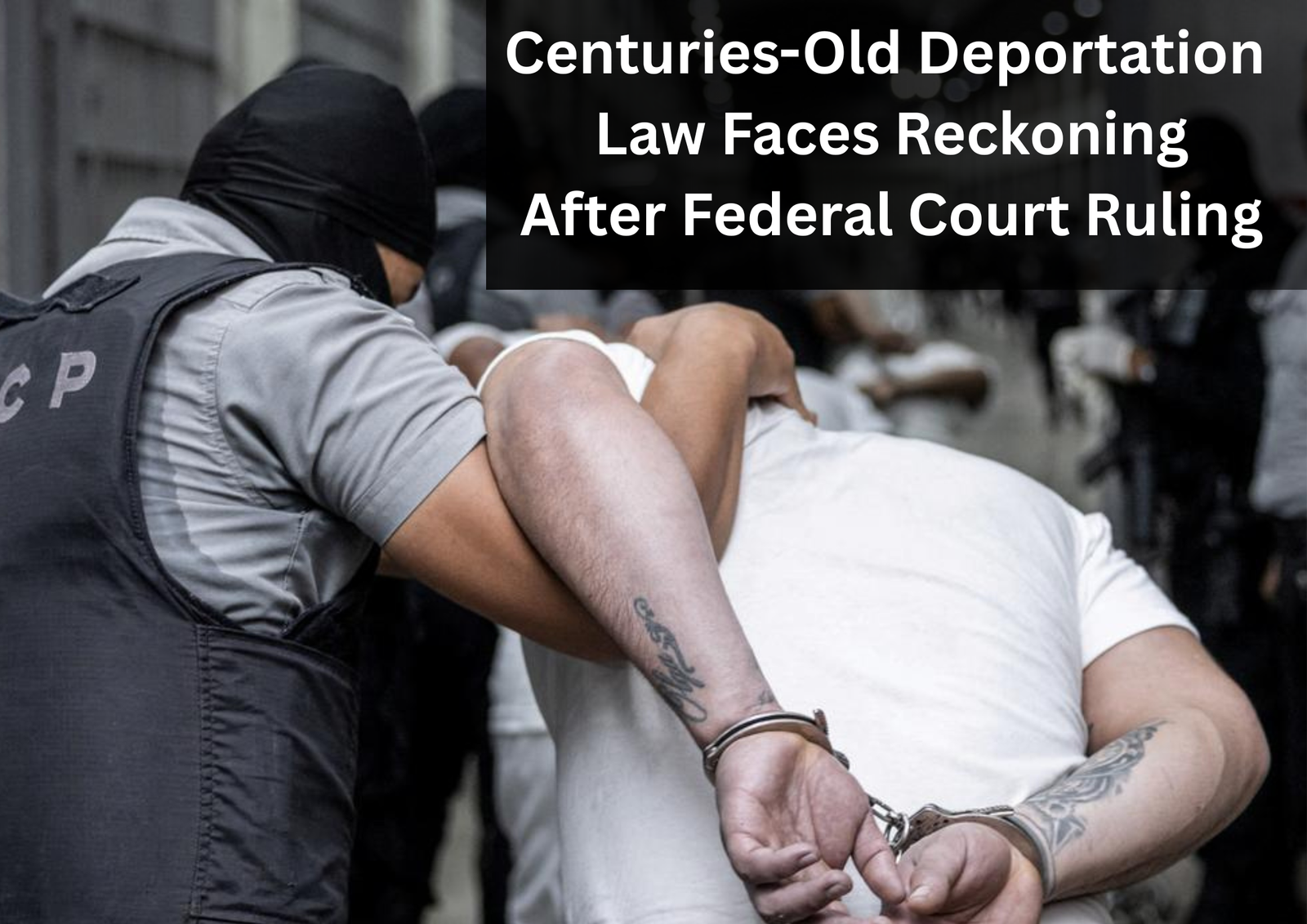
A federal judge has ruled that the U.S. government failed to provide basic legal protections to a group of Venezuelan nationals deported earlier this year under a rarely used wartime statute, ordering the administration to outline corrective steps by early January.
U.S. District Judge James Boasberg determined that the deportations, which sent dozens of Venezuelan men to a high-security prison in El Salvador, violated constitutional due process requirements. The men were removed from the United States after being labeled “alien enemies” under the Alien Enemies Act of 1798, a law originally intended for use during armed conflict.
In his ruling, Judge Boasberg instructed the administration to submit a plan by January 5 explaining how it will either allow the affected individuals to challenge the allegations against them or take steps to return them to the United States for proper legal proceedings.
Deportations Conducted Without Hearings
The case centers on deportations carried out in mid-March after the administration alleged that certain Venezuelan migrants were connected to Tren de Aragua, a transnational criminal organization originating in Venezuela. Federal officials asserted that the group posed a national security threat and used the centuries-old statute to expedite removals without traditional immigration hearings.
However, the court found that the deported individuals were given little to no notice and no meaningful opportunity to contest the claims against them. Judge Boasberg wrote that such actions ran counter to long-established constitutional protections, regardless of the government’s national security assertions.
Jurisdiction Despite Foreign Detention
Although the men were transferred to El Salvador’s CECOT mega-prison, the court rejected the argument that U.S. jurisdiction ended once the deportations occurred. The judge ruled that the United States maintained effective control over the detainees, allowing the court to retain authority over the case.
The group of individuals deported on March 15 was formally certified as a class, allowing the lawsuit to proceed collectively rather than on a case-by-case basis.
Human Rights Concerns Raised
Several human rights organizations later raised alarms about conditions inside the El Salvador prison, citing allegations of physical abuse and mistreatment. While the court’s ruling focused on procedural rights rather than prison conditions, the reports added urgency to the legal challenge.
The deported men were ultimately returned to Venezuela in July as part of a diplomatic prisoner exchange facilitated by the United States, though the legal questions surrounding their removal remain unresolved.
Legal Dispute Continues
The administration has maintained that once deported, the individuals were no longer under U.S. control and that the court’s involvement interferes with executive authority over immigration and foreign policy. Federal lawyers are expected to appeal the ruling.
In a related matter, Judge Boasberg previously found sufficient grounds to consider whether the government violated a court order intended to halt the deportation flights. Those contempt proceedings are currently paused following an emergency stay issued by an appellate court.
Broader Implications
Civil liberties groups argue the ruling reinforces a fundamental principle: immigration enforcement must still comply with constitutional safeguards. Attorneys representing the plaintiffs say the decision sends a clear message that extraordinary laws cannot be used to bypass due process.
The case could have lasting implications for how rarely invoked emergency powers are applied in modern immigration enforcement, particularly when national security claims intersect with individual rights.