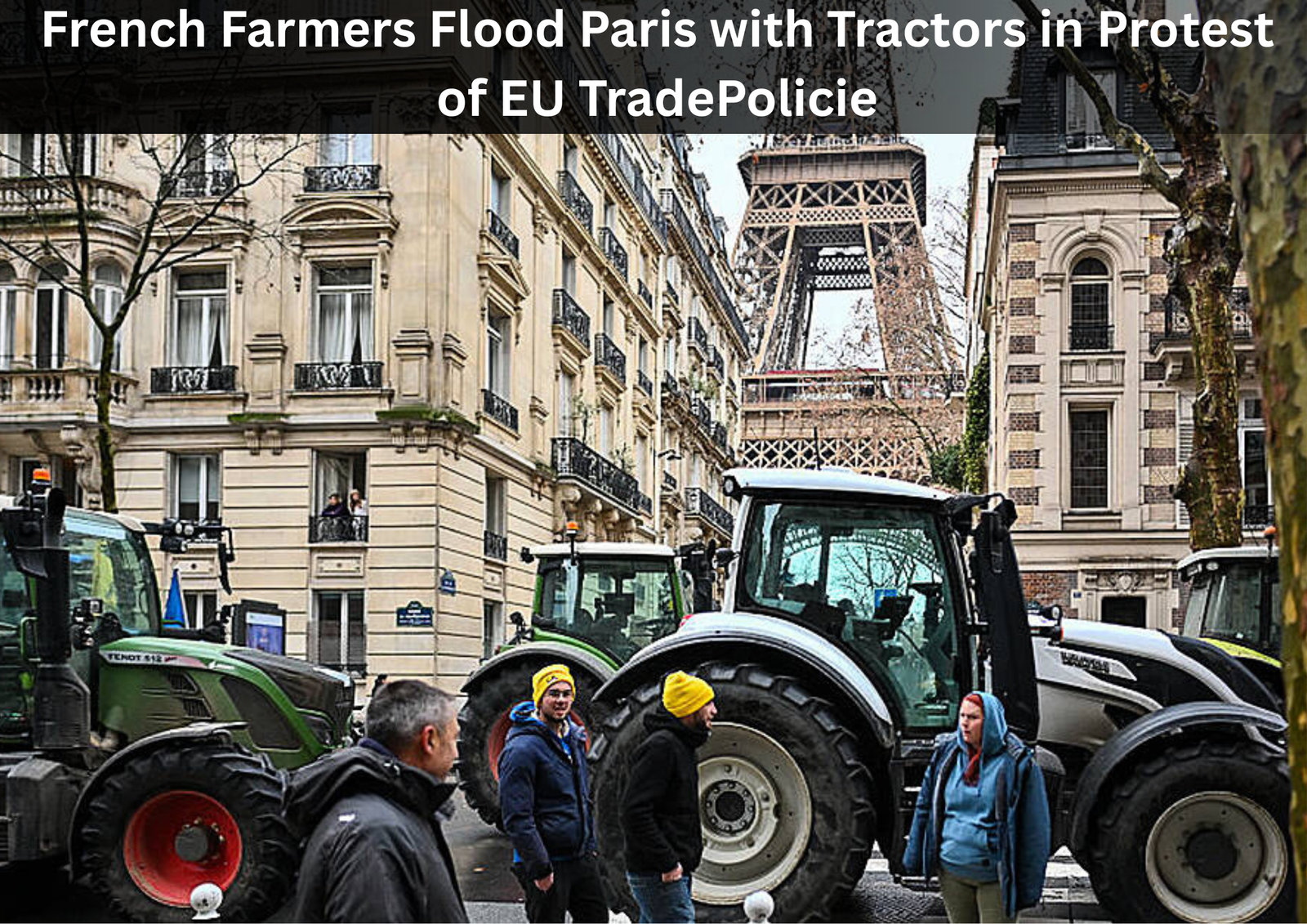
Major roads surrounding the French capital were lined with tractors this week as thousands of farmers from across the country rolled into Paris to voice opposition to ongoing European Union trade negotiations. The large-scale protest marked one of the most visible mobilizations by the agricultural sector in over a decade, drawing national attention and temporarily slowing traffic around the Île-de-France region.
Farmers participating in the demonstration argue that new trade policies-particularly the long-discussed Mercosur deal between the EU and South American nations-could undercut French agriculture by allowing cheaper imports produced under different environmental and quality standards. Many participants displayed banners reading “Fair Trade, Not Free Trade” and “Don’t Sacrifice Our Agriculture,” reflecting concerns over economic pressure and regulatory consistency.
Agricultural unions say that imposing strict standards on European farmers while allowing imports produced under looser requirements makes fair competition impossible. “Producers here invest heavily in sustainability and animal welfare,” one dairy farmer from Normandy explained. “If imports don’t meet the same criteria, the playing field becomes uneven, and family farms suffer first.”
The Mercosur agreement has been in negotiation for more than twenty years and aims to create a major free-trade zone between the EU and Argentina, Brazil, Paraguay, and Uruguay. Supporters say the pact could boost European industrial exports, while critics warn that sensitive agricultural sectors would absorb the impact.
French officials acknowledged the growing discontent. Agriculture Minister Marc Fesneau stated that France would defend its standards throughout negotiations, noting that “food production is not just an economic sector but a strategic pillar of the country.” EU representatives, meanwhile, insisted that trade safeguards exist for farmers and that environmental protections form part of the agreement framework.
Beyond trade issues, the Paris protest also drew attention to rising production costs, regulatory burdens, and ongoing price pressures in European food markets. Similar demonstrations in recent years have already forced adjustments at the EU level, including delays and revisions to pesticide and environmental directives following farmer pushback.
Police reported that the protest remained peaceful. While some grocery chains noted minor logistical delays due to blocked roads, officials confirmed there were no significant disruptions to national food supply.
Many participants signaled they were prepared to remain in place with their tractors for an extended period, vowing to continue until their concerns receive meaningful attention. Analysts say the demonstration could influence talks ahead of the next EU-Mercosur summit expected later this spring.
The Paris protest ultimately highlights an ongoing debate within Europe: how to balance global trade opportunities with the sustainability of domestic food production. With farmers across the continent watching closely, the outcome of these negotiations may set the tone for European agriculture policy in the coming decade.
Read this analysis on my blog: Israeli Strikes in Gaza Leave Multiple Casualties Following Reported Rocket Misfire.