
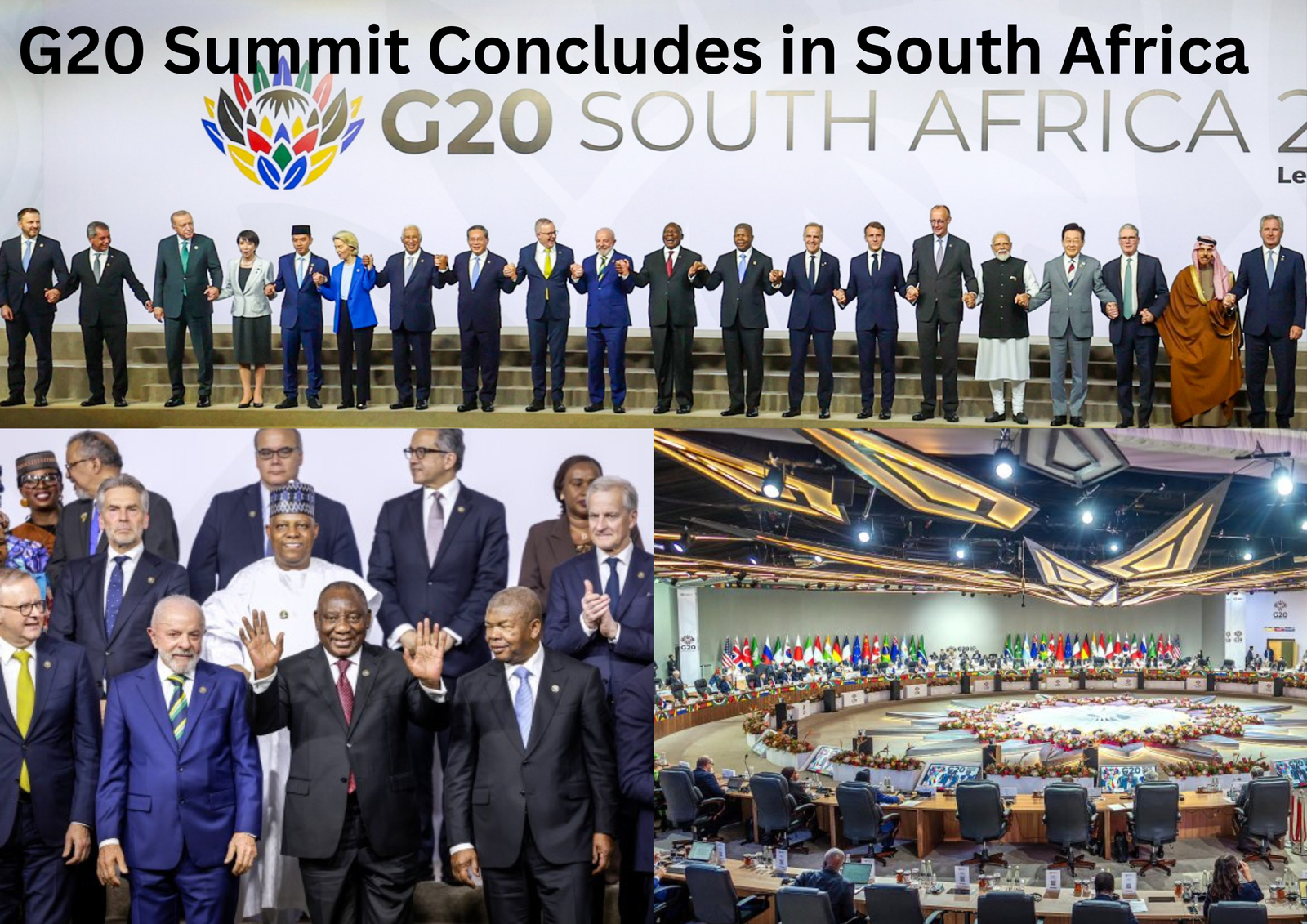
The 2025 G20 summit in Johannesburg concluded on November 23 with South Africa formally handing the group’s presidency to the United States, closing two days of intense discussions overshadowed by the wars in Gaza and Ukraine. South African President Cyril Ramaphosa, who presided over the gathering, marked the transition with a symbolic presentation of the G20 gavel to U.S. representatives. The handover segment, recorded in advance, sets the stage for the United States to host next year’s leaders’ meeting.
Despite the smooth ceremonial exchange, the summit was defined by difficult and often divided negotiations. Conversations around the conflict in Gaza dominated much of the agenda. The final communiqué stopped short of calling for a full ceasefire after objections from the United States and several allied nations. Instead, the document urged a “humanitarian truce” and highlighted the urgency of easing civilian suffering. It also condemned the Hamas-led attacks of October and pressed for the immediate release of all hostages. Leaders reiterated support for a two-state solution, warning that the humanitarian situation in Gaza has reached catastrophic levels.
Talks on the war in Ukraine were similarly tense. Western countries pushed for direct criticism of Russia, but a lack of consensus led to a more moderate formulation. The compromise underscored the difficulty of uniting the bloc’s diverse political interests.
U.S. President Donald Trump attended the summit in person and met bilaterally with President Ramaphosa. The U.S. delegation was heavily involved in negotiations surrounding the Middle East portion of the final statement. This year’s participation also marked a shift from the previous summit, where Washington sent a lower-level delegation to Brazil.
In his closing remarks, President Ramaphosa acknowledged the challenging diplomatic environment, noting that global divisions made this year’s summit “very difficult.” Even so, the successful publication of a joint communiqué was widely viewed as a diplomatic achievement for South Africa, given the widening geopolitical rifts among member states.
Beyond the major conflicts, leaders also addressed long-term development issues, including global poverty and proposed reforms to multilateral development banks. African heads of state used the opportunity to advocate for stronger representation for the Global South within global financial and decision-making institutions.
The summit’s conclusion positions the United States to guide the G20 through a year expected to be marked by continued geopolitical strain, economic uncertainty, and efforts to rebuild cooperation among major economies.


