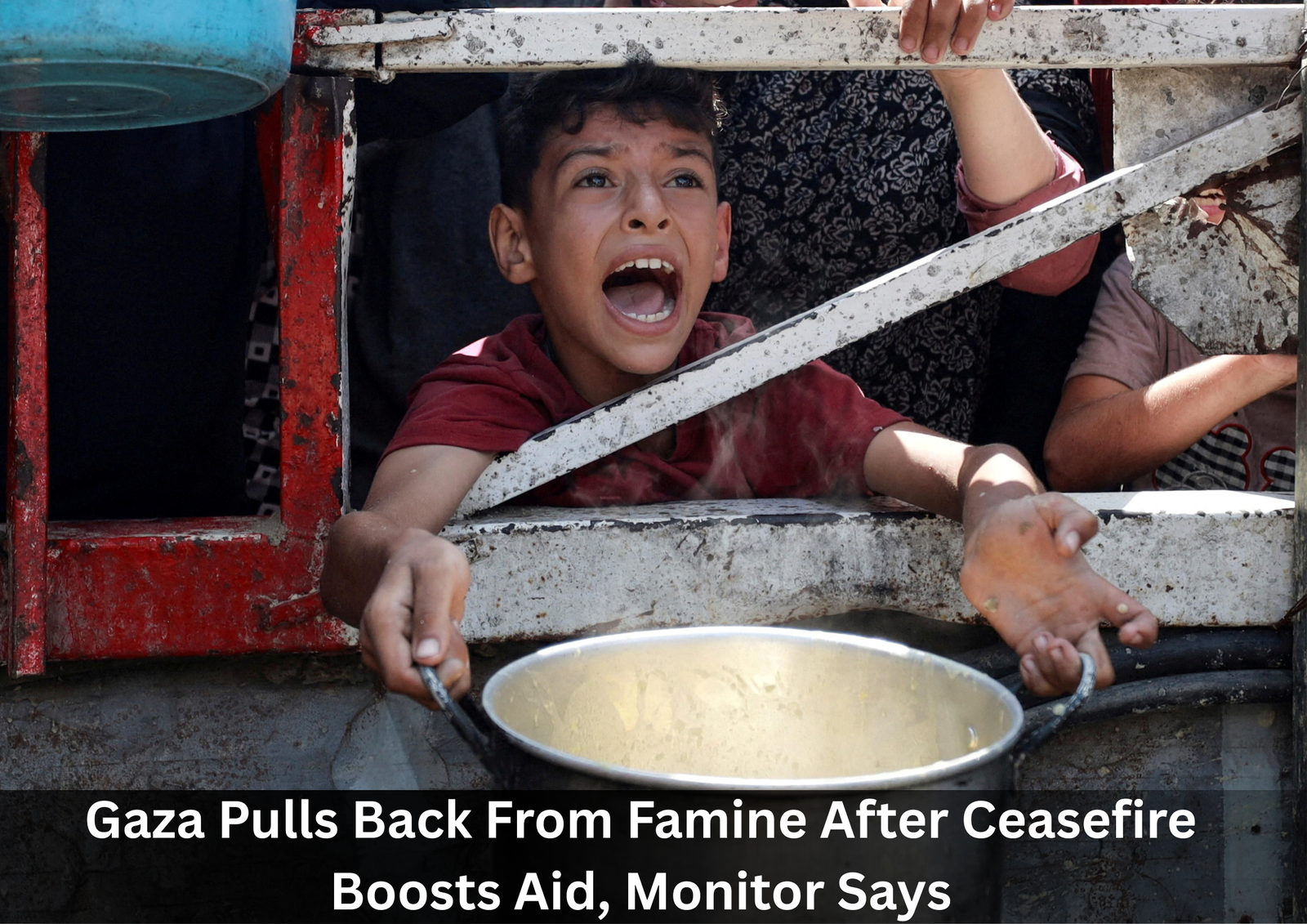
A global food security watchdog supported by the United Nations has reported that famine conditions are no longer present in the Gaza Strip following increased humanitarian access after an October ceasefire. Despite this improvement, the agency warned that the territory remains in a state of extreme food insecurity, with millions still struggling to meet basic nutritional needs.
The Integrated Food Security Phase Classification (IPC), which assesses hunger crises worldwide, stated that no region in Gaza currently meets the criteria for famine. This represents a notable change from its August 2025 assessment, when parts of the enclave were labeled as experiencing famine driven by prolonged conflict and restricted aid.
According to the IPC, the easing of hostilities, combined with expanded humanitarian corridors and limited commercial food deliveries, has helped stabilize the situation. However, the organization emphasized that Gaza remains classified at the “Emergency” level, the second-highest category on its five-stage scale.
The latest analysis estimates that around 1.6 million residents are facing acute food insecurity. Among them, more than 100,000 people are still enduring “catastrophic” hunger conditions, while roughly half a million are categorized as living in emergency-level food shortages. The report cautioned that these figures reflect ongoing vulnerability rather than recovery.
Projections suggest that the number of people experiencing catastrophic hunger could decline significantly by April 2026, provided current aid flows continue. Still, the IPC warned that the outlook remains fragile. Any renewed fighting or disruption to humanitarian access could quickly reverse recent gains and push several areas back toward famine-like conditions.
Food insecurity in Gaza continues to be fueled by widespread displacement, damage to infrastructure, and the near-total destruction of agricultural land. The report noted that more than 730,000 people remain displaced, while livelihoods have been severely impacted, leaving families dependent on external assistance.
Israeli authorities rejected the IPC’s conclusions, arguing that the assessment does not accurately reflect conditions on the ground. Officials cited a substantial increase in daily aid deliveries, stating that hundreds of trucks now enter Gaza each day, many carrying food supplies that exceed international benchmarks.
Humanitarian organizations, while acknowledging improved access since the ceasefire, say aid delivery remains inconsistent and insufficient to support long-term stability. Several agencies reported bottlenecks at border crossings and delays that prevent food and relief supplies from reaching those most in need.
The humanitarian situation has been further strained by winter weather, with heavy rains and cold temperatures affecting displaced families living in temporary shelters. Health officials have warned that exposure, poor sanitation, and overcrowding continue to pose serious risks, particularly for infants and the elderly.
Meanwhile, diplomatic efforts to advance the next phase of the ceasefire agreement have stalled. Mediators have cautioned that ongoing violations and delays threaten the broader peace process. The IPC concluded that sustained, reliable humanitarian access-alongside economic recovery measures-is essential to prevent Gaza from slipping back into famine conditions.