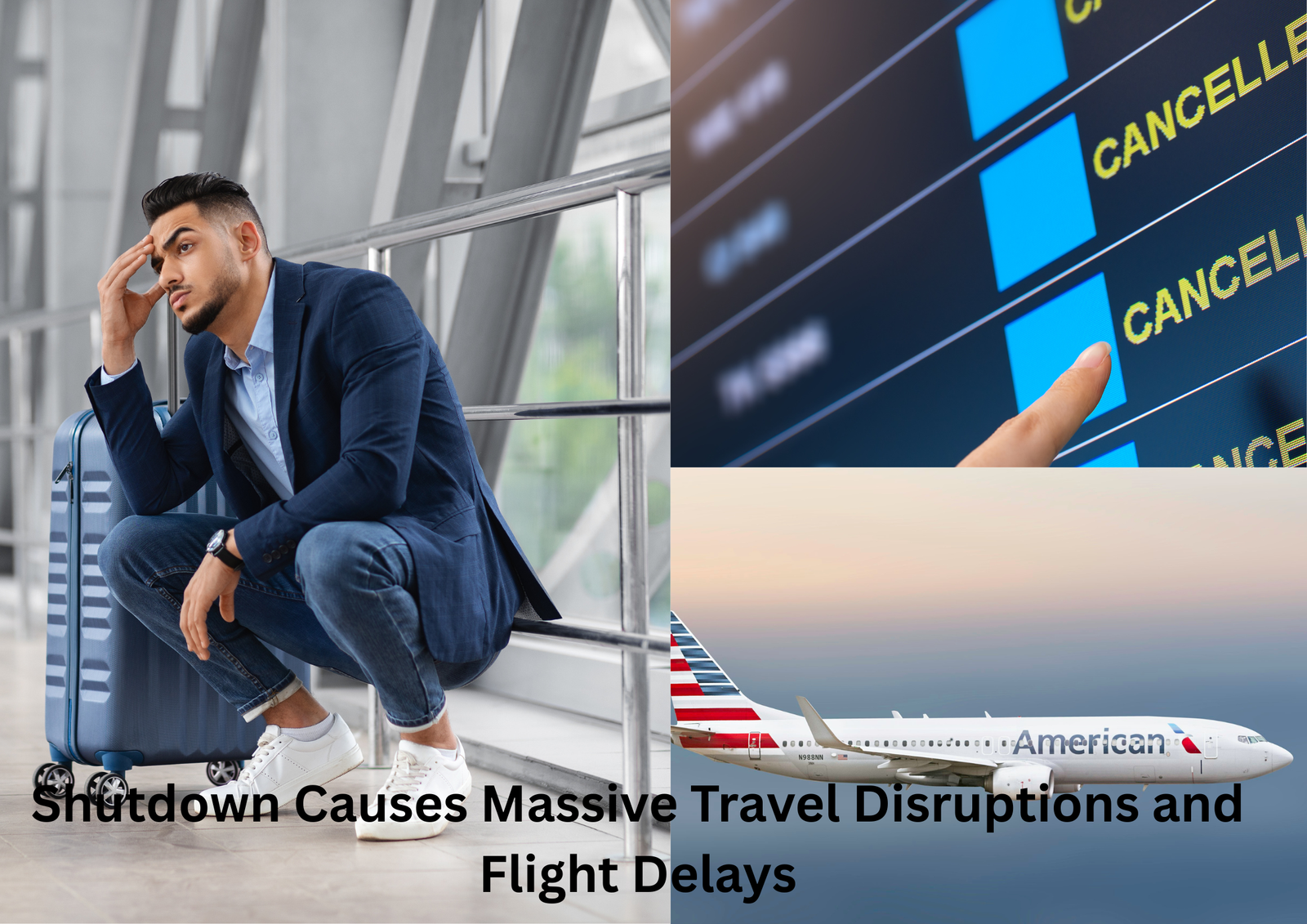
Airports across the United States descended into confusion this weekend as the ongoing federal government shutdown triggered one of the most severe disruptions to domestic air travel in years. With thousands of flights delayed and hundreds canceled, passengers are experiencing long lines, uncertainty, and frustration at terminals nationwide.
Essential Workers Under Strain
The chaos stems from severe staffing shortages among critical aviation personnel. Air traffic controllers and Transportation Security Administration (TSA) officers have been ordered to continue working without pay during the shutdown. Many, facing financial strain, have called in sick or taken leave-leaving control towers and security checkpoints dangerously understaffed.
A senior air traffic controller at Chicago’s O’Hare International Airport, speaking on condition of anonymity, said, “Morale is low, and people are exhausted. The system is running, but just barely.”
SFO Among Hardest Hit
San Francisco International Airport (SFO) reported some of the worst impacts. By early morning, 33 flights were canceled, while 200 others faced significant delays. The Federal Aviation Administration (FAA) implemented a ground delay program, slowing the flow of incoming and outgoing aircraft to maintain safety amid limited staff availability.
Widespread Airport Disruptions
Other major hubs were hit almost as hard. Newark Liberty International (EWR), Hartsfield-Jackson Atlanta International (ATL), and LaGuardia (LGA) all reported waves of cancellations and multi-hour delays. Airlines scrambled to adjust schedules and reposition aircraft to keep operations running.
The FAA also issued two separate ground stops affecting flights headed for Florida airspace after a staffing shortage emerged at the Jacksonville Air Route Traffic Control Center. The stoppages temporarily halted all incoming flights, further adding to the national backlog.
Airlines Offer Flexibility
In response to the mounting crisis, several airlines-including United, Delta, and American-have waived change fees for passengers affected by the disruption, allowing travelers to rebook flights at no additional cost. Many carriers are also increasing customer service capacity to manage the surge in rebooking requests.
Government and Industry Reaction
Transportation Secretary Pete Buttigieg issued a stark warning on Saturday, acknowledging that “the system is less safe and less efficient” under the current shutdown. He emphasized that prolonged disruption could lead to “more serious consequences” for aviation safety and the economy.
An FAA spokesperson said the agency is “closely monitoring operational impacts” and working to “ensure the continued safety of the national airspace.” Meanwhile, the airline industry group Airlines for America confirmed that its members are “proactively managing staffing and schedule adjustments” to minimize passenger disruption.
Travelers Left in Limbo
For many passengers, however, the situation remains dire. Families have been stranded overnight, business travelers have missed meetings, and vacation plans have unraveled.
As the federal impasse drags on, aviation experts warn that the longer the shutdown continues, the greater the risk of systemic breakdowns. With fewer controllers, rising fatigue, and mounting stress, the air travel network could face deeper disruptions in the coming days.
Until Congress reaches a deal to reopen the government, millions of Americans may continue to face turbulence-not just in the skies, but on the ground.