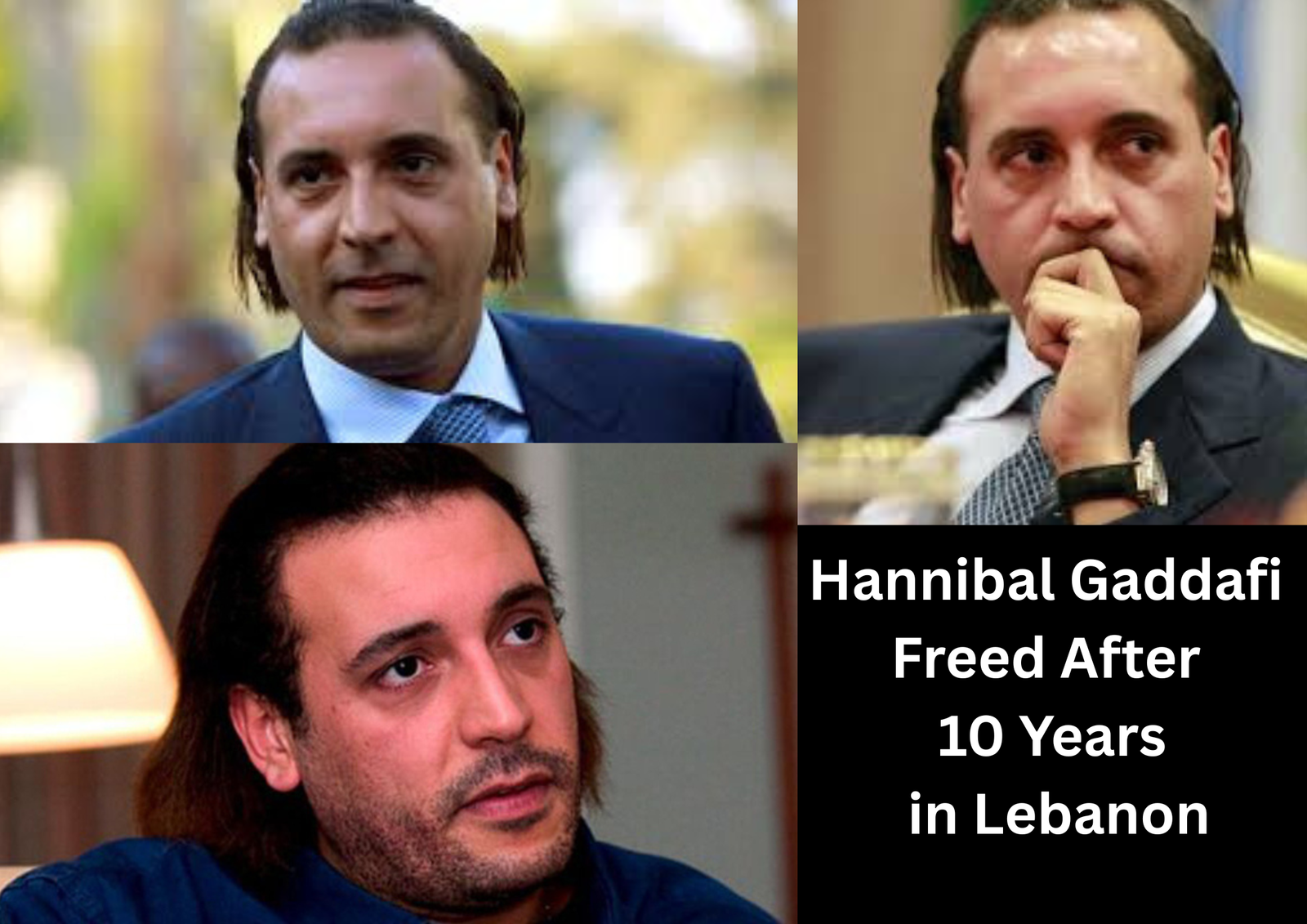
After nearly a decade behind bars, Hannibal Gaddafi – the son of late Libyan ruler Muammar Gaddafi – has been released from detention in Lebanon. His freedom was granted on Monday, following a judicial order that effectively ended years of legal limbo tied to one of the Middle East’s longest-standing mysteries.
Decade-Long Detention Ends
Lebanese officials confirmed that Gaddafi walked free from the General Security agency headquarters in Beirut after receiving authorization from Judicial Commissioner Helana Iskandar. Soon after his release, he left the country through Rafic Hariri International Airport, according to reports from Reuters and Sky News.
Gaddafi’s detention dated back to 2015, when he was arrested over alleged links to the 1978 disappearance of Imam Musa al-Sadr – a revered Lebanese Shiite cleric and founder of the Amal Movement – along with two companions during a visit to Libya. The trio vanished without a trace, sparking a political rift that persisted for more than four decades.
Legal Shift Leads to Release
For years, Gaddafi was held without formal charges or trial. His release followed new judicial developments after Lebanon’s public prosecutor, Judge, submitted a memorandum citing a “legal necessity” for his release.
Sources suggest the move was influenced by a recent Libyan delegation’s visit. The delegation reportedly shared new information and documentation related to the Musa al-Sadr case – including possible evidence about the cleric’s death and the location of his remains – leading to a reconsideration of Gaddafi’s detention.
Street Protests and Public Outcry
The decision to free Gaddafi has ignited anger among supporters of the Amal Movement. Protesters took to the streets of Beirut, burning tires and blocking roads near government buildings. Many view the release as a betrayal of justice for Imam Musa al-Sadr’s family and a setback in uncovering the truth about his disappearance.
Amal Movement officials expressed frustration, emphasizing that their struggle to find answers will continue despite the court’s ruling. “This is not just about one man’s freedom,” one supporter said. “It’s about decades of silence and unanswered questions.”
Historical and Political Implications
Hannibal Gaddafi, one of the few surviving sons of Muammar Gaddafi, has lived much of his adult life in the shadow of his father’s controversial legacy. The elder Gaddafi’s regime, which collapsed in 2011 during Libya’s violent uprising, consistently denied involvement in the Musa al-Sadr case, claiming the cleric and his companions left Libya for Italy.
The newly revealed Libyan documents appear to challenge parts of that account, potentially reopening old wounds between Beirut and Tripoli. Diplomatic observers say the move could signal a broader effort by Libya’s current government to close historic cases and normalize relations with Lebanon.
A Symbolic Release Amid Unresolved Questions
While Hannibal Gaddafi’s release closes one legal chapter, it reopens another – one centered on truth, accountability, and reconciliation. For the families of Imam Musa al-Sadr and his companions, the wait for definitive answers continues.
As Lebanon grapples with its own political instability, the release of Gaddafi serves as a stark reminder of how history’s unresolved mysteries still shape the region’s fragile present.