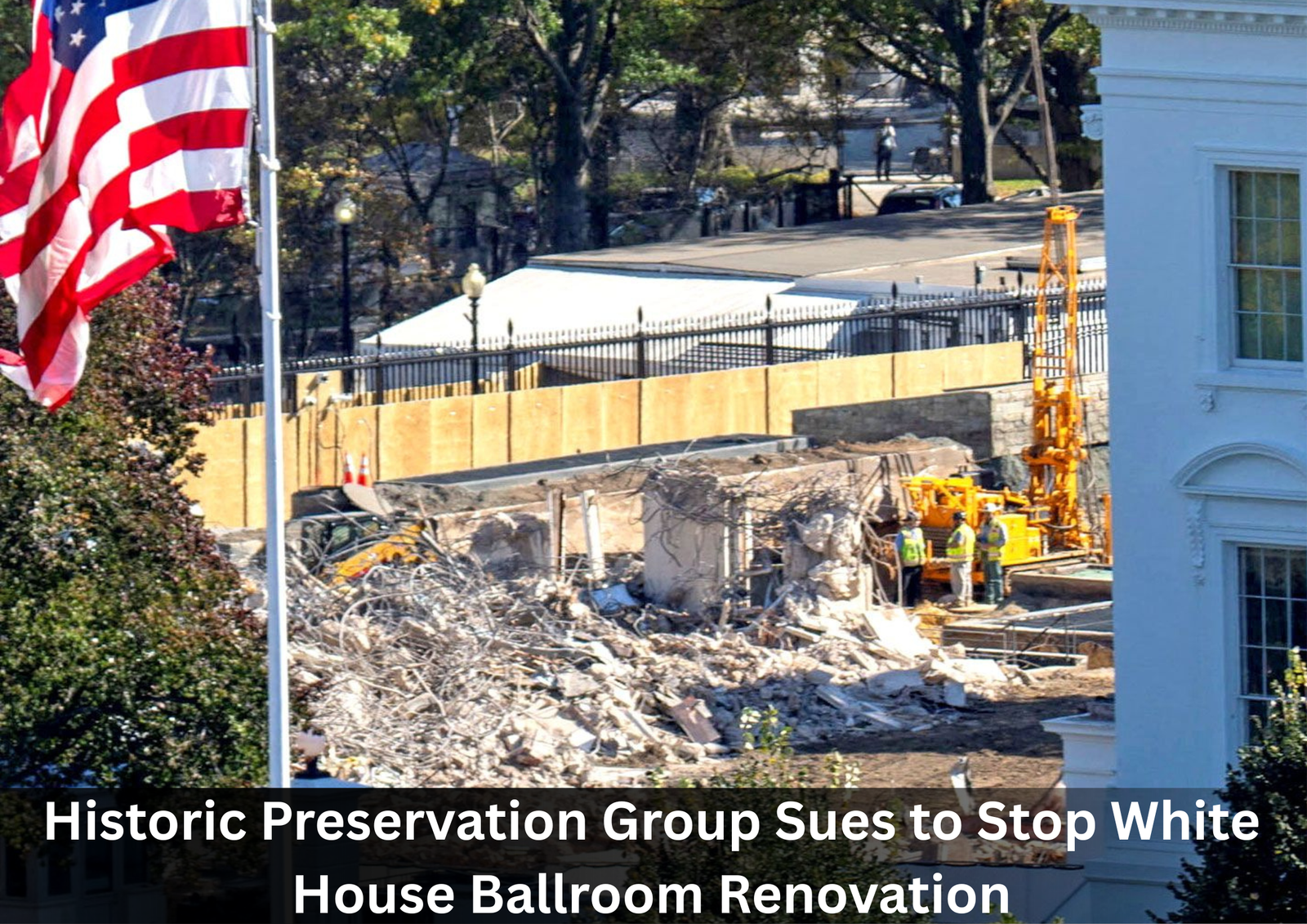
A prominent historic preservation organization has filed a federal lawsuit seeking to stop construction of a proposed ballroom at the White House, arguing that the project moved forward without legally required oversight and public review.
The National Trust for Historic Preservation, a nonprofit established by Congress to safeguard historically significant sites, submitted the lawsuit to the U.S. District Court in Washington, D.C. The case names President Donald Trump along with several federal agencies and senior officials as defendants. The group is asking the court to pause all construction activity until the project undergoes formal evaluations by relevant planning and design authorities.
According to the complaint, demolition work on the White House’s East Wing annex began without consultation from oversight bodies such as the National Capital Planning Commission or the Commission of Fine Arts. The organization contends that federal law mandates expert review and public input before any major changes are made to nationally significant public property.
The proposed project involves replacing the former East Wing annex with a ballroom measuring approximately 90,000 square feet. The administration has described the new facility as necessary to host large-scale official events that exceed the capacity of existing White House spaces. Officials have also stated that the construction would be financed through private funding rather than taxpayer dollars.
White House representatives have defended the project, asserting that presidents have long exercised authority to renovate and modernize the executive residence. Administration officials argue that the current plan falls within those historical precedents and does not violate federal regulations.
However, the preservation group disputes that interpretation. In its filing, the organization argues that while routine renovations may fall under executive authority, large-scale construction projects in Washington, D.C. require explicit congressional approval and regulatory review, regardless of funding sources. The lawsuit emphasizes that demolition itself should have been subject to the same oversight as new construction.
The legal challenge also highlights internal government debate over jurisdiction. The chair of the National Capital Planning Commission has publicly stated that the commission’s authority applies only to new construction and not to demolition activities. Critics argue that this distinction undermines the intent of preservation laws designed to protect historically important structures.
Preservation advocates note that the White House holds unique symbolic and cultural significance, representing American democratic ideals and national history. They argue that any major alteration should be handled with transparency and broad consultation, particularly when it involves the removal of existing structures.
While previous presidents have undertaken renovations at the White House, historians point out that the most extensive overhaul occurred during the Truman administration, when congressional approval and public funding were formally secured. Preservationists say this precedent reinforces the need for legislative involvement in similarly масштабные projects.
The ballroom proposal has generated criticism from architects, historians, and political figures who worry about its scale and long-term impact on the White House’s historic character. Supporters of the project, meanwhile, maintain that modernization is necessary to meet contemporary needs and that private funding minimizes public burden.
The court has not yet ruled on the request for a construction halt. If granted, the decision could delay the project until regulatory reviews are completed and public feedback is considered. The case may also set a broader precedent for how future modifications to federally significant buildings are handled.