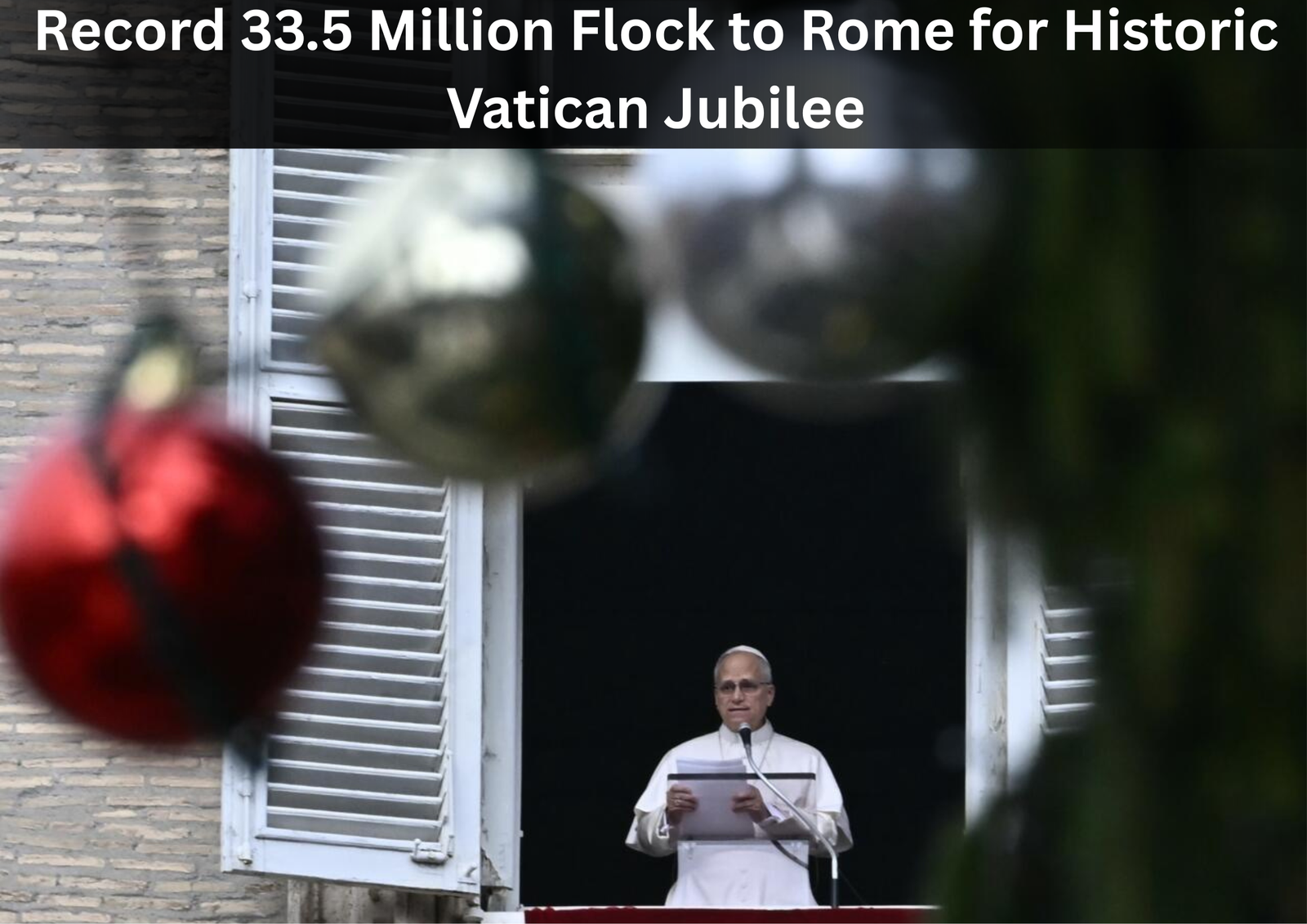
The Vatican has confirmed that an estimated 33.5 million pilgrims took part in the recently concluded Catholic Jubilee, marking the largest turnout ever recorded for a Holy Year and cementing the event as a landmark moment in modern Church history.
The Jubilee, known as the Jubilee of Hope, came to a close Tuesday with a ceremonial closing of the Holy Door at St. Peter’s Basilica by Pope Leo XIV. The final count far exceeded early expectations and surpassed the previous record of approximately 25 million pilgrims who attended the Holy Year in 2000.
What made this Jubilee especially significant was its rare leadership transition. The event was opened under Pope Francis and concluded by his successor, Pope Leo XIV, following Francis’ death in April 2025. According to Church historians, this marked the first time in more than three centuries that a Jubilee was overseen by two popes, a situation last documented in 1700.
Pilgrims traveled to Rome from 185 countries, reflecting the global scale of the gathering. European visitors made up nearly two-thirds of attendees, while North America accounted for over 16 percent. Large delegations also arrived from South America and Asia, with smaller but notable participation from Africa, Oceania, and the Middle East. Italy contributed the highest number of pilgrims, followed by the United States, Spain, Brazil, and Poland.
The Vatican employed a combination of automated camera systems and manual verification to ensure accurate attendance figures. Advanced monitoring technology was installed at the Holy Door of St. Peter’s Basilica, while attendance at Rome’s other major papal basilicas was calculated using proportional flow data and registration records from official Jubilee events.
Beyond its spiritual importance, the Jubilee had a substantial economic impact on Rome. Italian authorities invested approximately €3.7 billion over two years to upgrade infrastructure in preparation for the influx of visitors. The funding supported thousands of construction projects, including transportation improvements, public space renovations, and the restoration of iconic landmarks such as the Trevi Fountain.
Rome’s mayor described the initiative as a long-term investment that strengthened cooperation between city agencies and left behind lasting improvements for residents. While most projects are nearing completion, some works will extend into 2026.
Not all reactions were positive. Ongoing construction caused frustration for locals, and some tourists expressed disappointment over restricted access to popular sites. The surge in visitors also intensified pressure on the housing market, as more property owners converted long-term rentals into short-term accommodations.
Despite these challenges, Vatican officials emphasized that the Jubilee succeeded both spiritually and economically. Church leaders described the event as a powerful demonstration of global faith and unity, with discussions already underway for the next major Jubilee in 2033, which may include unprecedented interfaith participation.
Don’t miss this detailed analysis on “Iran Introduces Nationwide Cash Credits as Economic Protests Intensify”, a must-read blog that explains the impact, background, and what it could mean next.